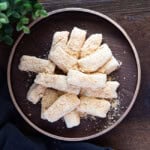
Injeolmi Recipe (Korean Rice Cake with Soybean Powder)
Injeolmi is a classic Korean rice cake made with sweet rice flour and coated in nutty roasted soybean powder. This homemade version is soft, bouncy, and pleasantly chewy, with a lightly sweet, earthy flavor.
Servings: 20 + pieces
Calories: 46kcal
Ingredients
For the dough
- 180 g sweet rice flour (glutinous rice flour), about 1 cup + 2 tablespoons
- 1 Tbsp granulated sugar
- 1/2 tsp fine salt
- 185 ml hot water , about 3/4 cup (for making the dough)
For the soybean coating
- 40 g roasted soybean powder , about 1/3 cup
- 2 tsp granulated sugar
- Pinch fine salt
Instructions
- Make the dough: In a large mixing bowl, combine the sweet rice flour, sugar, and salt. Gradually add hot water a little at a time, mixing as you go. Don’t pour all the water in at once, adding it slowly helps you control the dough’s texture and prevents it from becoming too wet. The mixture looks evenly moistened and slightly thick, like a loose batter.
- Steam the rice cake: Line your steamer with a silicone mat or steamer cloth (this makes it much easier to remove later). Spread the dough evenly in the steamer rather than leaving it in one thick mass. Once the water starts boiling, begin steaming. Steam until no white, powdery spots remain on the surface, about 20 minutes. The dough should look glossy and translucent when fully cooked.
- Season the soybean powder: While the rice cake is steaming, in a small bowl, combine the roasted soybean powder with the sugar and salt. Mix well until evenly combined, then set aside.
- Pound and Knead the dough: Once the mixture comes together, transfer it to a food-safe, sturdy plastic bag (such as a freezer bag). Knead and pound it by hand until smooth and elastic, about 3 to 5 minutes. Working the dough in the plastic bag makes it easier to knead and pound, as it won’t stick to the board or your hands.
- Coat with soybean powder: Lightly dust a sheet pan with roasted soybean powder. Carefully remove the steamed rice cake from the plastic bag and place it on the sheet pan. While still warm, gently flatten and shape it to your desired thickness. Coat it generously with the soybean powder, then cut into bite-sized pieces, tossing each piece in more powder as you go.
- Cool before serving: The rice cakes may feel slightly soft and sticky at first. For the best texture, let them cool at room temperature for about 1 hour before eating. This resting time allows the rice cake to develop its ideal chewiness.
Notes
- 1 Tbsp = 15ml, 1 Cup = 250ml
Nutrition
Calories: 46kcal | Carbohydrates: 9g | Protein: 1g | Fat: 1g | Saturated Fat: 0.1g | Polyunsaturated Fat: 0.3g | Monounsaturated Fat: 0.1g | Sodium: 59mg | Potassium: 57mg | Fiber: 0.4g | Sugar: 1g | Vitamin A: 2IU | Calcium: 5mg | Iron: 0.2mg