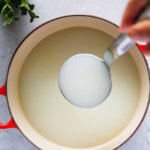
Korean Beef Bone Broth
This Korean Bone Broth Recipe (Sagol Yuksu) is a rich, milky beef bone broth made by maintaining the bones at a steady boil for several hours until the broth turns deeply flavorful and naturally collagen-rich. Traditionally used as the base for seolleongtang and tteokguk, it creates a clean yet full-bodied foundation for many classic Korean soups.
Servings: 4.5 liter
Calories: 629kcal
Ingredients
- 2 kg beef leg bones (4.4 lb), such as femur marrow bones, shin bones, or knuckles, cut into sections (Typically sold as sagol bones at Korean grocery stores and pre-cut crosswise.)
- 10 liters water for boiling (about 2 1/2 gallons) plus additional water for soaking and parboiling
Instructions
- Soak the Bones. Place the beef bones in a large bowl and cover completely with cold water. Soak for 45 to 60 minutes, depending on the type and size of the bones, changing the water every 20 minutes. Some bones release more blood and may benefit from a full hour, while others are fine with a slightly shorter soak. If you are short on time, soak for at least 45 minutes. This step removes excess blood and helps produce a cleaner-tasting broth.
- Parboil the Bones. Transfer the soaked bones to a large stock pot and add enough water to fully submerge them. Bring to a boil over high heat and cook for 15 to 20 minutes. Skim off any foam and impurities that rise to the surface. Discard all of the boiling water. Rinse the bones thoroughly under cold running water, and wash the pot clean as well. This stage is essential for building a clear, clean tasting base.
- First Main Boil (Most Important Extraction). Return the cleaned bones to the pot. Add 16 cups (1 gallon / 3.8 L) of water. Bring to a boil over high heat. This should take about 10 to 15 minutes. Once the water reaches a rolling boil, continue boiling on high heat for about 20 minutes. Then reduce the heat slightly to medium-high and maintain an active, steady boil. Do not gently simmer. The broth needs to boil actively to turn milky white.Continue boiling for another 50 to 60 minutes, for a total cooking time of about 90 to 100 minutes from when the pot first goes over the heat. Skim off any floating impurities occasionally, especially during the first 30 minutes, when most of the scum rises to the surface. Do not remove all the fat during cooking. Strain the broth into a clean pot and set aside. This is the first extraction.
- Second Extraction. Return the same bones to the pot. Add another 16 cups (1 gallon / 3.8 L) of water. If needed, wipe the inner rim of the pot clean. Bring to a boil over high heat, then maintain an active boil for 90 to 120 minutes. Strain the second batch and combine it with the first batch. This is the second extraction.If the broth turned milky during boiling, the bones can be extracted once more with fresh water. If it remained pale and did not turn milky, you can stop here.
- Optional Third Extraction. Add another 12 cups (3 quarts / 2.8 L) of water and bring to a boil over high heat. Maintain an active boil. This third extraction does not need to boil for the full 1.5 hours, as it will be lighter in body. It may appear pale brown or slightly translucent at first, then gradually turn opaque as it boils, though it will typically be lighter than the earlier batches. Boil for about 60 to 90 minutes, depending on how much body and flavor you would like to extract. Strain the third batch and combine it with the first two batches. Stir well to even out the concentration.
- Cooling, Defatting, and Storage. Let the broth cool slightly at room temperature. Once it has cooled further, refrigerate it until the fat rises to the top and fully solidifies. This usually takes several hours or overnight. When the fat has hardened, gently lift and remove the top layer. This will give you a cleaner, lighter-tasting broth.The broth can be stored in an airtight container in the refrigerator for up to 3 to 4 days.For longer storage, divide the broth into smaller portions that are easy to use later. I usually portion out about 6 to 7 cups per zip-top freezer bag, which is enough for a soup serving 4 people. Label each bag with the amount for easy reference. Double-bag to prevent leaks, then freeze. Defrost in the fridge as needed.
Nutrition
Calories: 629kcal | Protein: 5g | Fat: 68g | Sodium: 111mg | Vitamin A: 192IU | Calcium: 67mg | Iron: 4mg