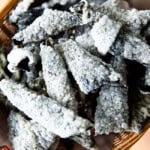
Korean Seaweed Chips (Gim Bugak)
Light and crispy Korean seaweed chips, also known as gim bugak, made with a thin glutinous rice paste that puffs beautifully when fried for an airy, savory crunch.
Servings: 4 (about 63 pieces)
Calories: 84kcal
Ingredients
- 1 1/2 cups water (375 ml)
- 1 piece dried kelp (5 x 5 cm, about 2 x 2 inches)
- 1/2 cup glutinous rice flour (sweet rice flour), (80 g)
- 1/2 tsp fine salt
- 2 tsp sugar (optional, for a hint of sweetness)
- 1/8 tsp sesame oil
- 7 sheets dried seaweed (gim)
- neutral oil (such as rice bran oil or avocado oil)
- sesame seeds (optional, for garnish)
Instructions
- Prepare the Glutinous Rice Paste: Start by making a quick kelp stock for extra depth of flavor. In a small saucepan, combine the water and dried kelp. Heat over medium heat until the water is just about to simmer, then remove the kelp. Avoid boiling the kelp for too long, as it can release bitterness. Use this kelp stock in place of plain water for a deeper, more savory flavor. If you do not have dried kelp, simply use water.In the same saucepan, whisk the glutinous rice flour into the prepared kelp stock until the flour is fully dissolved and no lumps remain. Stir in the salt and sugar. Place the saucepan over medium heat and cook, stirring constantly with a whisk or spatula, until the mixture thickens into a smooth paste, about 3 to 5 minutes. Remove from the heat and stir in the sesame oil. Let the paste cool slightly before using.
- Coat the Seaweed: Lay one sheet of seaweed on a flat surface, shiny side facing down. Using a brush or spatula, spread a thin but generous layer of rice paste evenly over the entire surface. Make sure you coat it properly from edge to edge. A gloved hand works beautifully too, especially if you want better control. Repeat with the remaining seaweed sheets.
- Dry the Seaweed: Once all the seaweed sheets are evenly coated, let them dry completely before moving on. The sheets should feel fully dry and crisp to the touch. The drying time will vary depending on how thickly the rice paste was applied and the surrounding humidity.You can dry the seaweed in several ways:Sun drying - Arrange the sheets on a wire rack or baking rack and place them in direct sunlight for about 2 to 3 hours, or until completely dry and crisp. Elevating the seaweed on a rack allows air to circulate underneath, helping it dry more evenly. In humid weather, this may take longer.Dehydrator - Dry the sheets using a low heat or vegetable setting until they are fully dry and crisp.Oven drying - Preheat the oven to 100 C (212 F). Arrange the seaweed sheets on a lightly oiled sheet pan and dry for 40 to 60 minutes, or until completely dry.Do not line the pan with baking paper, as it can slow the drying process by reducing airflow underneath. Instead, lightly brush oil directly onto the sheet pan so the seaweed releases easily once dried.
- Cut the Dried Seaweed into Pieces: Cut the dried seaweed sheets into bite sized rectangles before frying. Kitchen scissors work best for this. Aim for pieces about 4 to 5 cm wide and 6 to 8 cm long (about 1.5 to 2 inches by 2.5 to 3 inches). Try to keep the pieces fairly even so they fry at the same speed.
- Fry the Seaweed: Heat the oil in a deep frying pan or wok to 356 F (180 C). Make sure there is enough oil to fully submerge the seaweed pieces so they fry evenly. Carefully slide a few pieces into the hot oil, one at a time. Fry for about 10 to 20 seconds, or until they puff up and turn lightly golden. Use a slotted spoon or spider strainer to lift the chips out of the oil and transfer them to a plate lined with paper towels to drain any excess oil. Repeat with the remaining pieces.
- Serve: Let the seaweed chips cool completely before serving. They will become even crispier as they cool. Enjoy them as a snack, appetizer, or as a crunchy side dish (banchan). If you have leftovers, store them in an airtight container. For longer storage and the best texture, see the storage tips below.
Nutrition
Calories: 84kcal | Carbohydrates: 18g | Protein: 1g | Fat: 0.4g | Saturated Fat: 0.1g | Polyunsaturated Fat: 0.1g | Monounsaturated Fat: 0.1g | Sodium: 307mg | Potassium: 20mg | Fiber: 1g | Sugar: 2g | Vitamin A: 6IU | Vitamin C: 0.1mg | Calcium: 13mg | Iron: 0.2mg