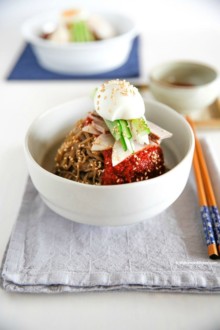
I am often amazed at how many kinds of Kimbap are out there. This salad Kimbap is one of those. I made it a couple of weeks ago and have been hesitating about whether I should post it or not. But the picture was just so gorgeous to not to mention it, even though the taste wasn’t really fantastic!
OK, so the point is that I am not talking about this salad Kimbap recipe. It is about my personal matter. I don’t think I have to report about my personal life nor you need to know about it, but it affects this blog’s future and maybe your convenience.
I’ve been so busy and tense this week. I just started a course. Don’t get too excited. It is not a cookery course nor photography. There was one time I was seriously thinking about cooking or journalism, but I decided not to go with either of them.
I am not quite happy to be a student again. It is scary being a student in a foreign country and knowing that I have to study two times harder than others, because of my not very fluent English. I am such a sucker in reading English text. I also need to look after my home after school, then naturally this blog comes very last.
You would be surprised to know how maintaining a food blog well can be such a time consuming and overwhelming matter, especially when you have 1500 or more visitors a day.
I certainly wouldn’t want to close this blog down. I put too much of my energy and love into it. And I also feel responsible for you too.
I hope I can post one article a week at least, but we will see how that goes. You might have to wait for a couple of days or more to get my answers or responses to your requests or questions. You can still request recipes you want to see but I certainly don’t have time to do it unless it is super simple. Just keep these in mind.
Thank you.
If you started to wonder what is different between bibim naengmyun and bibim guksu when you read my bibim guksu post the other day, I wouldn’t be surprised. I wasn’t quite sure which one is more accurate as the title either.
Here is a beautiful picture of bibim naengmyun taken by Evil jungle prince and compare it with my bibim guksu picture. Have a close look. Can you tell what the difference is? Not including the toppings?

(Bibim Naengmyun)

(Bibim Guksu)
As far as I know, the main difference is “the noodles”. Naemyun noodles are usually made of buckwheat flour, sweet potato starch or potato starch. They are very resilient and relatively harder to cut with your teeth.
On the other hand, guksu noodles are usually made of wheat flour and sometimes something else added like the soba noodles I used for my bibim guksu (The noodles had 69% wheat flour and 29% buckwheat flour).
I prefer guksu noodles over naengmyun noodles because they are easier to chew, therefore less messy to eat and feels easy on my stomach. What about you?
Here is some information on naengmyun if you are interested.

(Mul naengmyun, photo from hankooki.com)
Types of Korean Naengmyun
- Pyongyang naengmyun – Mul naengmyun, served in cold watery radish kimchi broth, the noodles are usually 70% buckwheat flour and 30% starch powder
- Hamhung naengmyun – Bibim naengmyun, served in spicy seasoning without the broth, the noodles are usually 100% potato starch.
- Busan style Milmyun – the noodles are are usually 70% wheat flour and 30% starch powder

(Type of Milmyun, photo from Gaya milmyun)
Related posts
Instant Cold Noodles in Broth (Mul Naengmyun)
Buckwheat Noodles (Memil Guksu in Korean)

(photo from – Naver news )
Yellow sherbet from citron (유자 yuja), purple sherbet from mountain berry (복분자 bokbunja) and green sherbet from green tea.
Do sherbets cool you down? If I tell you the price, you will chill even more!
They are 15,000 won (US $16.00) each before VAT. Have a nice summer!