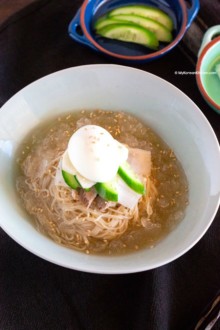
If you started to wonder what is different between bibim naengmyun and bibim guksu when you read my bibim guksu post the other day, I wouldn’t be surprised. I wasn’t quite sure which one is more accurate as the title either.
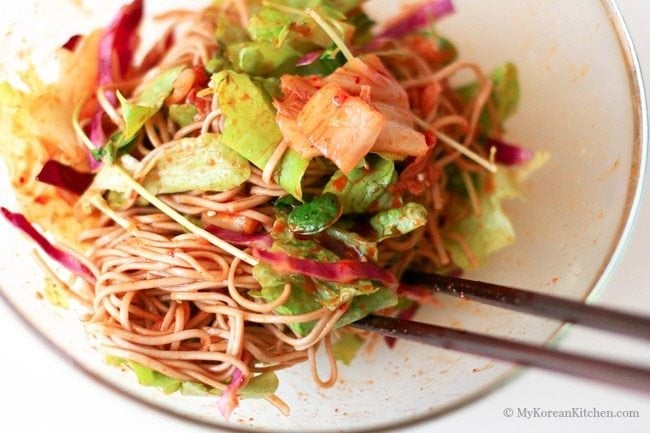
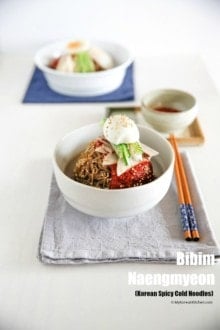
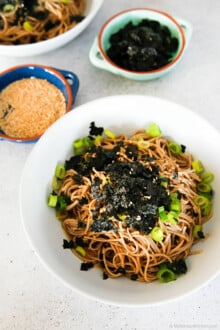
Here is a beautiful picture of bibim naengmyun taken by Evil jungle prince and compare it with my bibim guksu picture. Have a close look. Can you tell what the difference is? Not including the toppings?
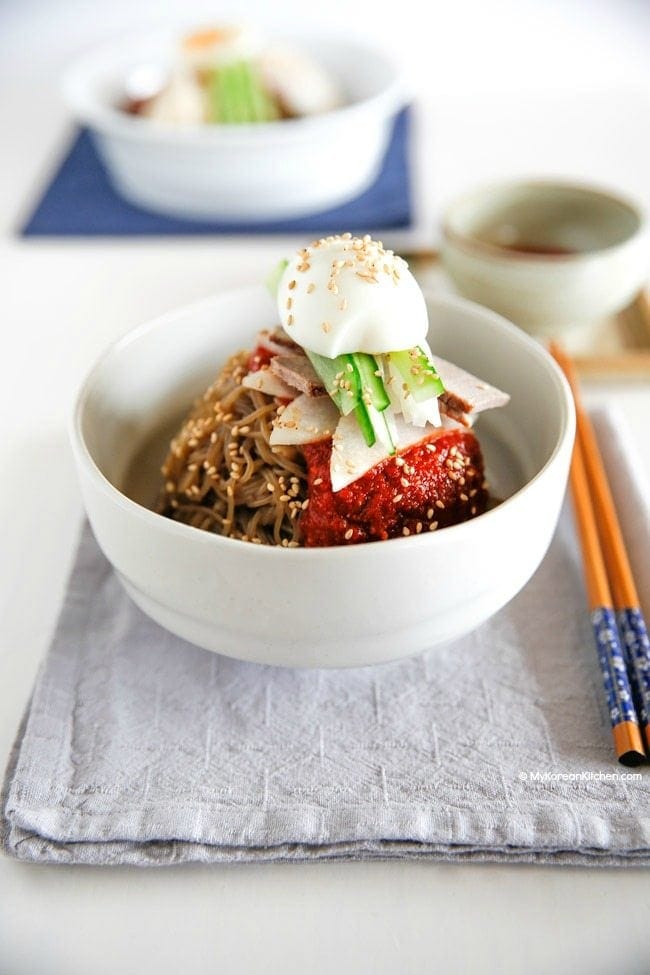
(Bibim Naengmyun)

(Bibim Guksu)
As far as I know, the main difference is “the noodles”. Naemyun noodles are usually made of buckwheat flour, sweet potato starch or potato starch. They are very resilient and relatively harder to cut with your teeth.
On the other hand, guksu noodles are usually made of wheat flour and sometimes something else added like the soba noodles I used for my bibim guksu (The noodles had 69% wheat flour and 29% buckwheat flour).
I prefer guksu noodles over naengmyun noodles because they are easier to chew, therefore less messy to eat and feels easy on my stomach. What about you?
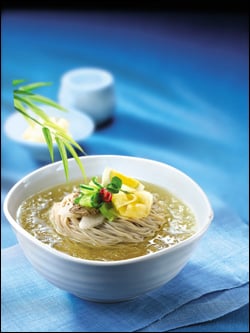
Here is some information on naengmyun if you are interested.

(Mul naengmyun, photo from hankooki.com)
Types of Korean Naengmyun
- Pyongyang naengmyun - Mul naengmyun, served in cold watery radish kimchi broth, the noodles are usually 70% buckwheat flour and 30% starch powder
- Hamhung naengmyun - Bibim naengmyun, served in spicy seasoning without the broth, the noodles are usually 100% potato starch.
- Busan style Milmyun - the noodles are are usually 70% wheat flour and 30% starch powder
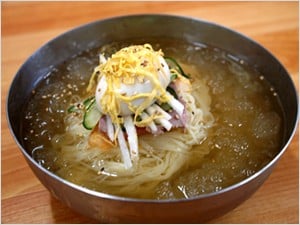
(Type of Milmyun, photo from Gaya milmyun)
Related posts
Instant Cold Noodles in Broth (Mul Naengmyun)
Buckwheat Noodles (Memil Guksu in Korean)


I don’t think I’ve ever tried Naengmyun, both sound really good though.
Both looks very delicious! The main difference I see is that the noodles of the Bibim Naengmyun is slightly translucent, so they’re clearly potato starch or something. I think I would prefer the buckwheat kind, but that’s maybe because my fave kind of noodles are soba noodles
Thanks for clarifying that! The photos look so delicious! I must say though, that I am partial to bibim and mul naengmyun, especially during the summer months. I’ll be going home soon for a visit and I’m hoping that my mom will cook naengmyun for us!
Oh YUM!! I’m not really familiar with Korean cuisine, but once I read about a Korean fusion food in one of culinary magazines in New Zealand. And I tried it because it didn’t include any alcohol, it tasted reallllllyyyy goooooooodd!!!
Hi Sue,
I’ve got a couple of quick questions.
1,How are you finding the differences between Korean and Australian ingredients?
2,If you have a garden going,what are you growing and if you’ve been growing Korean varieties,how have they come along?(Brisvegas “winter”now,I know)
Cheers^^
i can see the difference in the noodle’s texture and appearance. their consistencies are different too. i really really wanna try naengmyun and galguksu. hope to find it here locally.
I absolutely love mul-naengmyun…I’ve loved it so much I’ve started making it at home with the packs you can buy at supermarkets. I’ll have to get adventurous once day and make it myself.
I totally fell in love with Mul naengmyun after having it in Pusan! Do you know if the noodles w/ all the starch powder is more fattening than regular noodles or the same? hahahah
Nothing can’t beat spicy Hamhung naengmyun with a bowl of hot Yuk soo.
that looks so good.. I am so hungry now.
It is so hot here in Silicon Valley…and that looks like it would hit the spot. Mmmmm.
Wow…that looks divine!
Is it difficult to make? How could I make that kind of a dish at home?