Save This Recipe For Later
You can unsubscribe at any time
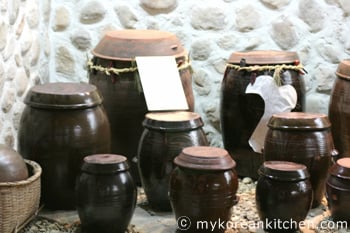
(Jangdokdae, 장독대- A terrace where Koreans used to store pickled or fermented food like gochujang or soy sauce/ The pots are called hangari, 항아리)
After enjoying my rice cakes and tea at Jilsiru, we decided to visit the Tteok and Kitchen Utensil Museum (떡 박물관) that is located in the same building (Tteok means “rice cake”).
After paying the entrance fee (6,000 won (US $ 6.30) for 2, which I thought was a bit expensive), we went up to the second floor where the Tteok museum was. It wasn’t very crowded. There were a couple of families and some kids doing their winter vacation homework. Then I saw a “Do not take pictures” sign. *big disappointed sigh*
The exhibition room was a lot smaller than I expected. There were some collections of display rice cakes and traditional equipment/tools that are used for making Korean rice cakes. I have seen most of those as I grew up in text books or TV or even in my house.
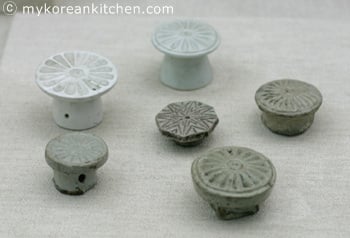
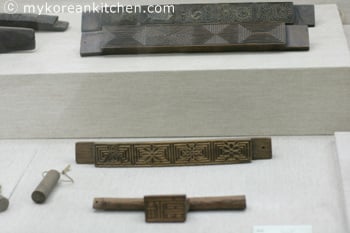
(Tteoksal,떡살 – Rice cake mould)
After staying in that floor about 5 minutes with a bit of disappointment (there wasn’t much to see in my opinion), we went up to the third floor where the traditional kitchen utensil museum was. The very first display I saw was this.
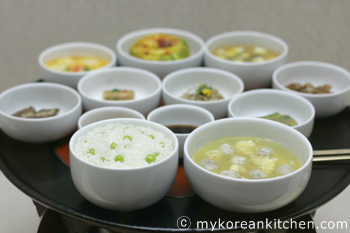
(5 dish table, 5 cheop bansang/ 5첩 반상 : Rice, soup, stew, soy sauce and 5 other side dishes, Kimchi doesn’t count as a side dish) Do you think it is a lot of side dishes? Yet the King and noble people had 12 side dish meals!
Surprisingly there was no sign saying “Do not take pictures”, so I gladly grabbed the chance.
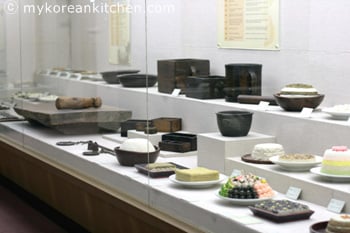
(Rice cake making tools such as measuring cups and rice flour mill and rice cake model display)
If you haven’t seen any of those before in your life, you might find them interesting.
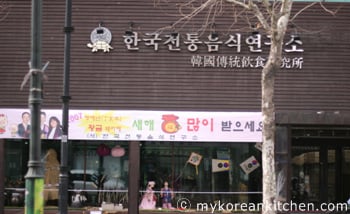
- Address : 164-2, Waryong-dong, Jongno-Gu, Seoul
- Open : Monday- Sunday 10:00~18:00
- Traffic info – (Subway) line 1, 3, 5 Jongno 3 ga station, Exit gate no.7, 5 mins by walk
- Entrance fee : 3,000 won for an individual adult, 2,000 won for a student (adult fee applies to uni students) / 2,000 won each for adults in a group, 1,000 won each for students in a group (group means more than 20 people)
Update (April 21, 2016): If you’re interested in participating in making some Korean rice cakes, Kimchi or other Korean traditional food, you should check out their experience program. I read very good reviews about it.