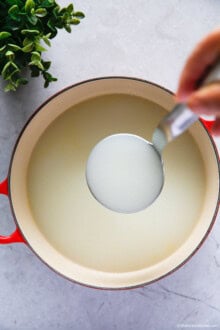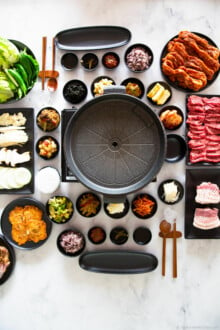
Gamjatang is a spicy Korean pork bone soup. It is made by simmering pork bones for a long time then the strained milky bone broth is seasoned with Korean special condiments such as gochugaru (Korean chili flakes) and gochujang (Korean chili paste).
The soup is very hearty and comforting so it’s perfect for cold wintry weather. Let’s make it!

Gamjatang (감자탕) is a popular Korean soup. It goes well with a bowl of steamed rice to complete a meal (my preference) but some people pair it with Korean liquor – soju as a drinking snack.
One interesting fact about gamjatang is its name. Because gamjatang literally translates to “potato soup” (gamja = potato, tang = soup), but the highlight of the soup is actually pork bones.
Even when I ordered gamjatang at a restaurant many years ago, I was expecting to receive a soup full of potatoes, not some chunky bones that looked like they were just cut from a dinosaur! (I remind you, I was young and naive. Lol)
(While there are other theories about its origin of name, they are not convincing to me, so I won’t mention them here. ;))
Anyway, homemade gamjatang is very budget friendly (Have you ever bought pork bones? They are so cheap!) and considered highly nutritious (It’s all about the milky broth! Supposedly good for people with weak bones.). Maybe that’s why it’s been popular in Korea for so many years!
I originally shared my gamjatang recipe back in 2007 and it was due for an update – particularly the photos!
I even visited my local restaurants a few times recently to analyse their version of gamjatang in case I missed something in my first recipe.
In summary, my revised recipe is a tad spicier, but it’s more flavorful and earthy! My family loved it even more! So I hope you do too. 🙂 Enjoy!
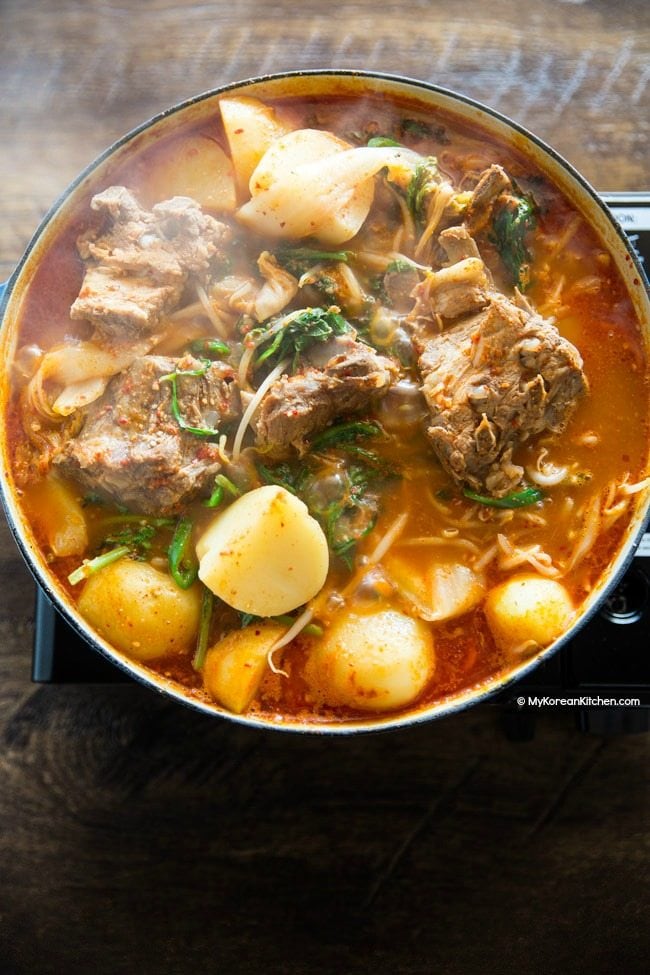
Ingredients for Gamjatang (3 to 4 servings)
Main
- 1.4 kg / 3 pounds pork neck bone (try to pick the bones with lots of meat on them)
- 7 cups water
- 3 potatoes (500 g / 1.1 pounds), peeled & cut into smaller chunks
- 6 napa cabbage leaves (300 g / 10 ounces), rinsed
- 100 g /3.5 ounces mung bean sprouts, rinsed
- (optional) 30 g / 1 ounces crown daisy leaves, rinsed
- (optional) 6 perilla leaves, thinly sliced
- (optional) 2 green chilies, thinly sliced
Aromatic Vegetables
- 1 onion (160 g / 5.6 ounces), peeled & halved
- 30g / 1 ounce green onion (white part only)
- 5 cloves garlic (30 g/ 1 ounce), peeled
- 1 ginger (5 g / 0.2 ounce), peeled & thinly sliced
- 1 tsp whole black pepper
Seasoning base (mix these well in a bowl)
- 3 Tbsp gochugaru (Korean chili flakes)
- 2 Tbsp doenjang (Korean soybean paste)
- 2 Tbsp rice wine
- 1 1/2 Tbsp minced garlic
- 1 Tbsp gochujang (Korean chili paste)
- 1 Tbsp Korean fish sauce
- 1 Tbsp water
- 1 tsp minced ginger
- A few sprinkles of ground black pepper
Other condiments
- 1/8 tsp fine sea salt
- 1 Tbsp roasted sesame seeds or perilla seeds, ground
*1 Tbsp = 15 ml, 1 Cup = 250 ml
** If you want to learn more about Korean cooking ingredients, check my 30 essential Korean cooking ingredients list!
How to Make Gamjatang (Pork Bone Soup)
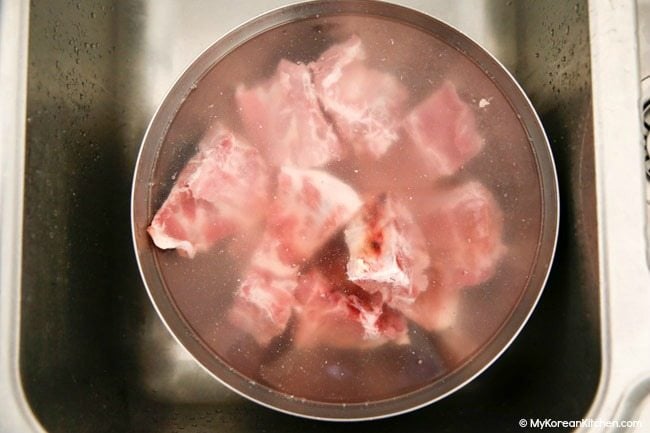
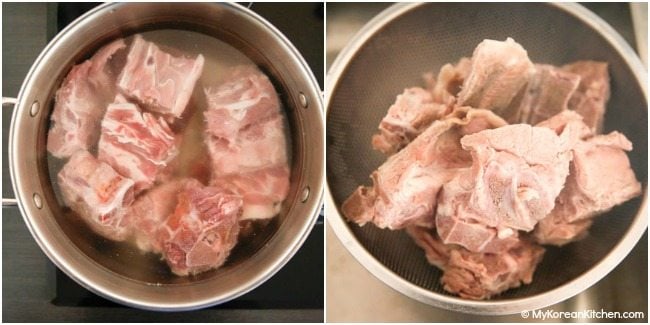
1. Soak the pork bones in cold water for at least 1 hour (to get rid of any excess red liquid that looks like blood). Drain away the water. (If you can, try to change the water every 15 mins.)
2. Place the bones into a large pot and add enough water to cover the bones, then boil it for about 10 minutes over medium high heat, covered. Drain away the water and rinse the bones in cold running water.
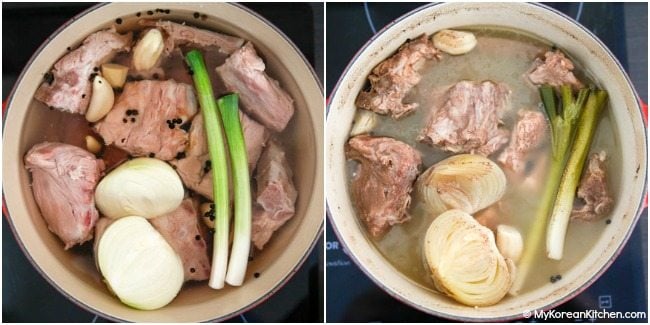
3. In a large clean pot, place the bones and add the water (7 cups) and all ingredients from the “aromatic vegetables” section. Simmer it on medium to low heat for 1 hr 30 mins, covered.
4. While the bone broth is simmering;
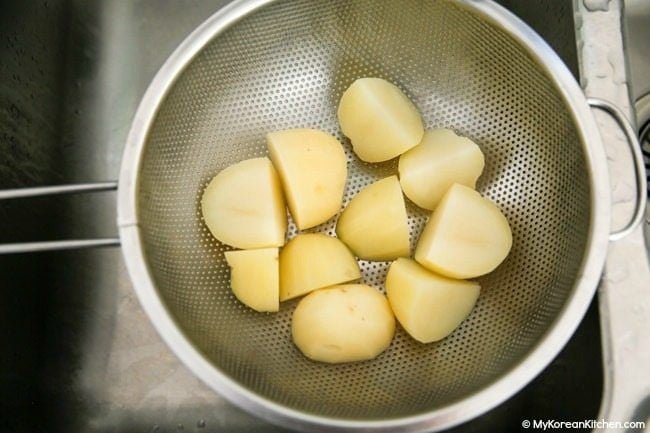
(1) Put the potatoes in a separate pot and add enough water to cover them. Boil it over medium high heat until the potatoes are nearly cooked (about 90%). Drain away the water and set aside the potatoes until needed.
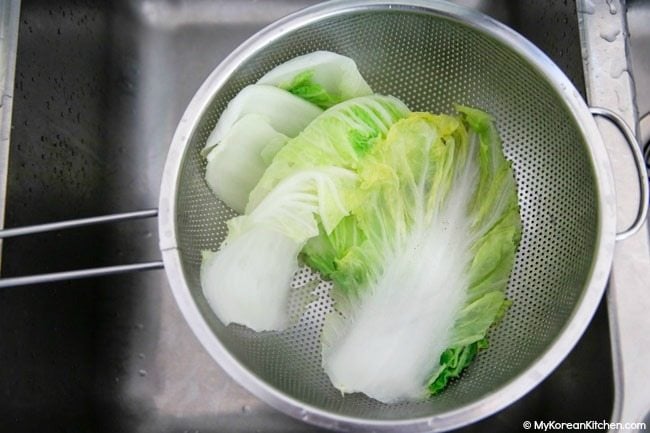
(2) In a separate pot, add some water and the salt (1/8 tsp) and boil it. Once the water is rapidly boiling, parboil the napa cabbage for 1 to 2 mins. Drain away the water and cool down the leaves. Tear down each leaf length ways with your hands. (Or you can use a knife to cut them.)
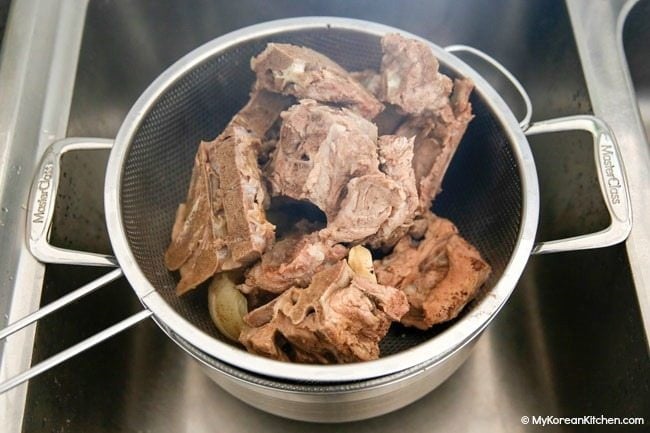
5. Sieve the broth (from step 3) through the strainer and catch the broth in a large bowl. Also, keep the pork bones but discard any boiled spices/vegetables. It should result in about just under 5 cups of broth.
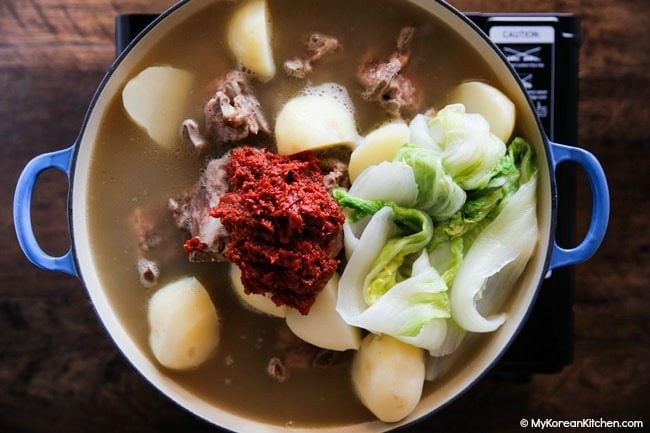
6. Transfer the broth into a clean pot (I used my favorite braiser pot) then add back the pork bones, potatoes, cabbage leaves, and the seasoning base into the pot. Boil over medium high heat until the potatoes cook completely (10 to 15 mins).
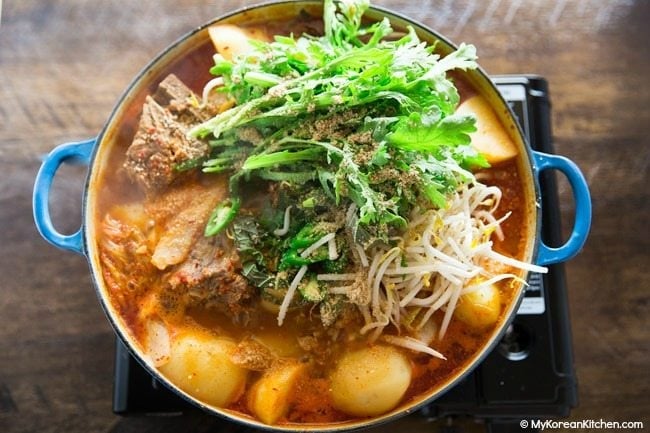
7. Reduce the heat to medium. Add the remaining vegetables (mung bean sprouts, crown daisy leaves, perilla leaves, and green chilies) and the ground sesame seeds into the pot and boil for a further 1 to 2 mins until they soften. Serve warm with steamed rice.
Ingredients
MAIN
- 1.4 kg pork neck bone (3 pounds), (try to pick the bones with lots of meat on them)
- 7 cups water
- 3 potatoes (500 g / 1.1 pounds), peeled & cut into smaller chunks
- 6 napa cabbage leaves (300 g / 10 ounces), rinsed
- 100 g mung bean sprouts (3.5 ounces), rinsed
- 30 g crown daisy leaves (1 ounce), rinsed (optional)
- 6 perilla leaves , thinly sliced (optional)
- 2 green chilies , thinly sliced (optional)
AROMATIC VEGETABLES
- 1 onion (160 g / 5.6 ounces), peeled & halved
- 30 g green onion (1 ounce), white part only
- 5 cloves garlic (30 g / 1 ounce), peeled
- 1 ginger (5 g / 0.2 ounce), peeled & thinly sliced
- 1 tsp whole black pepper
SEASONING BASE (MIX THESE WELL IN A BOWL)
- 3 Tbsp gochugaru (korean chili flakes)
- 2 Tbsp doenjang (korean soybean paste)
- 2 Tbsp rice wine
- 1 1/2 Tbsp minced garlic
- 1 Tbsp gochujang (korean chili paste)
- 1 Tbsp Korean fish sauce
- 1 Tbap water
- 1 tsp minced ginger
- A few sprinkles ground black peppers
OTHER CONDIMENTS
- 1/8 tsp fine sea salt
- 1 Tbsp toasted sesame seeds or perilla seeds, grounded
Instructions
- Soak the pork bones in cold water for at least 1 hour (to get rid of any excess red liquid that looks like blood). Drain away the water. (If you can, try to change the water every 15 mins.)
- Place the bones into a large pot and add enough water to cover the bones, then boil it for about 10 minutes over medium high heat, covered. Drain away the water and rinse the bones in cold running water.
- In a large clean pot, place the bones and add the water (7 cups) and all ingredients from the “aromatic vegetables” section. Simmer it on medium to low heat for 1 hr 30 mins, covered.
- While the bone broth is simmering;(1) Put the potatoes in a separate pot and add enough water to cover them. Boil it over medium high heat until the potatoes are nearly cooked (about 90%). Drain away the water and set aside the potatoes until needed.(2) In a separate pot, add some water and the salt (1/8 tsp) and boil it. Once the water is rapidly boiling, parboil the napa cabbage for 1 to 2 mins. Drain away the water and cool down the leaves. Tear down each leaf length ways with your hands. (Or you can use a knife to cut them.)
- Sieve the broth (from step 3) through the strainer and catch the broth in a large bowl. Also, keep the pork bones but discard any boiled spices/vegetables. It should result in about just under 5 cups of broth.
- Transfer the broth into a clean pot, then add back the pork bones, potatoes, cabbage leaves, and the seasoning base into the pot. Boil over medium high heat until the potatoes cook completely (10 to 15 mins).
- Reduce the heat to medium. Add the remaining vegetables (mung bean sprouts, crown daisy leaves, perilla leaves, and green chilies) and the ground sesame seeds into the pot and boil further 1 to 2 mins until they soften. Serve warm with steamed rice.
Notes
Nutrition Info (per serving)
The nutrition information shown is an estimate provided by an online nutrition calculator. It should not be considered a substitute for a professional nutritionist’s advice.