Learn how to make perfect Korean steamed rice using a rice cooker or on the stove!
(This is part III of How to Make Perfect Korean Steamed Rice. Click here for part I and part II.)
Save This Recipe For Later
You can unsubscribe at any time
After buying good rice and rinsing the rice properly, we need to soak the rice in water.
The reason is to make evenly cooked rice and to make each rice grain sticky and resilient (“gelatinization”). However, if you soak it too long, it can become brittle and lose some nutrition. So we need to do it for the right amount of time. Then what is the right amount of time?
How long to soak the rice
- Soak the rice in water for 30 minutes in summer and 1-2 hours in winter minimum.
(The temperature is based on the Korean climate ; Seoul’s average daily high temperature – summer : 27℃, winter : 3℃)
Once the soaking is done, drain the water then add an adequate amount of water to the rice.
The adequate amount can vary depending on the the type of rice, condition of the rice and type of cooking method, but we usually need to add 1.5 times more water compared to the rice weight or 1.2 times more water compared to the rice volume.
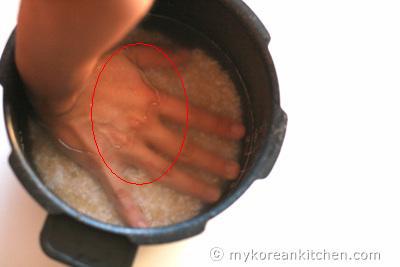
(However, I always measure it manually. The so called “Knuckle method” – Add the water until it covers near my knuckles when my hand is flat on the rice. Does it sound logical to you? A lot of Koreans seem to use this method too. It’s not just me. 🙂 )
The rice cooking process goes Boiling – Simmering – Thoroughly steaming. If you use an electric rice cooker like I do, we just put the rice and water into the cooker and press the button. However, if you use the stove top method then there are a couple of things you need to be aware of.
How to make Korean steamed rice on the stove
(Recommended by a rice expert in the Rural Development Administration, Korean government)
- Boil the rice with the lid on for 5-10 minutes on high heat (The water gets absorbed into the rice and the rice expands).
- Turn the heat down to medium and simmer it for 7-8 minutes (During this time we are accelerating the gelitinization process – making each rice grain sticky and resilient).
- As the water gets absorbed into the rice or evaporates, reduce the heat to low gradually. Do not open the lid at this point. When the water has nearly disappeared, turn the heat off.
- Let the rice sit (thoroughly steam) for 10-15 minutes with the lid on.
- Then stir the rice around (top to bottom, side to side) lightly with the rice scoop (It is to evaporate extra moisture, even out the rice taste, and keep the good shape).
Now, theoretically, we should be able to make perfect Korean steamed rice. Fingers crossed for you all!
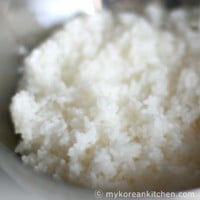
How to make Korean steamed rice on the stove
Ingredients
- Short or Medium grain rice
- Water
Instructions
- Boil the rice with the lid on for 5-10 minutes on high heat (The water gets absorbed into the rice and the rice expands).
- Turn the heat down to medium and simmer it for 7-8 minutes (During this time we are accelerating the gelitinization process – making each rice grain sticky and resilient).
- As the water gets absorbed into the rice or evaporates, reduce the heat to low gradually. Do not open the lid at this point. When the water has nearly disappeared, turn the heat off.
- Let the rice sit (thoroughly steam) for 10-15 minutes with the lid on.
- Then stir the rice around (top to bottom, side to side) lightly with the rice scoop (It is to evaporate extra moisture, even out the rice taste, and keep the good shape).
Nutrition Info (per serving)
The nutrition information shown is an estimate provided by an online nutrition calculator. It should not be considered a substitute for a professional nutritionist’s advice.
Save This Recipe For Later
You can unsubscribe at any time