A simple tuna cucumber sushi rolls recipe.
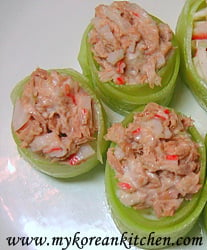
No, it is not a traditional Korean food, but it is quite a simple meal to make.
I do not know if this sushi is available in Japan or not, but I know this is very delicious to eat! It will make a great party finger food.
Ingredients for 12 sushi rolls
Main
- 1 cup steamed sushi rice
- 250 canned tuna, oil or water drained
- 1/4 onion
- 3 crab sticks
- 1 English cucumber
Sushi seasoning (mix these together)
- 1 Tbsp rice vinegar
- 2 tsp sugar
- 1 tsp fine sea salt
- 1 tsp rice wine
Tuna salad seasoning
- 3 Tbsp mayonnaise
- A few sprinkles ground black peppers
- A few sprinkles fine sea salt
Preparation
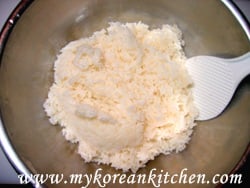
1. Cool down the steamed rice for about 10 minutes.
2. While waiting, finely chop the onion, tuna, and crab sticks.
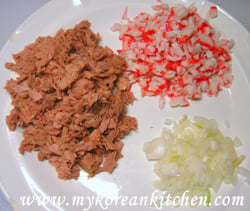
3. Put them into a bowl.
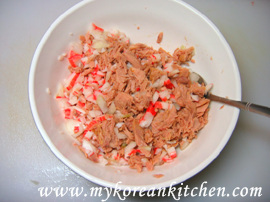
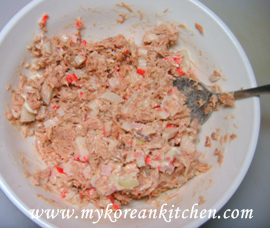
4. Add the salad sauce into a bowl (from step 3) and mix it well.
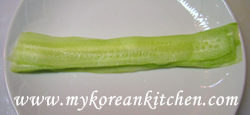
5. Peel the cucumber skin off then thin slice the flesh with a peeler carefully. (Thickness about 0.2 cm)
6. Boil the sushi seasoning in a pan until the sugar and salt dissolve. (You can use a microwave instead.) Pour it over the rice and mix it well.

How to Make Tuna Cucumber Sushi Rolls
1. Wet your hands in cold water then make 12 balls of rice.
2. Wrap the rice around with thinly sliced cucumber.
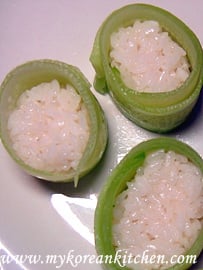
3. Put the tuna and crab salad on top of the rice.
4. Serve.
Tips
- When rice seem to stick on your hand, use cold water. (Have a bowl of cold water next to you so you can use it as you need it.)
- The height of rice’s dough ball should be lower than the sliced cucumber’s height to hold the tuna salad topping.
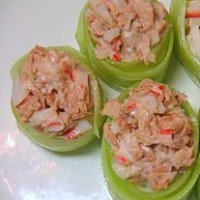
Tuna Salad Sushi Rolls
Ingredients
Main
- 1 cup steamed short grain rice
- 250 g canned tuna , oil or water drained
- 1/4 onion
- 3 crab sticks
- 1 English cucumber
Sushi seasoning (mix these together)
- 1 Tbsp rice vinegar
- 2 tsp sugar
- 1 tsp fine sea salt
- 1 tsp rice wine
Tuna salad seasoning
- 3 Tbsp mayonnaise
- A few sprinkles ground black peppers
- A few sprinkles fine sea salt
Instructions
Preparation
- Cool down the steamed rice for about 10 minutes.
- While waiting, finely chop the onion, tuna, and crab sticks.
- Put them into a bowl.
- Add the salad sauce into a bowl (from step 3) and mix it well.
- Peel the cucumber skin off then thin slice the flesh with a peeler carefully. (Thickness about 0.2 cm)
- Boil the sushi seasoning in a pan until the sugar and salt dissolve. (You can use a microwave instead.) Pour it over the rice and mix it well.
How to Make Tuna Cucumber Sushi Rolls
- Wet your hands in cold water then make 12 balls of rice.
- Wrap the rice around with thinly sliced cucumber.
- Put the tuna and crab salad on top of the rice.
- Serve
Nutrition Info (per serving)
The nutrition information shown is an estimate provided by an online nutrition calculator. It should not be considered a substitute for a professional nutritionist’s advice.