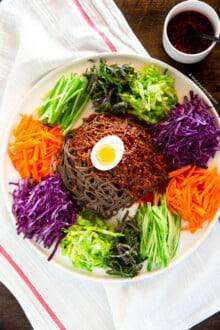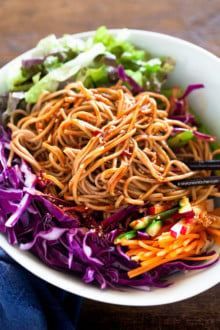
Try this quick and easy cold soba noodle recipe. This recipe is made with dry buckwheat noodles (soba noodles), and a few other Korean pantry staples.
It’s so simple to put together, making it a perfect dish on a lazy Sunday or busy weeknight. It will become your new favorite noodle dish particularly during hot summer months!
What is Cold Soba Noodles with Perilla Oil Dressing
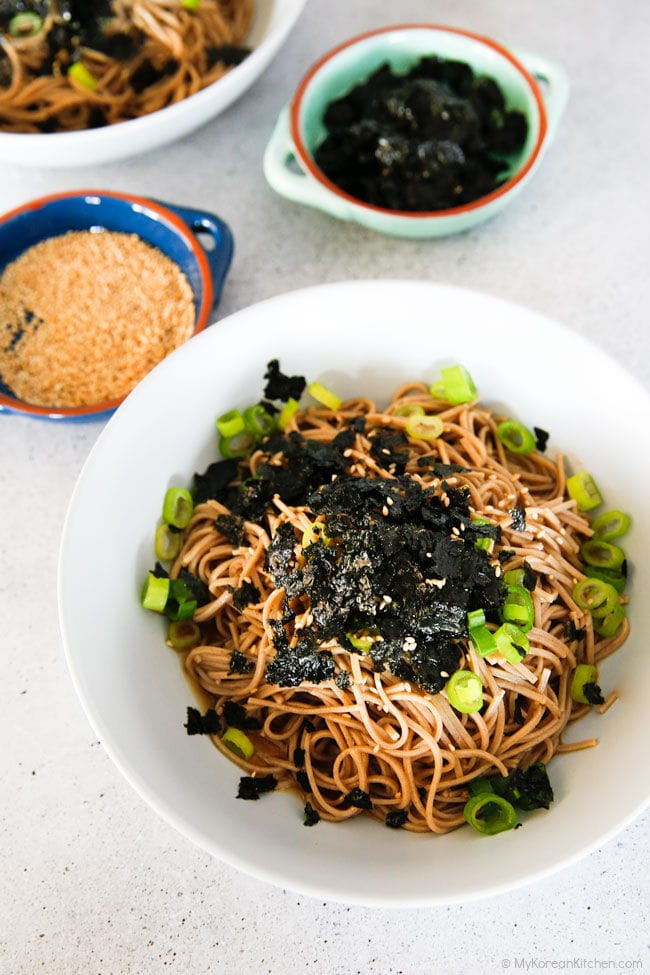
Cold soba noodles with perilla oil dressing (also known as perilla oil noodles) is a trendy Korean noodle dish. It is called Deulgireum Makguksu (들기름 막국수) in Korean, a type of Memil Guksu. Memil means buckwheat and guksu means noodles.
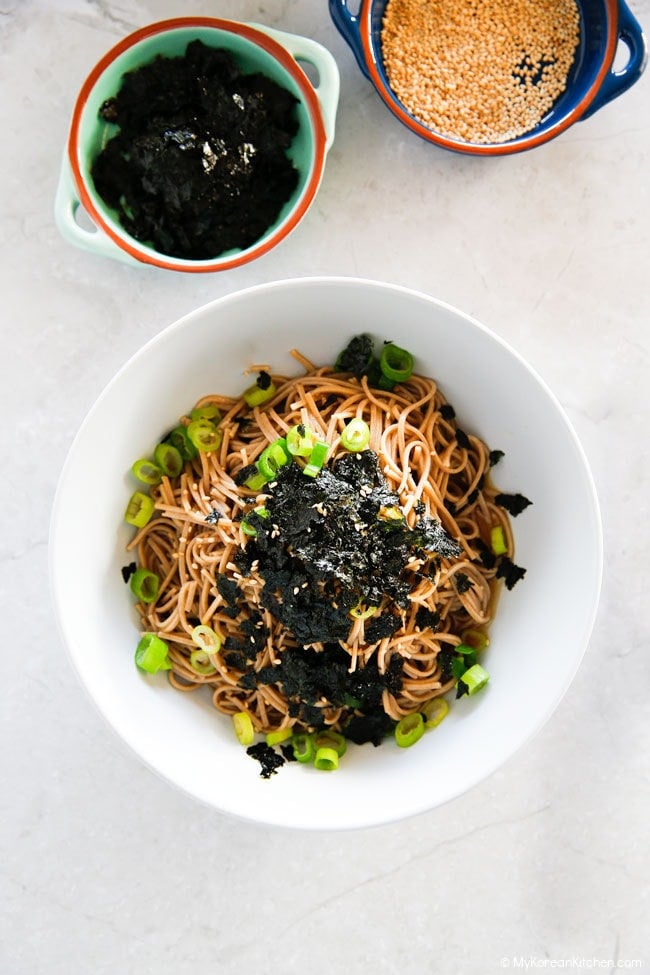
Boiled and drained soba noodles are dressed with a sauce made from perilla oil, soy sauce, toasted sesame seeds and other pantry staple items.
This sauce recipe for noodles is not spicy like the many types of Korean soba noodle dishes. That puts this dish in the Ganjang Bibim Guksu, 간장 비빔국수 (soy sauce mixed noodle) category.
If you prefer spicy noodles, check these two recipes instead. – Spicy Kimchi Noodles and Soba Noodles with Sweet Chili Soy Dressing
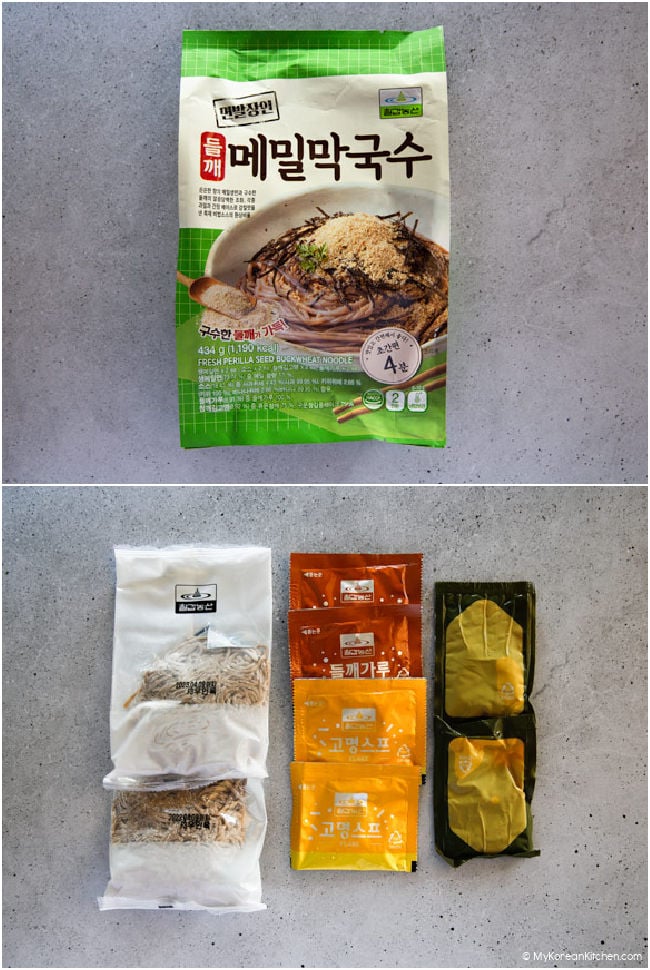
You can even buy a pre-packaged version of perilla oil noodles as shown in the picture below. The package reads “Memil Makguksu (메밀 막국수)”. Although I found this to be less delicious than homemade ones.
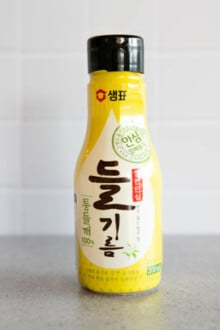
What is Perilla Oil
Perilla oil is a type of vegetable oil extracted from the toasted seeds of a plant called perilla. Toasted perilla oil is nutty and earthy in smell and flavor, light brown in color; similar to toasted sesame oil. However the flavor profile is quite different to that. It is often used in Korean sautéed vegetable dishes.
If you want to read more about perilla oil, you might find this post helpful – Perilla Oil.
Substitution Tips
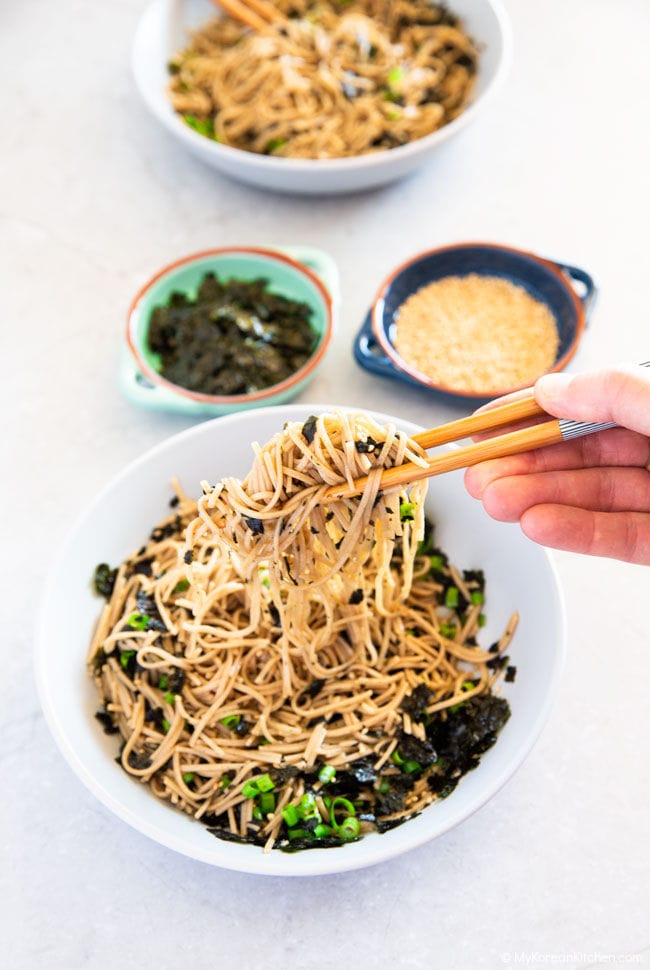
- Soba Noodles – Soba noodles or buckwheat noodles will work best for this recipe, but if you can’t find them, you could substitute with somen noodles (somyeon 소면). Because they’re much thinner than soba noodles, the chewing texture may not be quite right, but they absorb flavors well.
- Perilla Oil – If you cannot find perilla oil, you could use sesame oil. While the taste profile is quite different, the nutty aroma and taste of sesame oil is more similar to perilla oil than other types of oil. If you’re using sesame oil, make sure to use toasted sesame oil, rather than un-toasted sesame oil, as it will give a nuttier flavor. Also, use less of it than the recipe calls for. For example, if the recipe says 2 Tbsp perilla oil, use 1 to 1.5 Tbsp sesame oil.
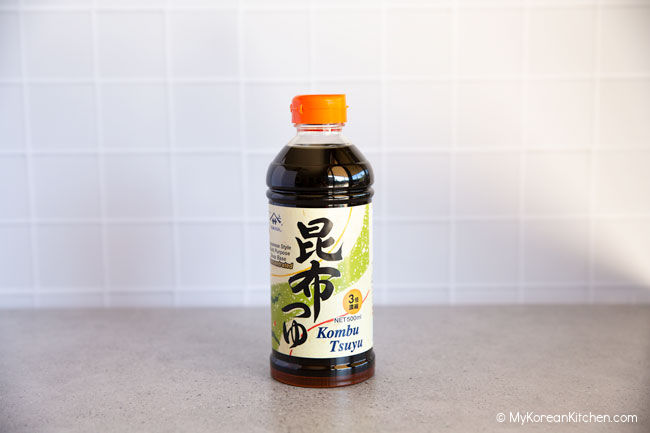
- Tsuyu – This is a multipurpose Japanese condiment that can be used as a dipping sauce or soup base for Japanese noodle soup. It is most commonly used as an accompaniment to soba and udon noodle dishes as well as tempura dishes. This condiment is also used in some Korean or Korean-Japanese fusion dishes as well. You could substitute tsuyu with homemade dried anchovy and kelp stock (Korean soup stock). Though, tsuyu tastes a bit stronger than Korean soup stock, so you will want to dilute it with some water to balance out the flavor.
How to Serve
As this dish is a cold noodle dish, you serve the noodles cold. You also won’t need to serve any side dishes with this soba noodles. However, if you want you can prepare extra toppings (as mentioned in the recipe below) to supplement the meal. I don’t normally bother with any extras as the whole point of this soba noodle is simplicity.
If you want to indulge more in Korean flavor and texture, you could serve with pickled radish or cucumber pickles.
You could serve with white kimchi too, but I wouldn’t recommend regular kimchi as it can overpower the taste.
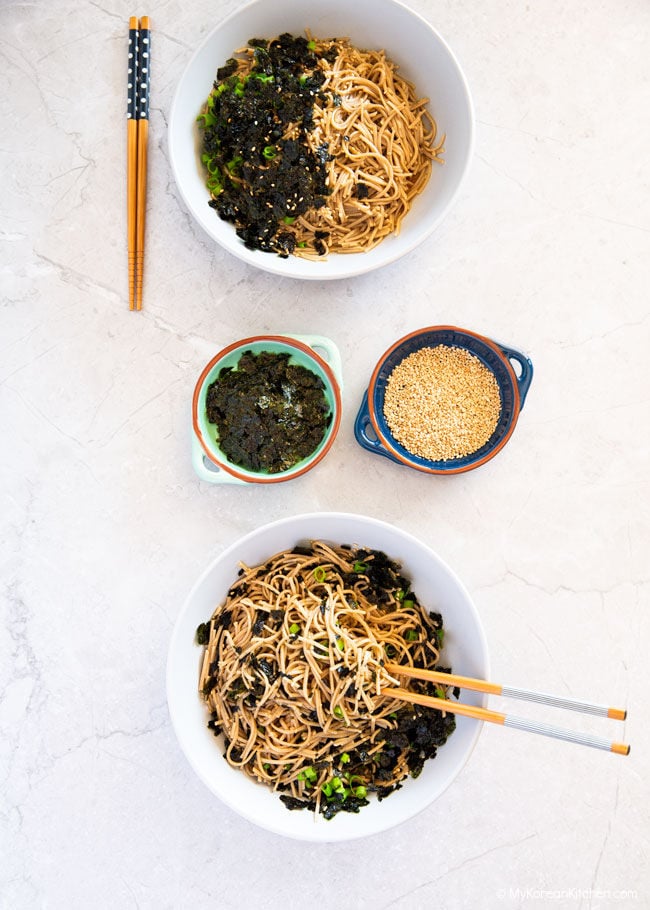
Other Korean Summer Noodle Recipes
I love noodles, especially in Summer. These noodles are so delicious and addictive, you must try them! You won’t be disappointed.
- Mul Naengmyeon (Korean Cold Noodle Soup)
- Bibim Naengmyeon (Korean Spicy Cold Noodles)
- Bibim Guksu (Korean Cold Noodle Salad)
- Jaengban Guksu (Spicy Noodle Salad Platter)
- Kimchi Bibim Guksu (Cold Kimchi Noodles)
Ingredients for Cold Soba Noodles, Serves 2
Main
- 180 g / 6.3 ounces dry buckwheat noodles (soba noodles)
- 10 g / 0.4 ounces seasoned dried seaweed (gim, nori), finely crushed
- 10 g / 0.4 ounces green onions, thinly sliced
- 1-2 Tbsp toasted sesame seeds
Cold Soba Sauce
- 1.5 Tbsp soy sauce, regular (I used kikkoman soy sauce)
- 2 Tbsp tsuyu (Japanese soup base) * see below for substitution
- 1 Tbsp water
- 2 Tbsp perilla oil or 1 to 1.5 Tbsp sesame oil (toasted)
- 2 tsp sugar, raw or light brown
- 2 tsp toasted sesame seeds
Optional Toppings
- thin sliced cucumber
- radish sprouts
- boiled egg
- thin sliced cooked zucchini
- thin sliced perilla leaves
- poached shredded chicken breast
- canned tuna
* If you don’t have tsuyu, substitute it with 3 tbsp of homemade dried anchovy and kelp stock (Korean soup stock) and omit the water from the soba sauce ingredients.
** If you want to learn more about essential Korean ingredients, check my Korean ingredients list.
How To Make Cold Soba Noodles
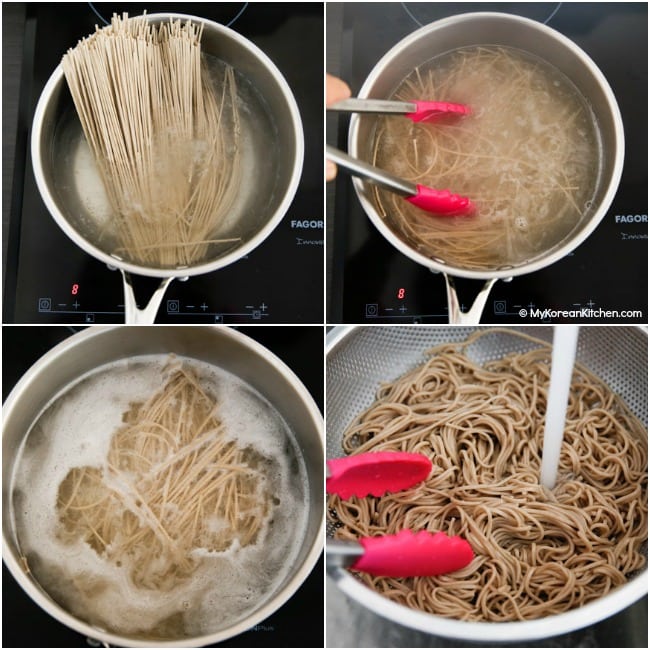
1. Boil the soba noodles in rolling boiling water just until tender following the package instructions. Drain and rinse in cold water to cool down. Transfer the noodles into a mixing bowl.
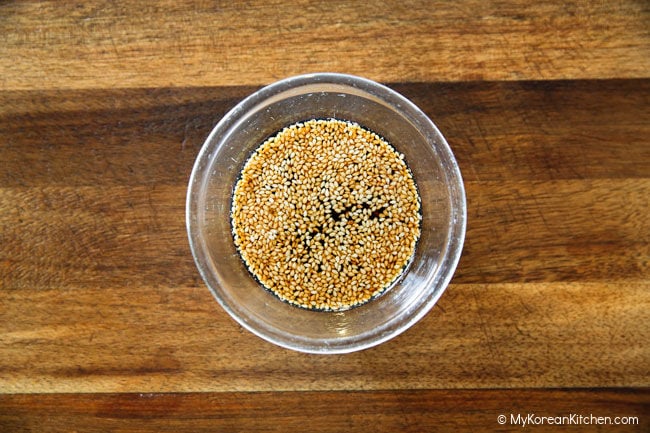
2. While the noodles are cooking, combine the sauce ingredients in a small bowl and mix them well. Set aside.
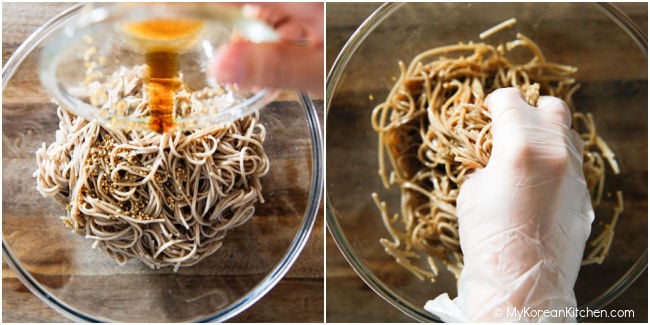
3. Combine the noodles with the sauce in a mixing bowl.
4. Transfer the noodles into a bowl. Garnish with the seaweed, green onions, and sesame seeds by sprinkling them around the bowl. Top up with your choice of other optional topping ingredients listed above. Serve.
Love Korean food? Browse lots more Korean recipes from my easy Korean recipe collections. And subscribe to my newsletter for all of the latest updates including new recipes, what MKK communities are cooking and K-Dramas!
Cold Soba Noodles (Memil Guksu)
Ingredients
MAIN
- 180 g buckwheat noodles (6.3 ounces), (soba noodles)
- 10 g seasoned dried seaweed (0.4 ounces), finely crushed
- 10 g green onions (0.4 ounces), thinly sliced
- 1 - 2 Tbsp toasted sesame seeds
COLD SOBA SAUCE
- 1.5 Tbsp soy sauce , regular (I used kikkoman soy sauce)
- 1/2 Tbsp tsuyu sauce (Japanese soup base) * see below for substitution
- 1 Tbsp water
- 2 Tbsp perilla oil or 1 to 1.5 Tbsp sesame oil (toasted)
- 2 tsp sugar , raw or light brown
- 2 tsp toasted sesame seeds
OPTIONAL TOPPINGS
- cucumber , thin sliced
- radish sprouts
- egg , boiled
- zucchini , thin sliced & cooked
- perilla leaves , thin sliced
- chicken breast , poached & shredded
- canned tuna , drained
Instructions
- Boil the soba noodles in rolling boiling water just until tender following the package instructions. Drain and rinse in cold water to cool down. Transfer the noodles into a mixing bowl.
- While the noodles are cooking, combine the sauce ingredients in a small bowl and mix them well. Set aside.
- Combine the noodles with the sauce in a mixing bowl.
- Transfer the noodles into a bowl. Garnish with the seaweed, green onions, and sesame seeds by sprinkling them around the bowl. Top up with your choice of other optional topping ingredients listed above. Serve.
Notes
Nutrition Info (per serving)
The nutrition information shown is an estimate provided by an online nutrition calculator. It should not be considered a substitute for a professional nutritionist’s advice.
Save This Recipe For Later
You can unsubscribe at any time