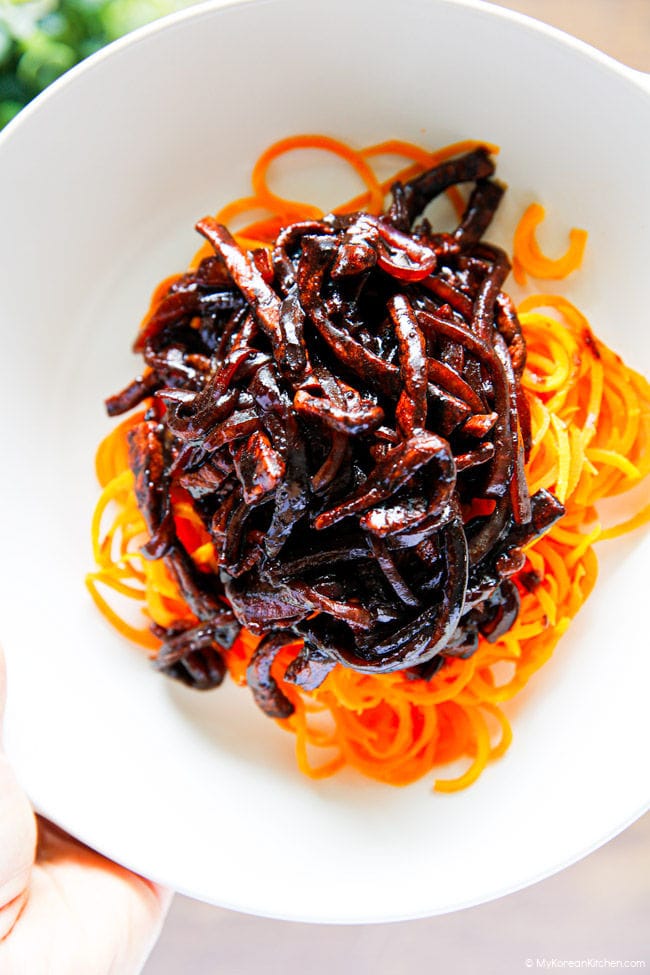
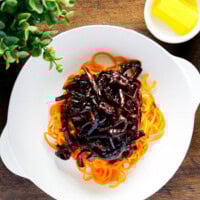
Carrot jajangmyeon is a lighter, vegetable-forward take on classic Korean black bean noodles, made by pairing rich jajang sauce with gently steamed spiralized carrots instead of wheat noodles. It delivers the deep, savory flavor of jajangmyeon while feeling lighter and more vegetable focused, without losing that familiar comfort.
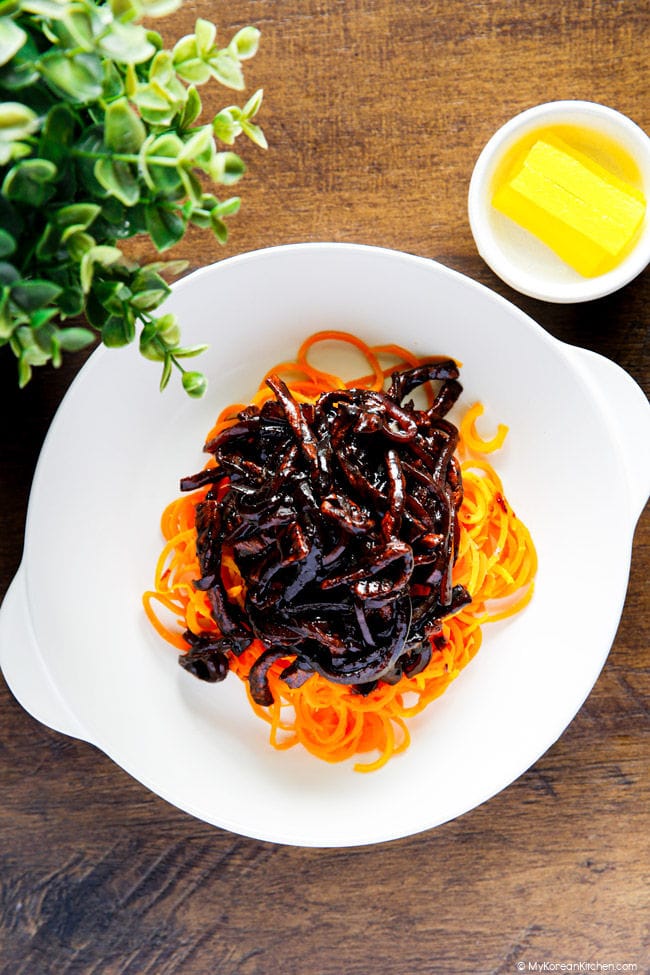
I first came across this carrot jajangmyeon (당근 자장면) idea while watching Culinary Class War, season 2, episode 12, during the carrot challenge, and it immediately caught my attention. Using carrots instead of noodles felt unexpected, but after making it at home, the dish still tasted very much like jajangmyeon. This recipe is my home kitchen take on that idea, using a slightly adjusted jajang sauce and pairing it with carrots, just the way Chef Hudeokjuk prepared it.
Why This Recipe Works
- Uses a lighter, adjusted jajang sauce that pairs better with carrots
- Carrots hold the sauce well without becoming soggy
- Carrot noodles offer a lighter alternative to traditional wheat noodles
Ingredients
- 2 to 3 medium carrots, spiralized (net 450 g / 16 oz)
- 150 g (5.2 oz) pork tenderloin medallions, thinly sliced
- 2 tsp mirin (sweet rice wine)
- Ground black pepper, to taste
- 2 Tbsp chunjang (Korean black bean paste)
- 1 tsp white miso paste (Shiro miso)
- 1 Tbsp lard or neutral cooking oil
- 1/2 medium red onion (120 g / 4.2 oz), sliced into half-moons
How to Make Carrot Jajangmyeon
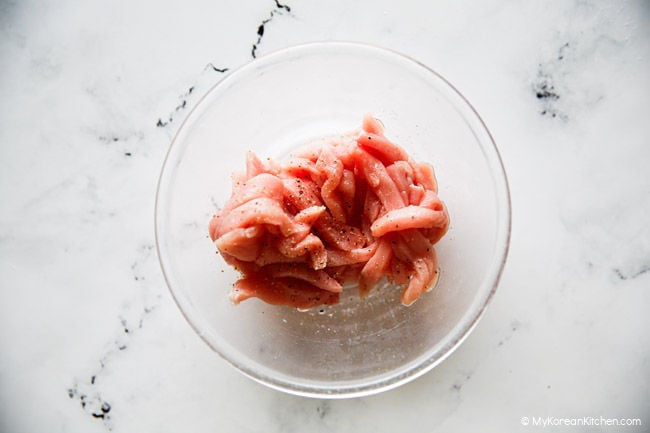
1. Marinate the pork
In a bowl, combine the pork, mirin, and a light sprinkle of black pepper. Mix well and set aside while you prepare the other ingredients.
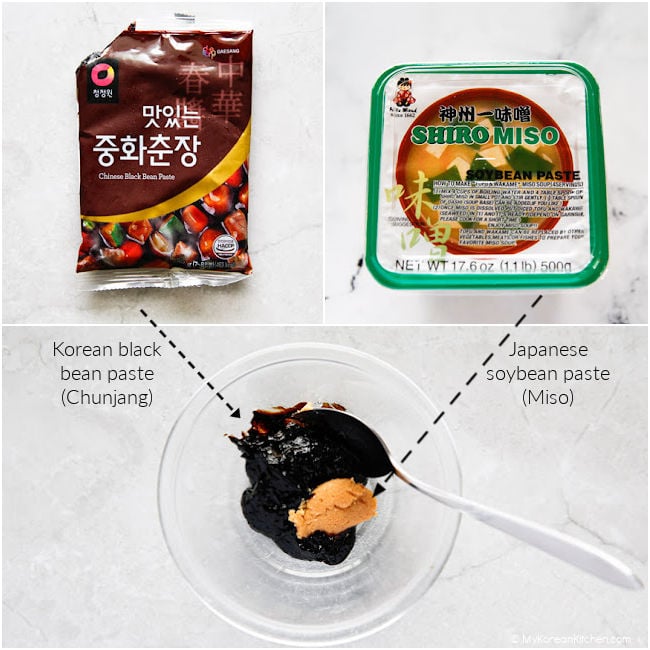
2. Prepare the sauce paste
In a small bowl, mix the chunjang and miso paste until smooth. Set aside.
3. Fry the sauce base
Heat the lard or oil in a wok or large pan over low heat. Add the chunjang–miso mixture and gently fry it for about 20 to 30 seconds, stirring constantly so it doesn’t burn. The paste should become glossy and aromatic.

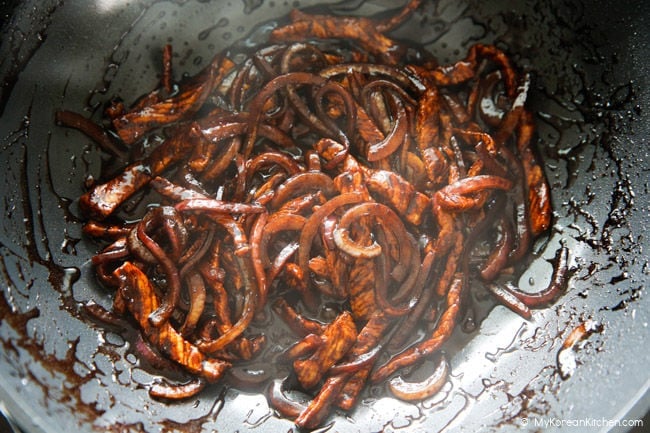
4. Add the pork and onion
Increase the heat to medium. Add the marinated pork and stir-fry until mostly cooked through. Add the red onion and continue stir-frying until softened and fragrant.
5. Steam the carrots
While the sauce is cooking, place the spiralized carrots in a steamer basket and steam over medium heat for about 5 minutes, until tender but still slightly crisp.

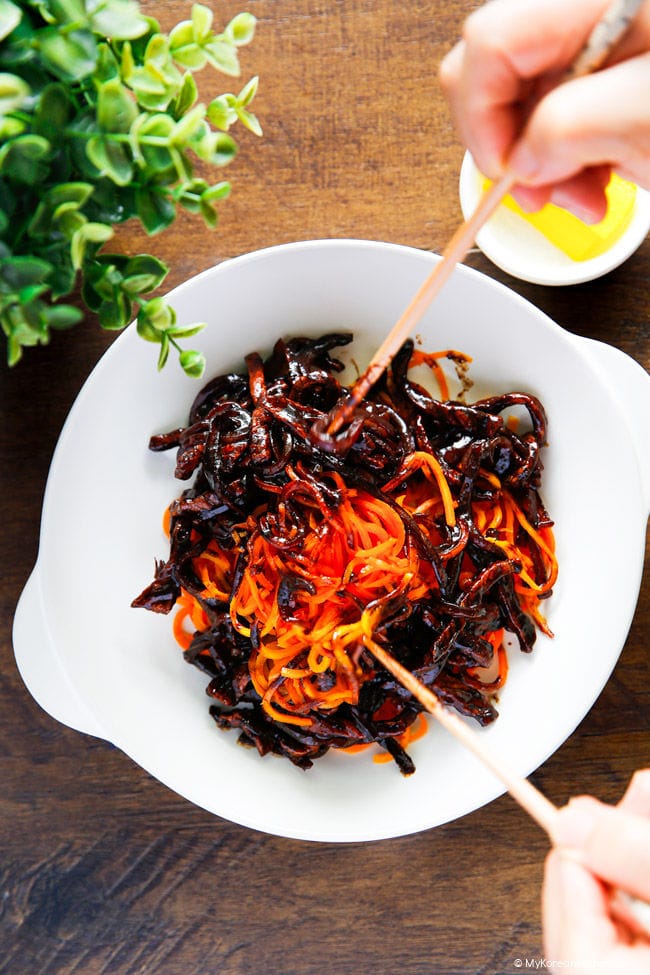
6. Serve
Divide the steamed carrots between serving plates and spoon the hot jajang sauce generously over the top. Serve immediately.
Cooking Tips for Carrot Jajangmyeon
About the jajang sauce
Frying the chunjang first helps mellow its bitterness and develop a smoother, more rounded flavor before adding the pork and onion. The sauce for this dish is intentionally lighter and gently coats the carrots, rather than being thick and heavy like classic jajangmyeon.
About spiralizing the carrots
When spiralizing carrots, the thinner end pieces tend to break easily. This is normal. The thicker end near the stem produces longer, sturdier strands that feel more noodle-like. I used this spiralizer for this recipe because it makes long, even strands and handles firm vegetables like carrots very well.

If you don’t want to invest in a spiralizer, julienned carrots work too, but they won’t give the same noodle-like eating experience since the strands are more separated.
Serving and reheating
Serve the dish immediately for the best texture, as the carrots will continue to soften as they sit. This dish is best enjoyed fresh, but it can be reheated briefly. When reheating, warm it gently for about 1 minute. Longer or repeated reheating can cause the carrots to soften and lose their noodle-like texture.

Jajangmyeon vs. Carrot Jajangmyeon
Classic jajangmyeon and carrot jajangmyeon are built around the same rich, savory black bean sauce that makes the dish so comforting and familiar. The difference comes down to what the sauce is served with. One uses wheat noodles, while the other swaps them for spiralized carrots, which changes the texture and overall feel of the dish.
Carrot jajangmyeon isn’t meant to replace the classic version. Think of it as an alternative way to enjoy jajangmyeon flavors, especially when you’re in the mood for something lighter but still satisfying.
Watch How I Make Carrot Jajangmyeon at Home
Carrot Jajangmyeon (Korean Black Bean Sauce with Carrot Noodles)
Ingredients
- 3 carrots (net 450 g / 16 oz), spiralized
- 150 g pork tenderloin (5.2 oz), thinly sliced
- 2 tsp mirin (sweet rice wine)
- ground black pepper , to taste
- 2 Tbsp chunjang (Korean black bean paste)
- 1 tsp white miso paste (Shiro miso)
- 1 Tbsp lard (preferred) or neutral cooking oil
- 120 g red onion (4.2 oz), sliced into half-moons
Equipment
Instructions
- Marinate the pork. In a bowl, combine the pork, mirin, and a light sprinkle of black pepper. Mix well and set aside while you prepare the other ingredients.
- Prepare the sauce paste. In a small bowl, mix the chunjang and miso paste until smooth. Set aside.
- Fry the sauce base. Heat the lard or oil in a wok or large pan over low heat. Add the chunjang–miso mixture and gently fry it for about 20 to 30 seconds, stirring constantly so it doesn’t burn. The paste should become glossy and aromatic.
- Add the pork and onion. Increase the heat to medium. Add the marinated pork and stir-fry until mostly cooked through. Add the red onion and continue stir-frying until softened and fragrant.
- Steam the carrots. While the sauce is cooking, place the spiralized carrots in a steamer basket and steam over medium heat for about 5 minutes, until tender but still slightly crisp.
- Serve. Divide the steamed carrots between serving plates and spoon the hot jajang sauce generously over the top. Serve immediately.
Nutrition Info (per serving)
The nutrition information shown is an estimate provided by an online nutrition calculator. It should not be considered a substitute for a professional nutritionist’s advice.