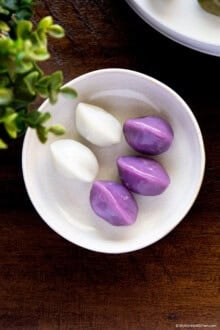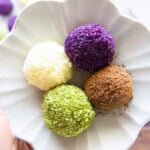
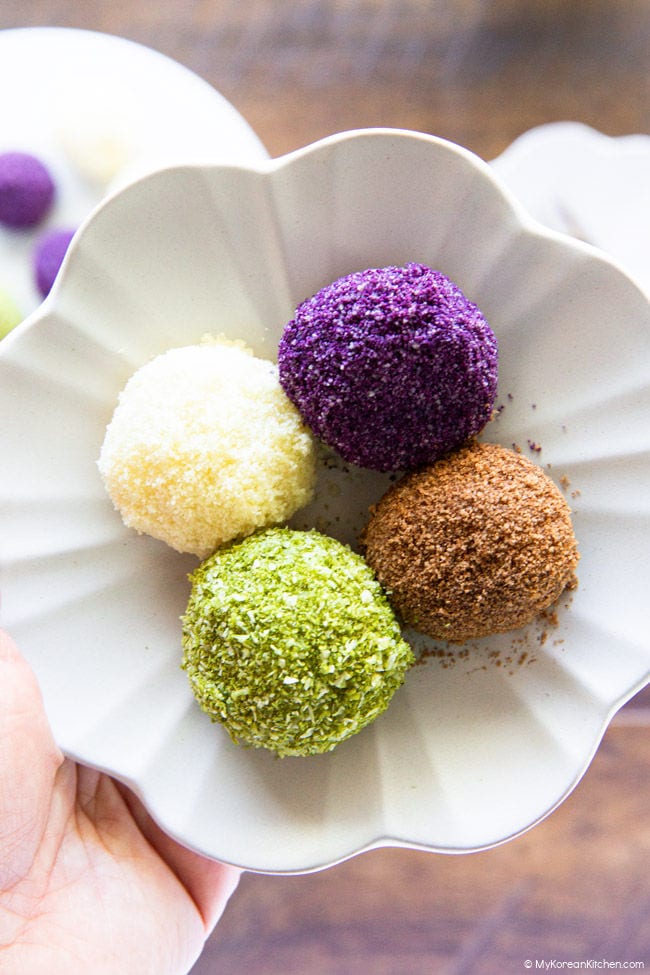
If you love soft, chewy Korean rice cakes, this gyeongdan recipe is a must try! These sweet rice balls are made from glutinous rice flour and rolled in beautiful coatings like Castella crumbs, coconut, or purple sweet potato powder, making them just as pretty as they are comforting. Festive and fun to make, gyeongdan are a classic Korean tteok dessert perfect for holidays, parties, or any celebration.
Save This Recipe For Later
You can unsubscribe at any time
What is Gyeongdan
Gyeongdan (경단) are soft, chewy Korean sweet rice balls made from glutinous rice flour dough, and these days they’re often filled with sweet red bean paste. They’re rolled in colorful coatings like castella or sponge cake crumbs, coconut flakes, or roasted soybean powder, which makes them just as pretty as they are delicious. You’ll often see them at tteok shops or in the rice cake section of Korean grocery stores. They’re traditionally enjoyed during special celebrations, and they’re one of those treats that feel comforting and special from the very first bite.
My family often made gyeongdan without any filling, and it’s the version I grew up eating. Without the sweet red bean paste inside, the flavor really depends on the coating, which makes each type stand out even more. Though as an adult, I much prefer the version with sweet red bean filling inside. That extra sweet flavor really adds a lovely depth and makes each bite feel even more special.
Why This Recipe
- You’ll learn the real Korean technique in a clear, supportive way, so your gyeongdan turn out soft, chewy, and beautiful every time.
- You also get tested storage guidance that actually works. I explain how long they keep, what cool room temperature means, and why the fridge is never a friend to glutinous rice.
- And for a little fun, I share modern, colorful coating ideas like matcha, freeze-dried raspberry, and Castella crumbs, so you can make them extra special for holidays and celebrations.
Ingredients
Main Dough
- 4 cups (500 g / 17.6 oz) glutinous rice flour
- 1/4 cup (54 g / 1.9 oz) granulated sugar
- 1 1/2 tsp (9 g / 0.32 oz) fine sea salt
- Up to 2 cups (500 ml / 16 fl oz) hot water, (you may have 1/4 – 1/2 cup left over, depending on the flour)
Filling
- 380g / 13.4 oz Sweet red bean paste (recipe) – prepare this ahead of time
Coating Options
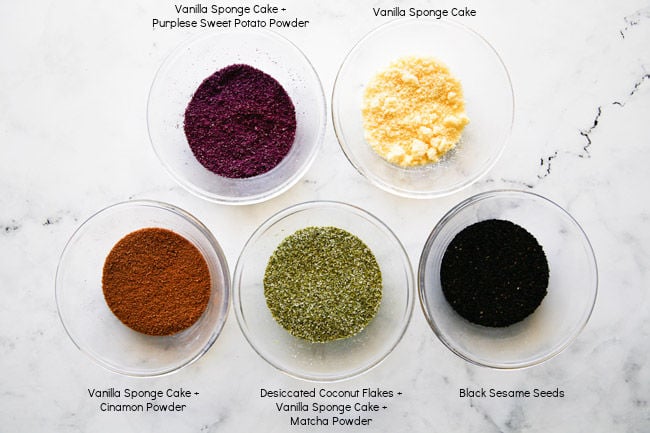
Choose your favorite or mix and match. Each option coats about 8–10 rice balls.
Castella + Purple Sweet Potato
- 1/2 cup finely sifted Castella or vanilla sponge cake crumbs
- 1 Tbsp purple sweet potato powder
Castella (Classic)
- 1/2 cup finely sifted Castella or vanilla sponge cake crumbs
Castella + Cinnamon
- 1/2 cup finely sifted Castella or vanilla sponge cake crumbs
- 1/2 Tbsp cinnamon powder
Coconut Matcha
- 1/2 cup desiccated coconut flakes
- 1/4 cup finely sifted Castella or vanilla sponge cake crumbs
- 1/2 Tbsp matcha powder
Black Sesame
- 1/4 cup black sesame seeds
* Other options not used in this recipe but still popular are mugwort powder for a soft green color and roasted soybean powder for a warm beige finish. For a Christmas theme, you can use freeze dried raspberry powder to give the rice cakes a beautiful red hue, and either matcha or mugwort powder for green.
** 1 Tbsp = 15 ml, 1 cup = 250 ml
How To Make Gyeongdan (Korean Sweet Rice Balls)
1. Make the Dough
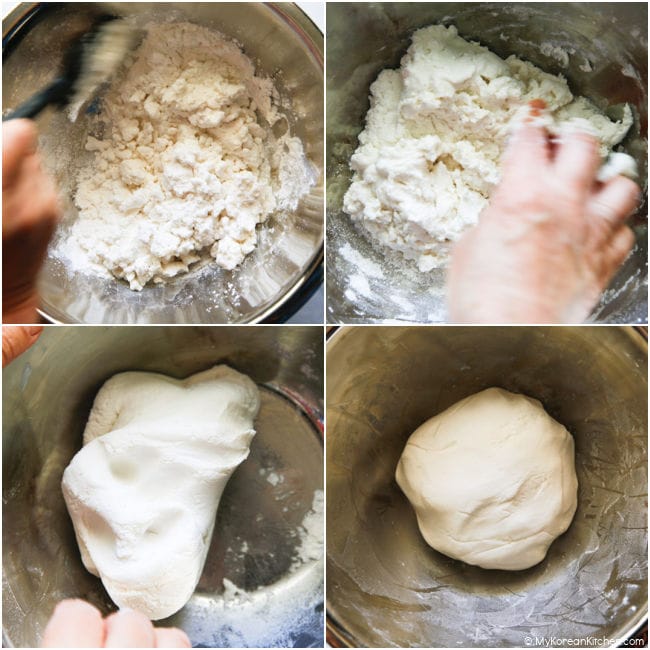
In a medium-sized bowl, combine the glutinous rice flour, white sugar, and salt. Mix well. Gradually add hot water while stirring to form a dough. (Tip: Don’t add all the water at once. Add it little by little, mixing in between to check the consistency. The dough shouldn’t be overly wet or fully soaked – aim for a slightly dry texture where you might think, “Does it need just a bit more water?” That’s the perfect balance. As you continue mixing, the dough will naturally come together.)
2. Shape the Balls
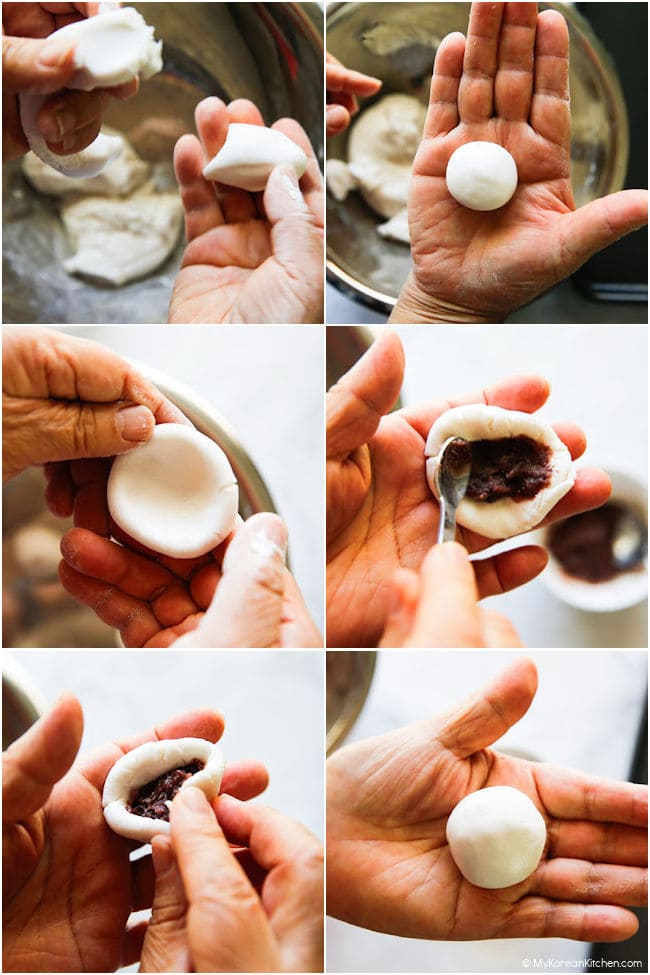
Take a small piece of dough and roll it into a ball. Keep the remaining dough covered with a damp towel or plastic wrap so it doesn’t dry out while you work. If you’d like to add a sweet red bean filling, gently press the center of the dough ball to create a small indentation. Add about 10 g (0.35 oz) of filling, then carefully seal and roll it back into a smooth ball. Try to keep the sizes consistent so they cook evenly. Repeat with the remaining dough – you should end up with about 38 to 40 rice cake balls if each piece is around 22 g (0.78 oz) before adding the filling.
3. Cook the Rice Balls
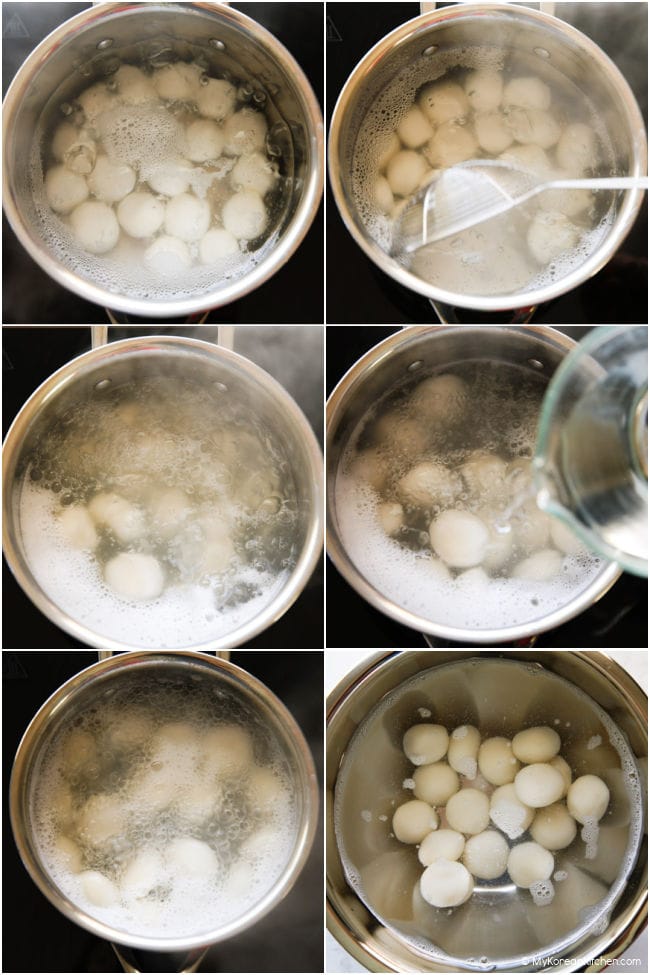
Bring a pot of water to a boil. Once boiling, gently drop in the dough balls. When they float to the surface, add a small splash of cold water to lower the temperature slightly. After they float up again, remove them with a slotted spoon and transfer them to a bowl of cold water to cool briefly. Don’t leave them in the cold water for too long – if they become too cold, the coating won’t stick well and may peel off.
4. Coat the Gyeongdan
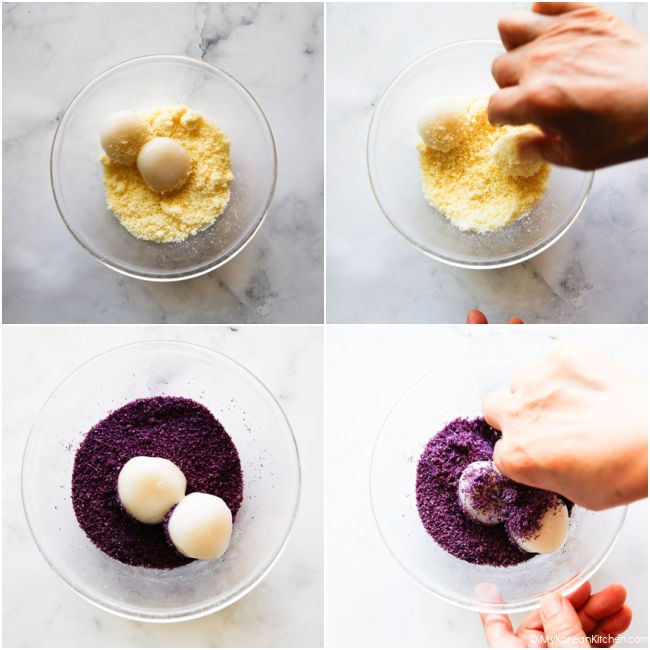
Roll the rice balls in a bowl of your chosen coating until evenly covered. (Tip: Castella crumbs give a soft, sweet finish and beautiful texture, and you can add a little purple sweet potato powder for a lovely pop of color.)
5. Serve
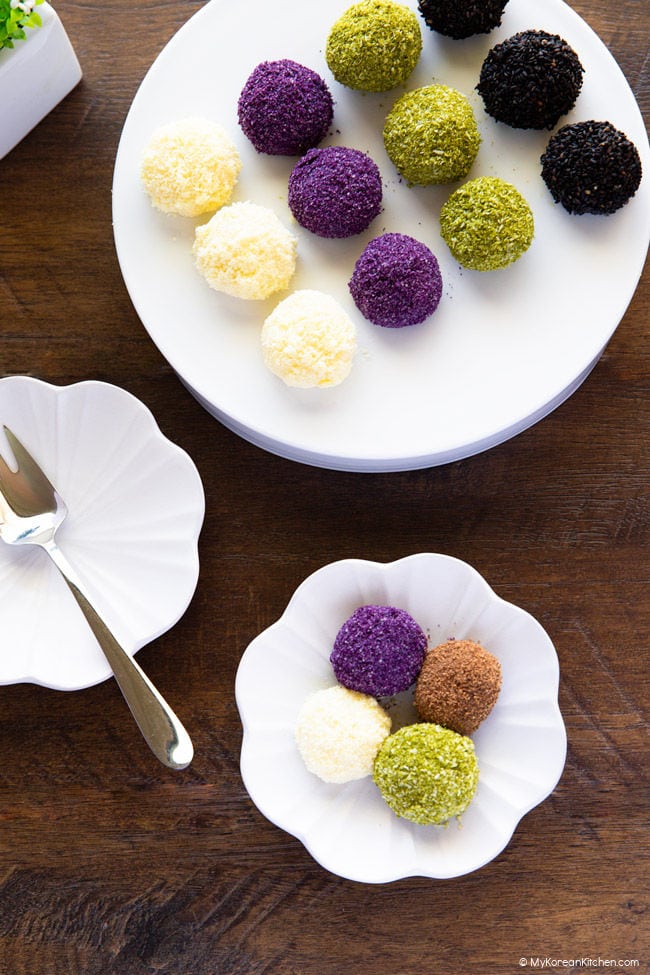
Let the rice balls cool completely, then serve as a snack or dessert. The flavor is best once they’ve cooled, and for the freshest taste and texture, enjoy them on the same day they’re made.
Cook’s Notes
Flour & Water
Use glutinous rice flour (chapssalgaru, 찹쌀가루) only, as it’s what gives gyeongdan their soft, chewy texture. Regular rice flour won’t behave the same way. Add the hot water gradually, since each flour brand absorbs moisture a little differently. The final dough should feel warm, smooth, and pleasantly pliable. I like to give precise measurements whenever I can, but this is one of those recipes where you also need to trust the texture and feel of the dough as you bring it together.
Cooking
These rice cakes cook very quickly. Once they float, they only need about 1 more minute. Overcooking can make them too soft or cause them to break apart. A quick rinse in cold water helps stop the cooking and sets the texture, but don’t leave them in the cold water for too long. If they cool completely, the coating won’t stick as well.
Coating
Coat the rice balls while they’re still slightly warm and just dry enough for the coating to cling. After the brief cold water rinse, the surface should feel lightly tacky rather than wet. If they’re too wet, the coating won’t stick; if they cool down too much or dry out, the coating can slip off and the texture becomes dull. A quick drain and a little warmth on the surface make all the difference.
How to Store
Gyeongdan taste best on the day you make them. Let them cool completely for the best flavor, and enjoy them while they’re still fresh for the softest, chewiest texture. Try not to refrigerate them, as glutinous rice firms up once it gets cold.
You can keep them at cool room temperature (around 20–22°C / 68–72°F) for 1 to 2 days. If you’re not planning to eat them within this time, or if your kitchen is warmer or more humid than cool room temperature, store them in an airtight container and freeze. To serve, thaw at room temperature, or warm them for about 10 to 15 seconds in the microwave to soften.
More Rice Cake Recipes
If you love soft, chewy Korean treats, here are more rice cake recipes you might enjoy. Each one has its own unique texture and flavor, and they’re all comforting in that classic tteok way.
- Red Bean Mochi (Chapssaltteok) – Soft, chewy rice cakes filled with sweet red bean paste. They’re similar to gyeongdan but larger in size, with a slightly different, more pillowy texture.
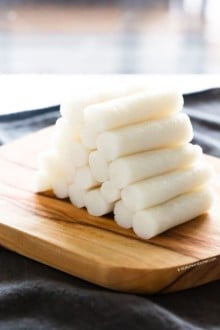
- Spicy Korean Rice Cakes (Tteokbokki) – A classic Korean street food made with chewy rice cakes simmered in a spicy-sweet gochujang sauce. It’s a savory contrast to dessert tteok, but just as comforting and satisfying.
- Songpyeon – Half-moon shaped Korean rice cakes traditionally enjoyed during Chuseok. Filled with sweet sesame, red bean, or chestnut, they have a soft, gently chewy texture and a festive feel that many people grew up enjoying.
Watch How My Mom Makes Gyeongdan
Gyeongdan (Korean Sweet Rice Balls)
Ingredients
MAIN DOUGH
- 4 cups glutinous rice flour (500 g / 17.6 oz)
- 1/4 cup granulated sugar (54 g / 1.9 oz)
- 1 1/2 tsp fine sea salt (9 g / 0.32 oz)
- Up to 2 cups hot water (500 ml / 16 fl oz), (you may have 1/4 – 1/2 cup left over, depending on the flour)
FILLING
- 380 g sweet red bean paste (13.4 oz)
COATING OPTIONS - Choose your favorite or mix and match. Each option coats about 8–10 rice balls.
Castella + Purple Sweet Potato
- 1/2 cup finely sifted Castella or vanilla sponge cake crumbs
- 1 Tbsp purple sweet potato powder
Castella (Classic)
- 1/2 cup finely sifted Castella or vanilla sponge cake crumbs
Castella + Cinnamon
- 1/2 cup finely sifted Castella or vanilla sponge cake crumbs
- 1/2 Tbsp cinnamon powder
Coconut Matcha
- 1/2 cup desiccated coconut flakes
- 1/4 cup finely sifted Castella or vanilla sponge cake crumbs
- 1/2 Tbsp matcha powder
Black Sesame
- 1/4 cup black sesame seeds
Instructions
- Make the DoughIn a medium-sized bowl, combine the glutinous rice flour, white sugar, and salt. Mix well. Gradually add hot water while stirring to form a dough. (Tip: Don’t add all the water at once. Add it little by little, mixing in between to check the consistency. The dough shouldn’t be overly wet or fully soaked – aim for a slightly dry texture where you might think, “Does it need just a bit more water?” That’s the perfect balance. As you continue mixing, the dough will naturally come together.)
- Shape the BallsTake a small piece of dough and roll it into a ball. Keep the remaining dough covered with a damp towel or plastic wrap so it doesn’t dry out while you work. If you’d like to add a sweet red bean filling, gently press the center of the dough ball to create a small indentation. Add about 10 g (0.35 oz) of filling, then carefully seal and roll it back into a smooth ball. Try to keep the sizes consistent so they cook evenly. Repeat with the remaining dough — you should end up with about 38 to 40 rice cake balls if each piece is around 22 g (0.78 oz) before adding the filling.
- Cook the Rice BallsBring a pot of water to a boil. Once boiling, gently drop in the dough balls. When they float to the surface, add a small splash of cold water to lower the temperature slightly. After they float up again, remove them with a slotted spoon and transfer them to a bowl of cold water to cool briefly. Don’t leave them in the cold water for too long – if they become too cold, the coating won’t stick well and may peel off.
- Coat the GyeongdanRoll the rice balls in a bowl of your chosen coating until evenly covered. (Tip: Castella crumbs give a soft, sweet finish and beautiful texture, and you can add a little purple sweet potato powder for a lovely pop of color.)
- ServeLet the rice balls cool completely, then serve as a snack or dessert. The flavor is best once they’ve cooled, and for the freshest taste and texture, enjoy them on the same day they’re made.
Notes
- Other coating options not used in this recipe but still popular are mugwort powder for a soft green color and roasted soybean powder for a warm beige finish. For a Christmas theme, you can use freeze dried raspberry powder to give the rice cakes a beautiful red hue, and either matcha or mugwort powder for green.
- 1 Tbsp = 15 ml, 1 cup = 250 ml
- Cook time does not include making the sweet red bean paste (prepare this ahead of time).
Cook’s Notes
Flour & WaterUse glutinous rice flour (chapssalgaru) only, as it’s what gives gyeongdan their soft, chewy texture. Regular rice flour won’t behave the same way. Add the hot water gradually, since each flour brand absorbs moisture a little differently. The final dough should feel warm, smooth, and pleasantly pliable. I like to give precise measurements whenever I can, but this is one of those recipes where you also need to trust the texture and feel of the dough as you bring it together. Cooking
These rice cakes cook very quickly. Once they float, they only need about 1 more minute. Overcooking can make them too soft or cause them to break apart. A quick rinse in cold water helps stop the cooking and sets the texture, but don’t leave them in the cold water for too long. If they cool completely, the coating won’t stick as well. Coating
Coat the rice balls while they’re still slightly warm and just dry enough for the coating to cling. After the brief cold water rinse, the surface should feel lightly tacky rather than wet. If they’re too wet, the coating won’t stick; if they cool down too much or dry out, the coating can slip off and the texture becomes dull. A quick drain and a little warmth on the surface make all the difference. Storage Gyeongdan taste best on the day you make them. Let them cool completely for the best flavor, and enjoy them while they’re still fresh for the softest, chewiest texture. Try not to refrigerate them, as glutinous rice firms up once it gets cold. You can keep them at cool room temperature (around 20–22°C / 68–72°F) for 1 to 2 days. If you’re not planning to eat them within this time, or if your kitchen is warmer or more humid than cool room temperature, store them in an airtight container and freeze. To serve, thaw at room temperature, or warm them for about 10 to 15 seconds in the microwave to soften.
The nutrition information shown is an estimate provided by an online nutrition calculator. It should not be considered a substitute for a professional nutritionist’s advice.
Save This Recipe For Later
You can unsubscribe at any time