Easy kimbap recipe!
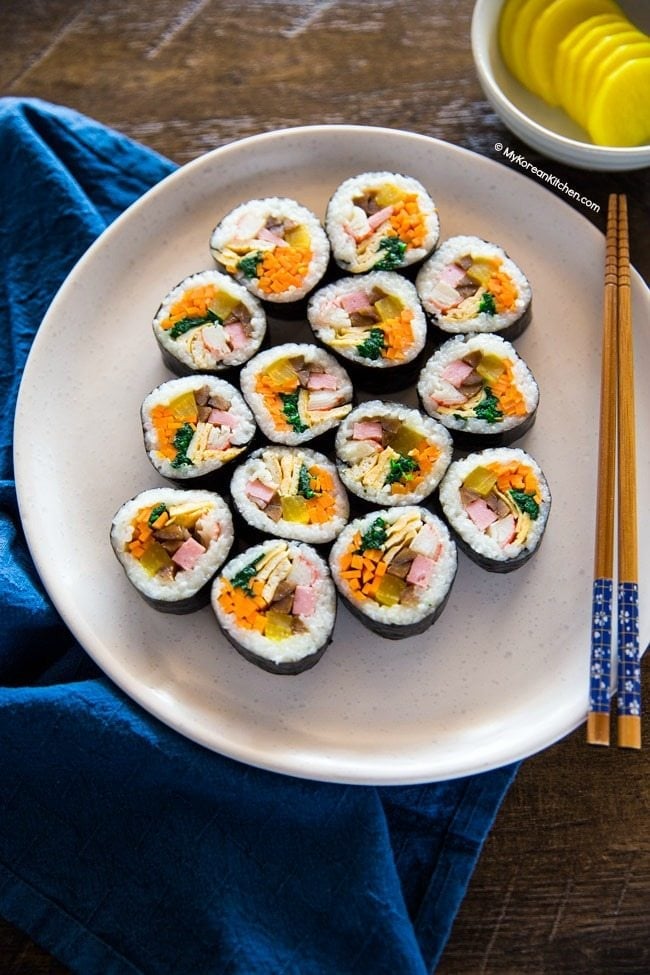
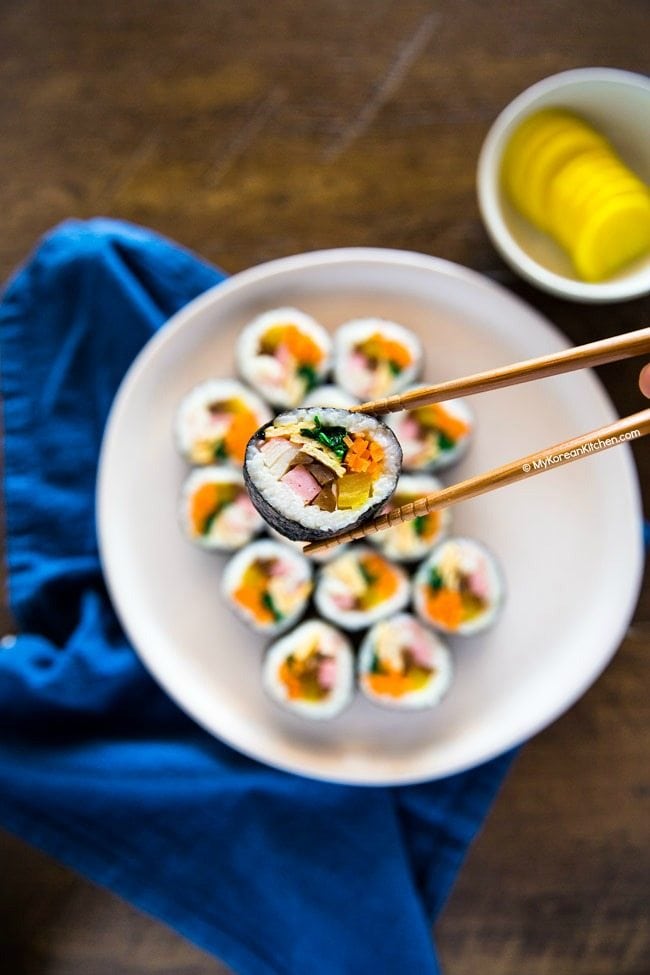
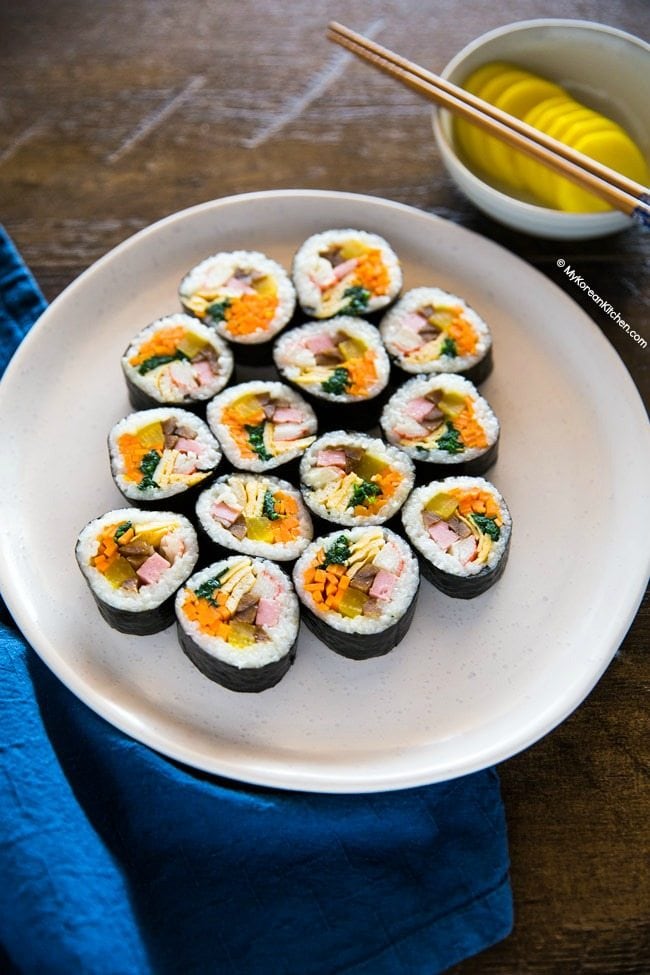
Today I’m sharing an easy version of Yachae Kimbap (야채 김밥), or vegetable kimbap. It’s one of the most basic and familiar types of Korean kimbap, made with seasoned rice, seaweed, vegetables, and a few classic kimbap fillings.
Despite the name, yachae kimbap isn’t necessarily vegetarian. It often includes Korean ham and imitation crab alongside the vegetables. If you’d like to make vegetable kimbap without meat or seafood, simply leave those out and add something like seasoned tofu instead.
Save This Recipe For Later
You can unsubscribe at any time
This homemade kimbap is a simple, classic version to start with, and it’s easy to adapt with different fillings once you’re comfortable making it. The rice is seasoned with sesame oil and salt rather than sushi vinegar, giving kimbap its own distinctive, gently nutty flavor.
That familiar sesame aroma is also part of what makes kimbap so nostalgic for me. Kimbap is a classic picnic food in Korea, and as a child, I always looked forward to school picnic days because my mom would get up early to make it for me. I still remember our kitchen smelling of toasted sesame oil all morning.
I really hope you enjoy making this easy kimbap recipe at home and the lovely sesame aroma that comes with it.
Ingredients for Easy Kimbap (Makes 4 rolls)
- 4 dried seaweed sheets (gim / sushi nori)
- 120g / 4.2 ounces spinach (regular or baby spinach)
- 2 eggs, beaten
- 1/2 carrot (120g / 4.2 ounces), julienned
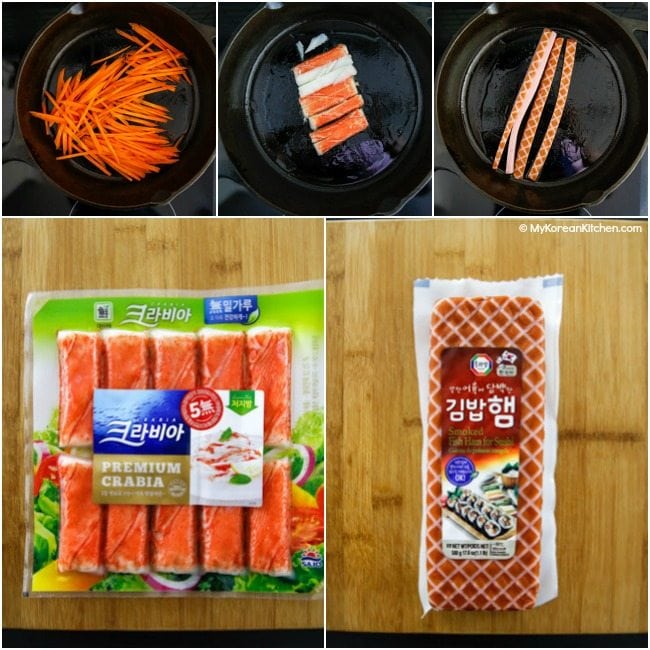
- 2 to 4 imitation crab sticks (depending on the length), cut in half length ways
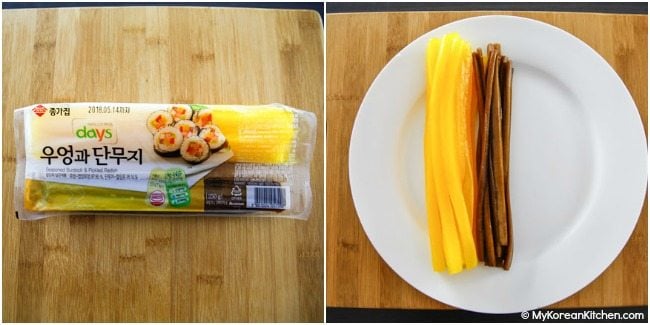
- 4 sticks of BBQ Kimbap ham, cut into long strips if you didn’t buy the pre-cut version (available at a Korean grocery store)
- 4 yellow radish pickle (danmuji), cut into long strips if you didn’t buy the pre-cut version (available at a Korean / Japanese grocery store)
- (optional) 12 strips seasoned edible burdock root (available at a Korean grocery store. You can buy the one that’s packaged together with yellow radish pickle like this picture. It’s also sold individually.)
- 2 1/2 cups cooked short grain rice
- 2 Tbsp sesame oil, divided
- 3/8 tsp fine sea salt (or more to taste), divided
*1 Tbsp = 15 ml, 1 Cup = 250 ml
Alternative Ingredients / Substitution
- Spinach -> cucumber
- Korean kimbap ham -> sliced double smoked ham (no further cooking needed)
- Sliced cheese or cream cheese
- Bulgogi (Korean BBQ beef)
- Kimchi
- Yubu (inariage)
How to Make Kimbap
1. Rinse the spinach and parboil it in rapidly boiling water (30 seconds to 1 minute). Drain the water away and run some cold water over the spinach. Gently squeeze the spinach to remove any excess water. Put the spinach into a bowl. Add 1/8 tsp salt and 1/2 Tbsp sesame oil then mix them well.
2. Pre-heat a pan/skillet. Add a small dash of cooking oil and spread it around the pan. Add the beaten egg and cook both sides well over medium heat. Place the egg omelette on a cutting board and cut it into long strips.
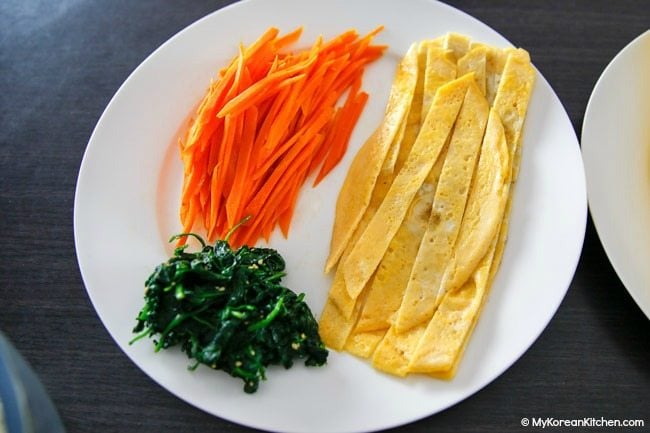
3. In a heated pan, lightly cook the carrots, crab sticks and kimbap ham (about 1 min per ingredients), separately, and over medium heat. (Some people use these raw, but I prefer cooking them first for my kimbap.)
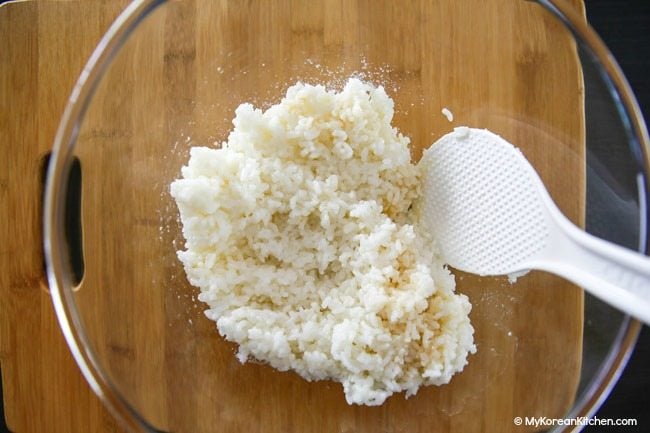
4. Place the cooked rice into a mixing bowl then add 1/2 Tbsp sesame oil and 1/4 tsp fine sea salt (or more to taste). Mix them well with a rice spatula.
5. Gather all the kimbap ingredients at the ‘kimbap rolling station’. This makes it easy to assemble.
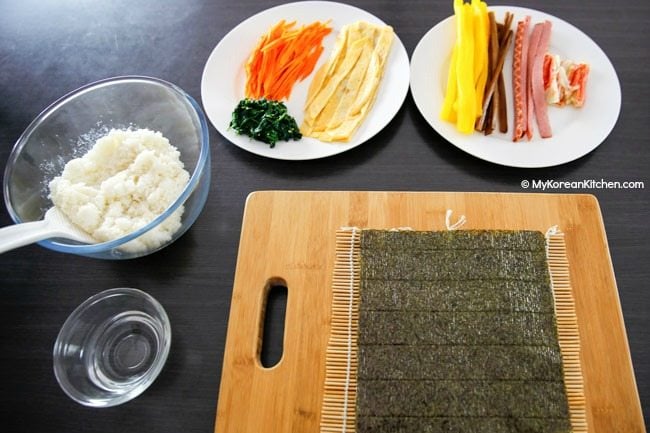
6. Place one dried seaweed sheet on the bamboo mat (shiny side down). Put the rice on the seaweed sheet then spread it evenly and thinly to cover about 2/3 of the seaweed. (Leave about 5cm / 2 inches gap at the top of the seaweed).
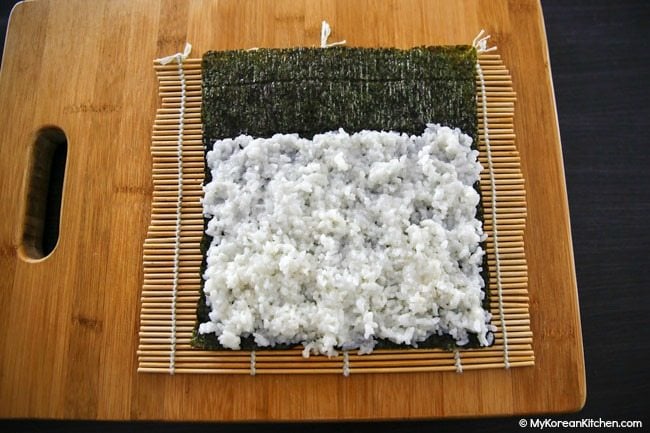
7. Now fill the seaweed with the filing ingredients. Make sure you evenly use the ingredients so that you’re not short of them later.
Place one yellow radish pickle at about 1/3 point of the seaweed then add three burdock strips, one ham strip, one crab stick around it. Then pile up a few eggs strips, carrot sticks, and some spinach. Then roll the seaweed.
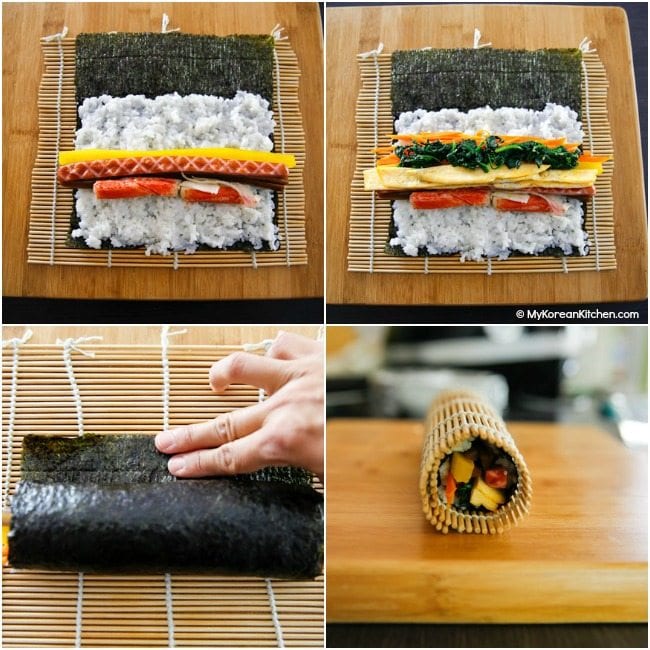
If the seaweed doesn’t stick, paste some water on the gap you left in step 6. You can also use a few grains of cooked rice in this gap. Set the rolled kimbap aside.
8. Repeat the step 6 and 7 with the remaining ingredients.
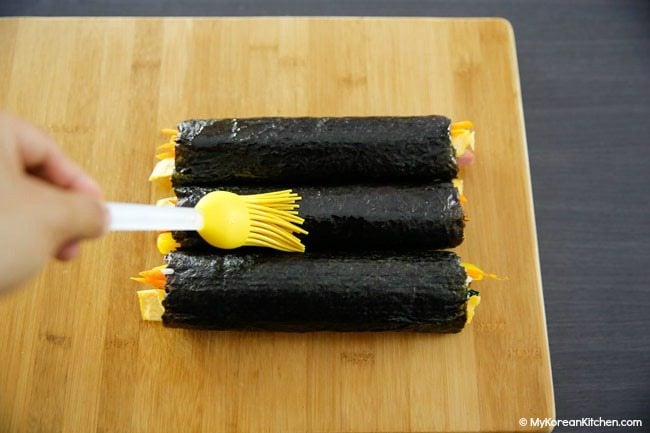
9. Line up all kimbap on a cutting board and paste some sesame oil (1 Tbsp) around the seaweed surface. Slice kimbap into bite size pieces. Serve.
How to Serve
Kimbap is usually served as is, often with sliced yellow pickled radish (danmuji) on the side. Unlike sushi, it does not typically need a dipping sauce because the rice and fillings are already seasoned.
For the best texture and flavor, serve it soon after slicing, while the rice is still soft and the seaweed has not had time to become chewy.
How to Store
Kimbap is best eaten on the day it is made, as the rice can become dry and firm in the refrigerator, especially overnight.
If you need to store it for a few hours, keep the sliced kimbap in an airtight container in the refrigerator. For overnight storage, I prefer to keep the rolls unsliced and tightly wrapped, as this helps them retain moisture a little better. Let them sit at room temperature for about 30 minutes before slicing and serving to take the chill off, although the rice will still be firmer than when freshly made.
For day-old kimbap, a popular Korean way to refresh it is to dip the slices in beaten egg and pan-fry them until lightly golden. The egg adds a little richness, while the gentle heat softens the rice and makes leftover kimbap much more enjoyable.
More Kimbap Recipes to Try
If you’d like to explore more Korean rice rolls, these kimbap recipes each bring something a little different to the table.
- Bulgogi Kimbap
Marinated bulgogi is layered with perilla leaves, cucumber, carrot, pickled radish, and seasoned burdock root. It’s a generously filled kimbap where the beef really takes center stage. - Tuna Kimbap
Tuna mayo and fragrant perilla leaves are a classic pairing in this popular kimbap. The creamy tuna works especially well with the fresh vegetables and pickled radish. - Yubu Kimbap
Seasoned yubu, or fried tofu pouches, is paired with egg, spinach, perilla leaves, carrot, and pickled radish. The yubu adds a sweet-savory flavor and pleasantly chewy texture that makes this one feel a little different from more classic kimbap fillings. - Mini Kimbap
These bite-sized rolls keep things simple with just a few fillings, including seasoned fish cake, carrot, and pickled radish. The real kicker is the sweet, tangy mustard dipping sauce served alongside.
Easy Kimbap
Ingredients
- 4 dried seaweed sheets (gim / sushi nori)
- 120 g spinach (4.2 ounces), regular or baby spinach
- 2 eggs , beaten
- 1/2 carrot (120g / 4.2 ounces), julienned
- 2 to 4 imitation crab sticks (depending on the length), cut in half length ways
- 4 sticks BBQ Kimbap ham , cut into long strips if you didn’t buy the pre-cut version (available at a Korean grocery store)
- 4 yellow radish pickle (danmuji), cut into long strips if you didn’t buy the pre-cut version (available at a Korean / Japanese grocery store)
- 12 strips seasoned edible burdock root (optional), (available at a Korean grocery store. You can buy the one that’s packaged together with yellow radish pickle like this picture. It’s also sold individually.)
- 2 1/2 cups steamed short grain rice
- 2 Tbsp sesame oil , divided
- 3/8 tsp fine sea salt (or more to taste), divided
Instructions
- Rinse the spinach and parboil it in rapidly boiling water (30 seconds to 1 minute). Drain the water away and run some cold water over the spinach. Gently squeeze the spinach to remove any excess water. Put the spinach into a bowl. Add 1/8 tsp salt and 1/2 Tbsp sesame oil then mix them well.
- Pre-heat a pan/skillet. Add a small dash of cooking oil and spread it around the pan. Add the beaten egg and cook both sides well over medium heat. Place the egg omelette on a cutting board and cut it into long strips.
- In a heated pan, lightly cook the carrots, crab sticks and kimbap ham (about 1 min per ingredients), separately, and over medium heat. (Some people use these raw, but I prefer cooking them first for my kimbap.)
- Place the cooked rice into a mixing bowl then add 1/2 Tbsp sesame oil and 1/4 tsp fine sea salt (or more to taste). Mix them well with a rice spatula.
- Gather all the kimbap ingredients at the ‘kimbap rolling station’. This makes it easy to assemble.
- Place one dried seaweed sheet on the bamboo mat (shiny side down). Put the rice on the seaweed sheet then spread it evenly and thinly to cover about 2/3 of the seaweed. (Leave about 5cm / 2 inches gap at the top of the seaweed).
- Now fill the seaweed with the filing ingredients. Make sure you evenly use the ingredients so that you’re not short of them later.
Here’s how I do it. (A short video instruction within the post above.) Place one yellow radish pickle at about 1/3 point of the seaweed then add three burdock strips, one ham strip, one crab stick around it. Then pile up a few eggs strips, carrot sticks, and some spinach. Then roll the seaweed.
If the seaweed doesn’t stick, paste some water on the gap you left in step 6. You can also use a few grains of cooked rice in this gap. Set the rolled kimbap aside. - Repeat the step 6 and 7 with the remaining ingredients.
- Line up all kimbap on a cutting board and paste some sesame oil (1 Tbsp) around the seaweed surface. Slice kimbap into bite size pieces. Serve.
Nutrition Info (per serving)
The nutrition information shown is an estimate provided by an online nutrition calculator. It should not be considered a substitute for a professional nutritionist’s advice.
Save This Recipe For Later
You can unsubscribe at any time