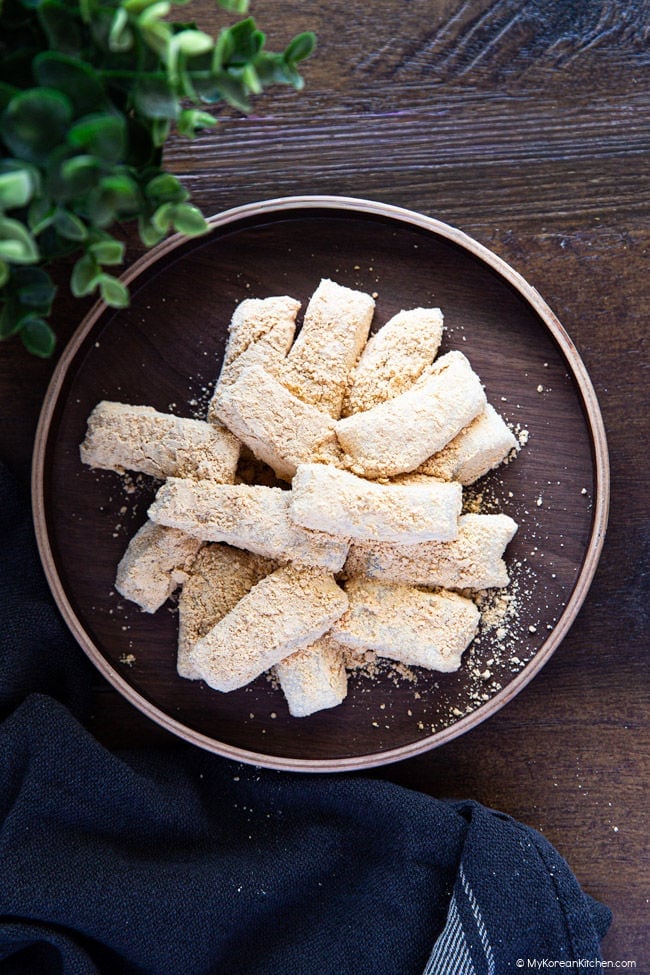
Injeolmi is one of those Korean treats that quietly grows on you, soft and coated in nutty soybean powder that feels more comforting than sweet. It is a rice cake closely tied to Korean traditions and everyday life, the kind you eat slowly and enjoy for its subtle flavor and gentle chew.
Save This Recipe For Later
You can unsubscribe at any time
What is Injeolmi
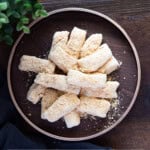
Injeolmi (인절미) is a soft, chewy Korean rice cake made from soft, chewy glutinous rice and generously coated in nutty, slightly savory soybean powder called konggaru. In Korea, injeolmi is often made to celebrate meaningful moments like birthdays, ancestral rites, or special family gatherings.
It is not flashy or brightly colored like some other tteok. Instead, it is calm and understated, with an earthy aroma from the roasted soybean powder. I still remember feeling incredibly thirsty after eating injeolmi as a child, that dry, nutty coating practically demanding a sip of water or sikhye right after.
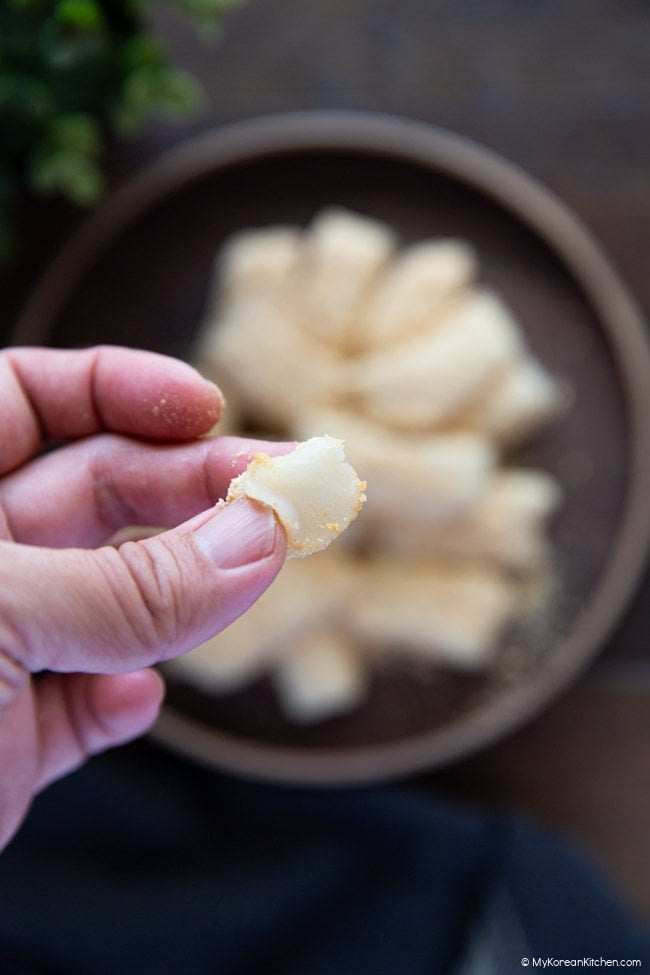
What makes injeolmi special is its texture. Freshly made, it is incredibly soft and stretchy, with a gentle chew that softens quickly in the mouth. The soybean powder clings to the rice cake, adding a nutty richness and just enough saltiness to balance the natural sweetness of the rice. Without any heavy sugariness, injeolmi is often seen as more of a grown-up treat, appealing more to adult tastes than to kids looking for something sweet, colorful, or instantly gratifying.
In the past, injeolmi was enjoyed as a standalone rice cake. These days, you might see injeolmi flavors pop up everywhere, from lattes to toast to bingsu.
Ingredients
For the dough
- 180 g (6.35 oz) sweet rice flour (glutinous rice flour), about 1 cup + 2 tablespoons
- 1 Tbsp granulated sugar
- 1/2 tsp fine salt
- 185 ml (6.25 fl oz) hot water, about 3/4 cup (for making the dough)
For the soybean coating
- 40 g (1.41 oz) roasted soybean powder, about 1/3 cup
- 2 tsp granulated sugar
- Pinch of fine salt
* 1 Tbsp = 15ml, 1 Cup = 250ml
How to Make Injeolmi
1. Make the dough:
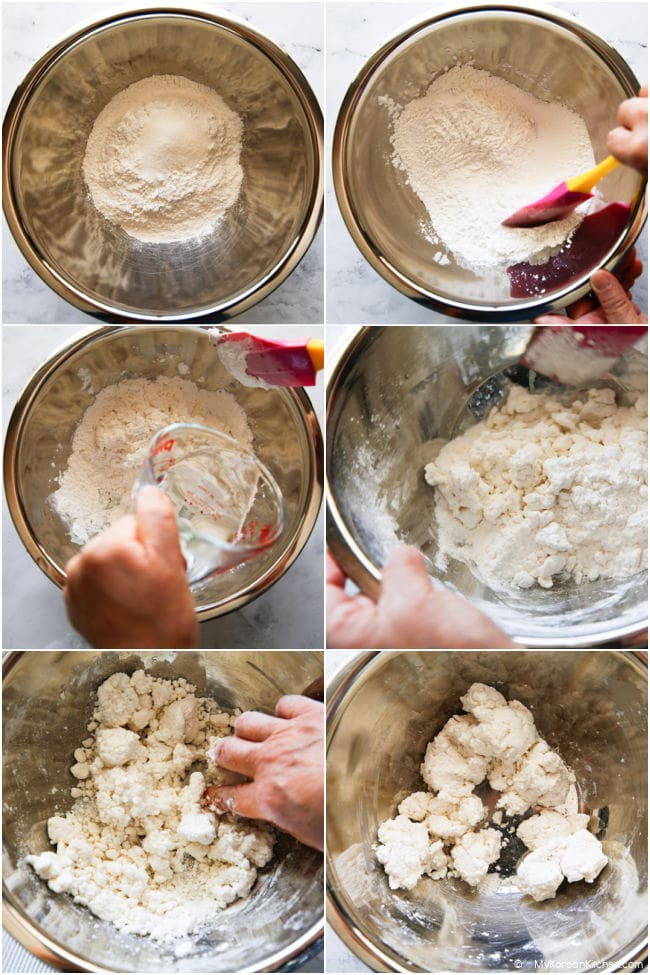
In a large mixing bowl, combine the sweet rice flour, sugar, and salt. Gradually add hot water a little at a time, mixing as you go. Don’t pour all the water in at once, adding it slowly helps you control the dough’s texture and prevents it from becoming too wet. The mixture looks evenly moistened and slightly thick, like a loose batter.
2. Steam the rice cake:
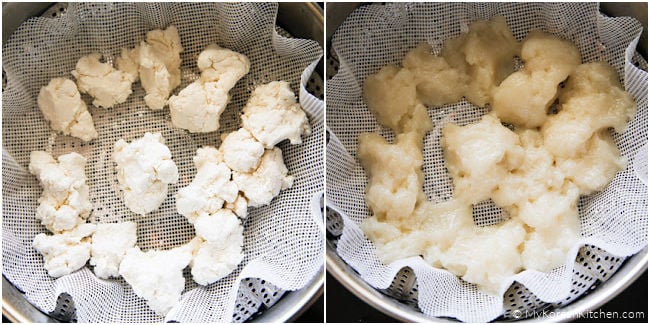
Line your steamer with a silicone mat or steamer cloth (this makes it much easier to remove later). Spread the dough evenly in the steamer rather than leaving it in one thick mass. Once the water starts boiling, begin steaming. Steam until no white, powdery spots remain on the surface, about 20 minutes. The dough should look glossy and translucent when fully cooked.
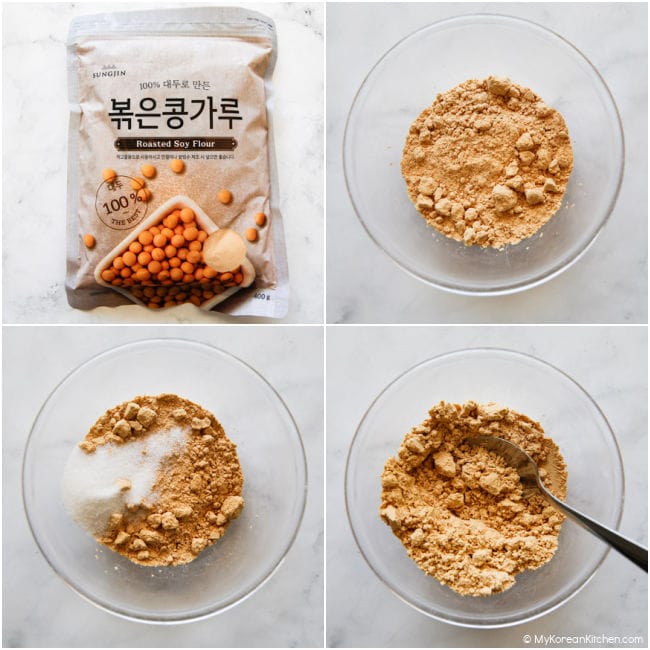
3. Season the soybean powder
While the rice cake is steaming, in a small bowl, combine the roasted soybean powder with the sugar and salt. Mix well until evenly combined, then set aside.
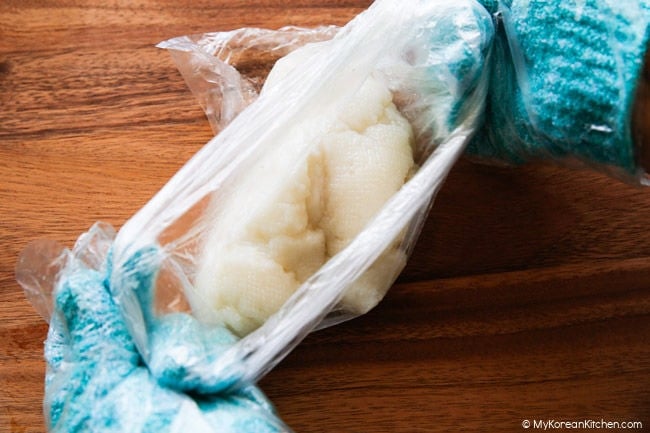
4. Pound and Knead the dough:
Once the mixture comes together, transfer it to a food-safe, sturdy plastic bag (such as a freezer bag). Knead and pound it by hand until smooth and elastic, about 3 to 5 minutes. Working the dough in the plastic bag makes it easier to knead and pound, as it won’t stick to the board or your hands.
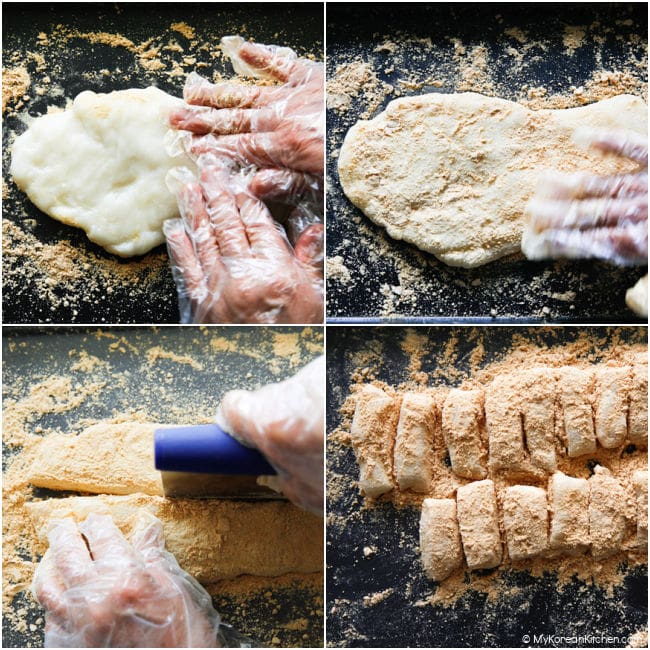
5. Coat with soybean powder:
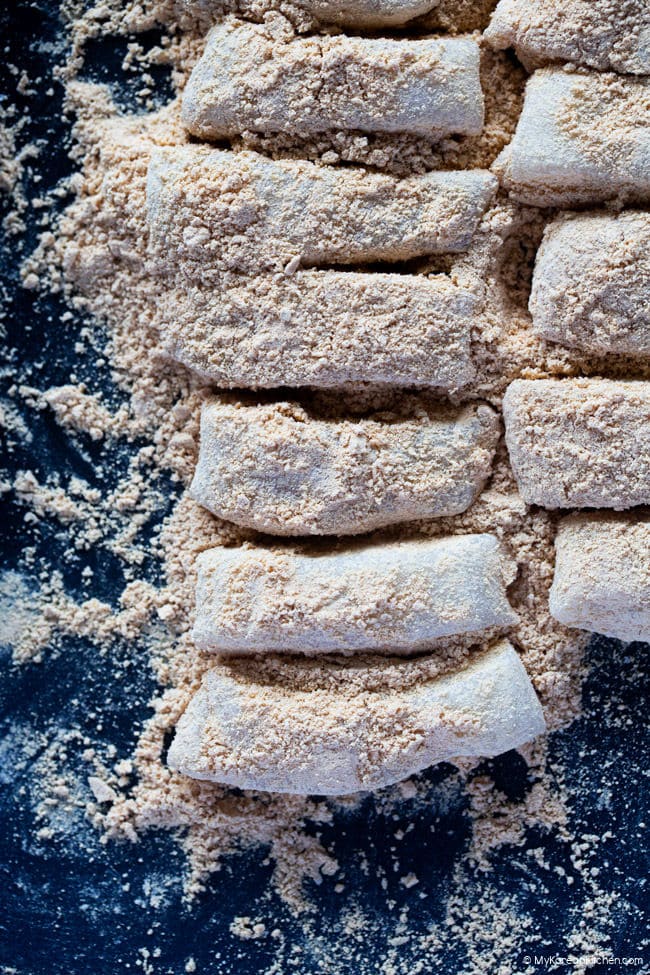
Lightly dust a sheet pan with roasted soybean powder. Carefully remove the steamed rice cake from the plastic bag and place it on the sheet pan. While still warm, gently flatten and shape it to your desired thickness. Coat it generously with the soybean powder, then cut into bite-sized pieces, tossing each piece in more powder as you go.
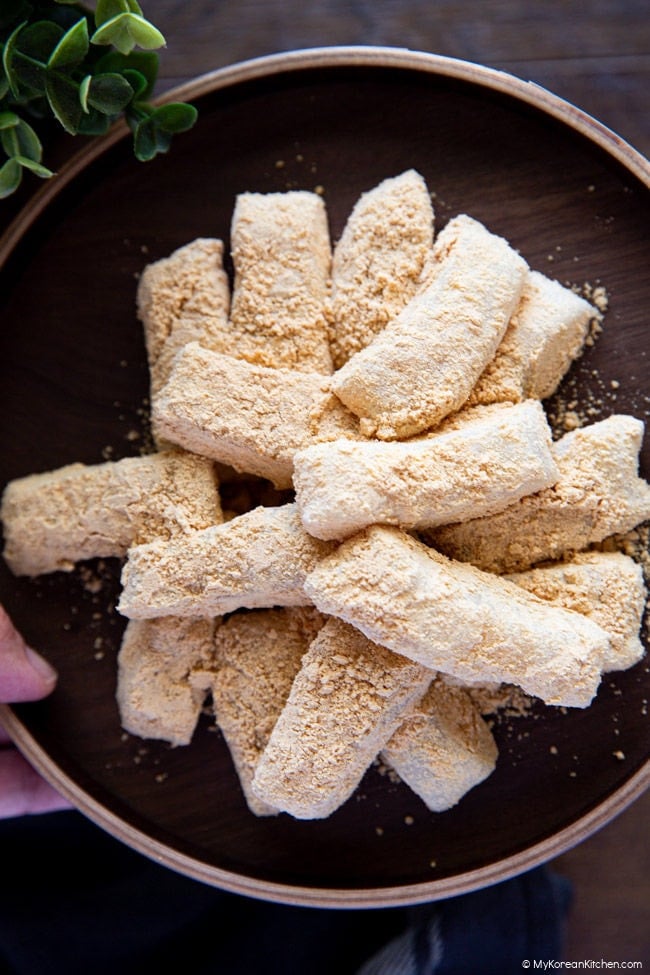
6. Cool before serving:
The rice cakes may feel slightly soft and sticky at first. For the best texture, let them cool at room temperature for about 1 hour before eating. This resting time allows the rice cake to develop its ideal chewiness.
Tips for Making Soft Injeolmi
- You can use the microwave to “steam” the dough, but injeolmi made in a pot steamer gives much better results. Steaming cooks the dough gently and evenly, resulting in a rice cake that is softer, bouncier, and chewier, with that signature injeolmi texture that stays tender longer instead of drying out.
- The rice cake can be kept at room temperature for up to 24 hours in an airtight container. For longer storage, freeze it in an airtight container. When ready to eat, thaw it in the refrigerator, then microwave for about 5 to 10 seconds. This brief reheating helps restore the soft, freshly made texture without drying it out.
Other Korean Rice Cakes You Might Like
If you enjoyed making injeolmi, you might also like these other Korean rice cakes, each offering different textures and flavors to explore.
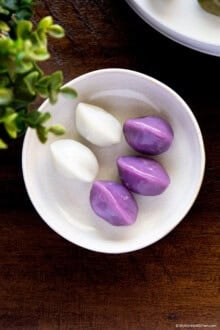
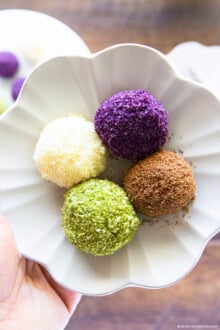
- Gyeongdan – Small, bite-sized rice cakes that are soft and chewy, often coated in colorful powders. They are simple, lightly sweet, and perfect when you want just a small taste of tteok.
- Songpyeon – A traditional half-moon shaped rice cake made for Chuseok, filled with sweet ingredients, and steamed over pine needles. It is more about tradition and symbolism.
- Chapssaltteok – A chewy glutinous rice cake with a soft, sweet red bean filling inside. It is similar to injeolmi, but with a filling inside.
Injeolmi Recipe (Korean Rice Cake with Soybean Powder)
Ingredients
For the dough
- 180 g sweet rice flour (glutinous rice flour), about 1 cup + 2 tablespoons
- 1 Tbsp granulated sugar
- 1/2 tsp fine salt
- 185 ml hot water , about 3/4 cup (for making the dough)
For the soybean coating
- 40 g roasted soybean powder , about 1/3 cup
- 2 tsp granulated sugar
- Pinch fine salt
Instructions
- Make the dough: In a large mixing bowl, combine the sweet rice flour, sugar, and salt. Gradually add hot water a little at a time, mixing as you go. Don’t pour all the water in at once, adding it slowly helps you control the dough’s texture and prevents it from becoming too wet. The mixture looks evenly moistened and slightly thick, like a loose batter.
- Steam the rice cake: Line your steamer with a silicone mat or steamer cloth (this makes it much easier to remove later). Spread the dough evenly in the steamer rather than leaving it in one thick mass. Once the water starts boiling, begin steaming. Steam until no white, powdery spots remain on the surface, about 20 minutes. The dough should look glossy and translucent when fully cooked.
- Season the soybean powder: While the rice cake is steaming, in a small bowl, combine the roasted soybean powder with the sugar and salt. Mix well until evenly combined, then set aside.
- Pound and Knead the dough: Once the mixture comes together, transfer it to a food-safe, sturdy plastic bag (such as a freezer bag). Knead and pound it by hand until smooth and elastic, about 3 to 5 minutes. Working the dough in the plastic bag makes it easier to knead and pound, as it won’t stick to the board or your hands.
- Coat with soybean powder: Lightly dust a sheet pan with roasted soybean powder. Carefully remove the steamed rice cake from the plastic bag and place it on the sheet pan. While still warm, gently flatten and shape it to your desired thickness. Coat it generously with the soybean powder, then cut into bite-sized pieces, tossing each piece in more powder as you go.
- Cool before serving: The rice cakes may feel slightly soft and sticky at first. For the best texture, let them cool at room temperature for about 1 hour before eating. This resting time allows the rice cake to develop its ideal chewiness.
Notes
- 1 Tbsp = 15ml, 1 Cup = 250ml
Nutrition Info (per serving)
The nutrition information shown is an estimate provided by an online nutrition calculator. It should not be considered a substitute for a professional nutritionist’s advice.
Save This Recipe For Later
You can unsubscribe at any time