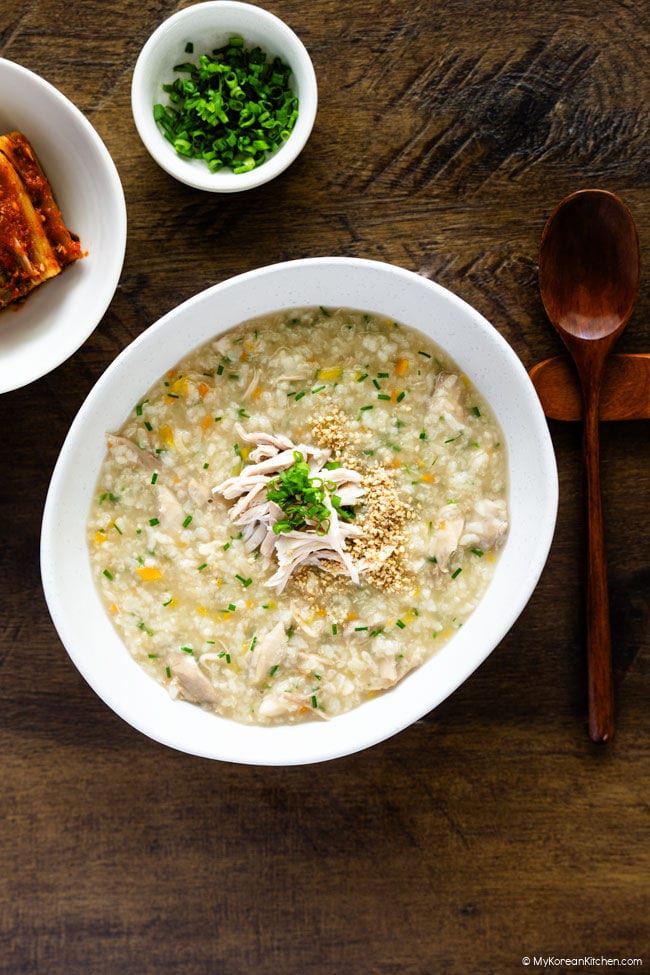
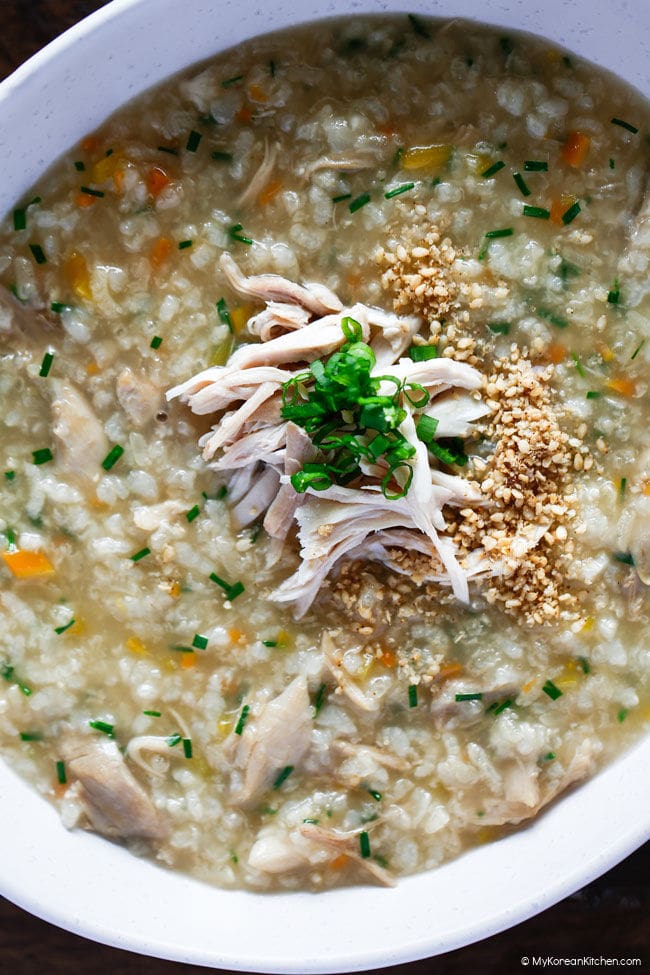
Learn how to make dakjuk, a deeply savory Korean chicken porridge with tender chicken, a beautifully seasoned broth, and the kind of warmth that stays with you.
What I love most about this dakjuk is how much flavor there is in every spoonful. The broth is rich and so well seasoned, while the warm porridge leaves you feeling comforted and nourished from the inside out.
Save This Recipe For Later
You can unsubscribe at any time
What is Dakjuk
Dakjuk (닭죽) is a Korean chicken and rice porridge made by slowly simmering rice in a chicken broth until the grains become very soft and the porridge turns thick and comforting. “Dak” means chicken, while “juk” refers to Korean-style rice porridge.
It is the kind of food Koreans often reach for when they want something warm, gentle, and nourishing. It is especially comforting on cold days or when you are feeling run down.
Why You’ll Love This Recipe
- Tender chicken, better-developed broth. The chicken meat is removed after 20 minutes so it stays tender, while the bones continue simmering to give the broth more depth.
- Warm and deeply comforting. The broth is well seasoned, with plenty of natural umami from the chicken and aromatics. On my first bite, I actually thought a little MSG might have been added. It is the kind of bowl that feels especially good when you want something warm and nourishing.
What Makes This Dakjuk Different
A little extra care goes into building both the broth and the chicken texture in this recipe.
The chicken meat is removed after about 20 minutes of simmering, before it has a chance to become dry or stringy. The bones then go back into the pot and continue simmering, giving the broth more time to develop while the reserved chicken stays tender for serving.
I also briefly stir fry the drained rice in sesame oil before adding the broth. This gives the rice a subtle nutty richness and adds another layer of flavor to the finished porridge.
Ingredients
Chicken & Stock
- 800 g (1.8 lb) chicken drumsticks
- 1 Tbsp apple cider vinegar
- 2.5 L (10 cups) water
- 60 g (2.1 oz) green onions, green parts only
- 160 g (5.6 oz) onion, halved (skin on)
- 170 g (6 oz) Korean radish
For the Porridge
- 1/2 cup glutinous rice
- 1/2 cup short-grain or medium-grain rice (e.g. sushi rice)
- 1 Tbsp toasted sesame oil (for stir-frying)
- 1/4 tsp Korean anchovy fish sauce
- 3/4 tsp fine sea salt
- 1/2 tsp Korean soup soy sauce
- 60 g (2.1 oz) carrot, finely diced
- 20 g (0.7 oz) garlic chives, finely chopped
- 1 Tbsp toasted sesame oil, for finishing
For Garnish
- 1 Tbsp toasted sesame seeds, lightly crushed
- 1 Tbsp green onion, thinly sliced
* 1 Cup = 250 ml
How to Make Dakjuk
Soak the rice
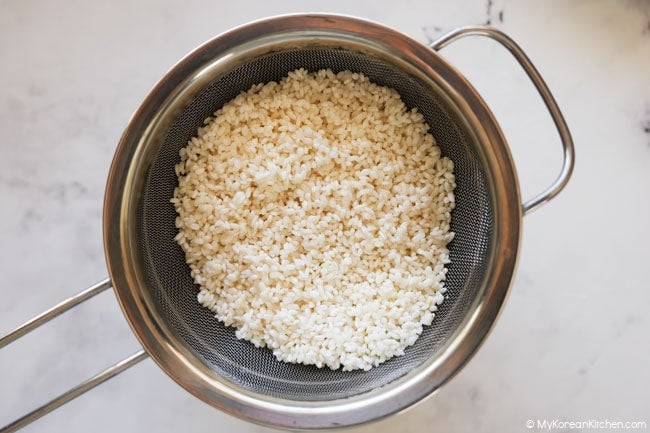
Soak the glutinous rice and regular rice in water for 1 hour. Drain well and set aside.
Prepare the chicken
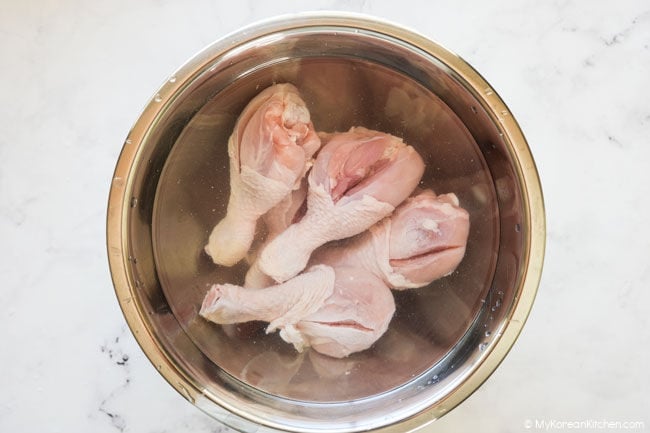
Using a sharp knife, make 2 to 3 shallow cuts in the thickest part of each chicken drumstick. Combine the water and apple cider vinegar in a bowl, then soak the chicken for 5 minutes. Drain well.
Make the chicken stock
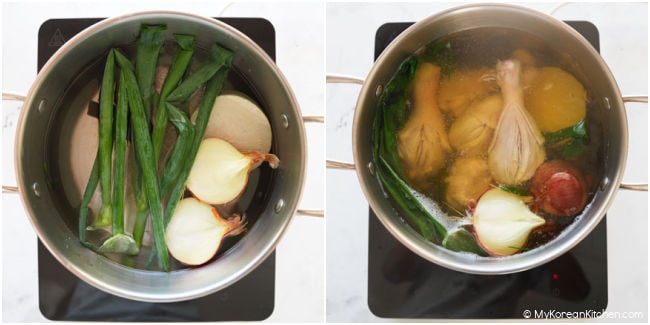
Add the water, green onions, onion, and radish to a large pot. Bring to a boil over high heat, about 15 minutes.
Add the chicken drumsticks. Once the liquid returns to a boil, reduce the heat to medium-high and cook for 20 minutes, adjusting the heat as needed to maintain a steady boil without overflowing.
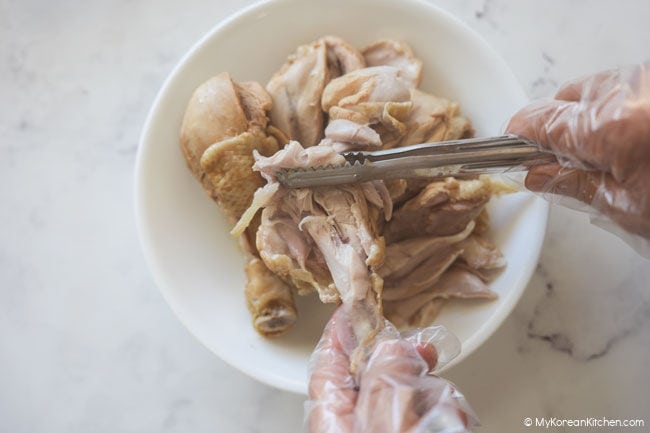
Using tongs, transfer the chicken to a large plate and let it cool slightly. Keep the stock simmering over low heat. Once the chicken is cool enough to handle, separate the meat from the bones, taking care as the meat may still be hot inside. Set the meat aside and keep the bones.
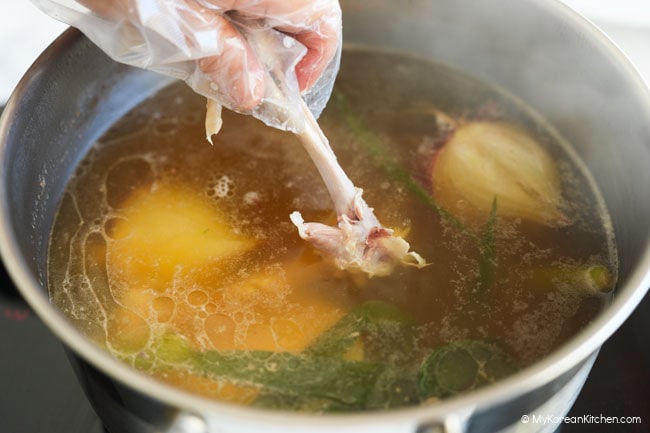
Return the bones to the pot and simmer over low heat for another 20 minutes to deepen the flavor of the stock. Skim off any foam, excess fat, or impurities from the surface as needed.
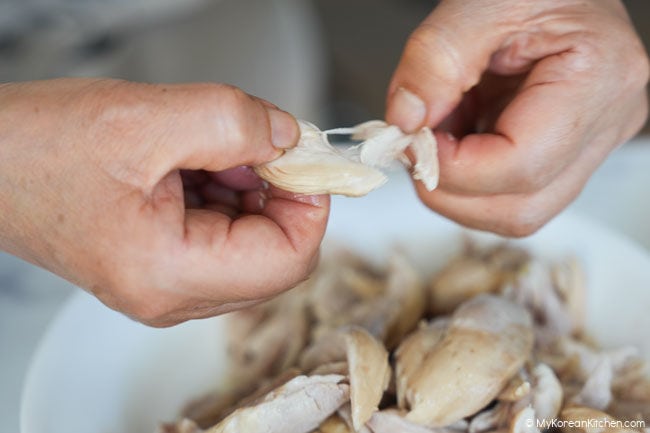
Meanwhile, tear most of the chicken into bite-sized pieces for the porridge. Set aside about 5 Tbsp for garnish, then finely shred or chop that portion.
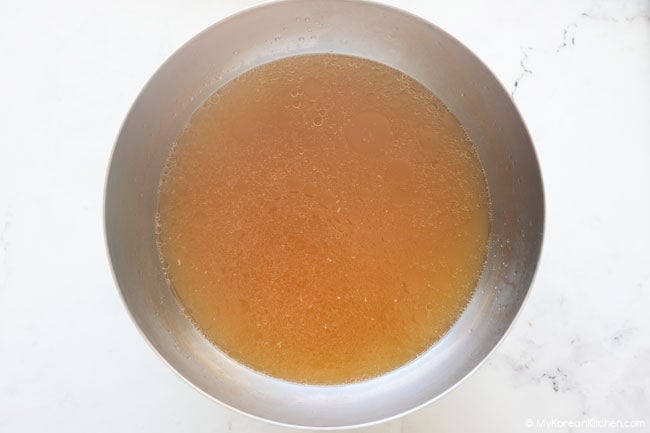
Strain the stock through a sieve into a large bowl and discard the solids. You should have about 1.7 L (7 cups) of stock.
Sauté the rice
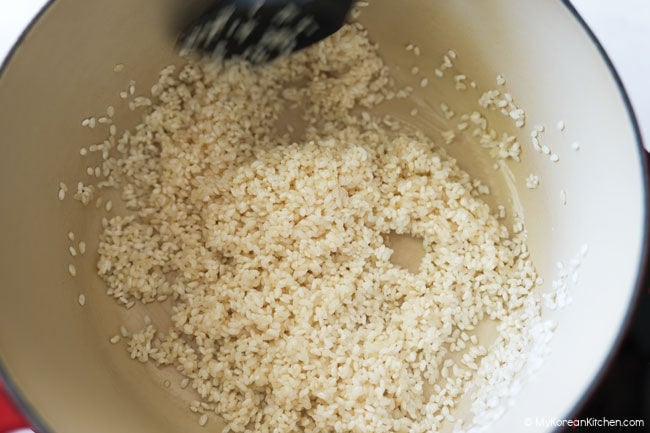
Heat 1 Tbsp sesame oil in a clean pot over medium heat. Add the drained glutinous rice and regular rice and stir for 1 to 2 minutes, until evenly coated with the oil.
Cook the porridge
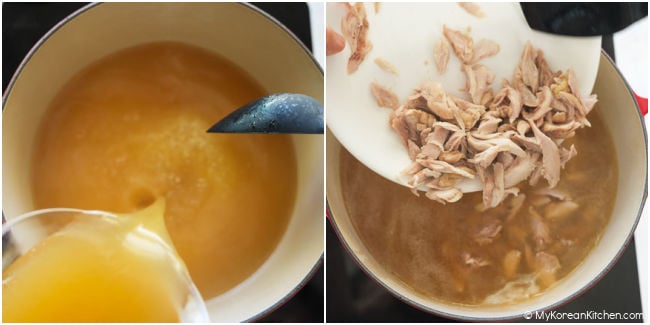
Pour in the chicken stock and bring it to a boil. Add the torn chicken, except for the reserved portion, and the anchovy fish sauce.
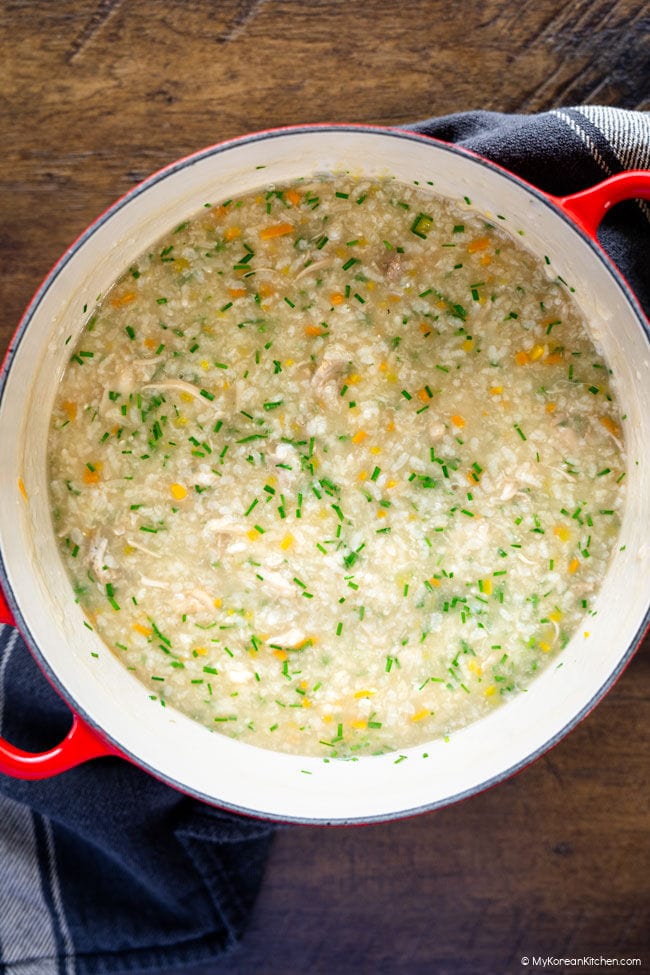
Reduce the heat to medium-low and simmer, stirring occasionally. As the rice begins to soften, reduce the heat to low and continue simmering until the rice is fully cooked and the porridge has thickened slightly. It should still be loose enough to slowly flow off a spoon.
Stir in the salt and soup soy sauce. Taste and adjust the seasoning if needed.
Add the vegetables and finish
Add the carrot and cook until tender, about 3 to 5 minutes. Stir in the remaining 1 Tbsp sesame oil and the garlic chives.
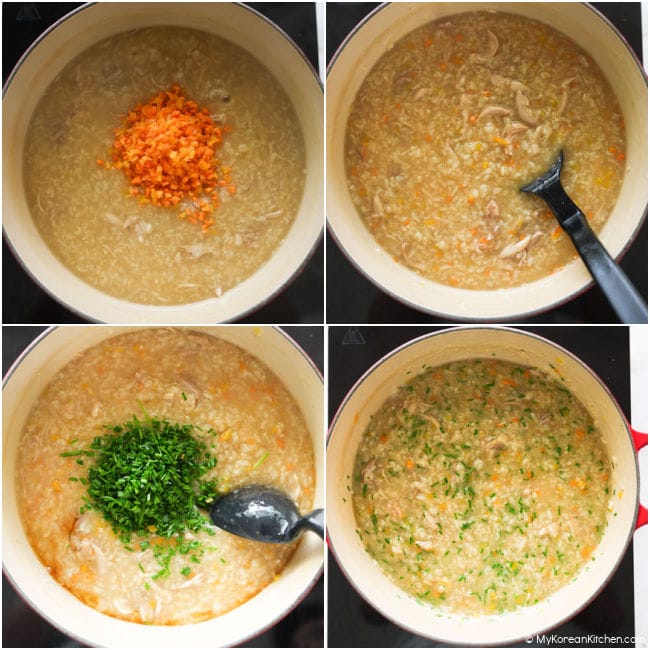
Serve
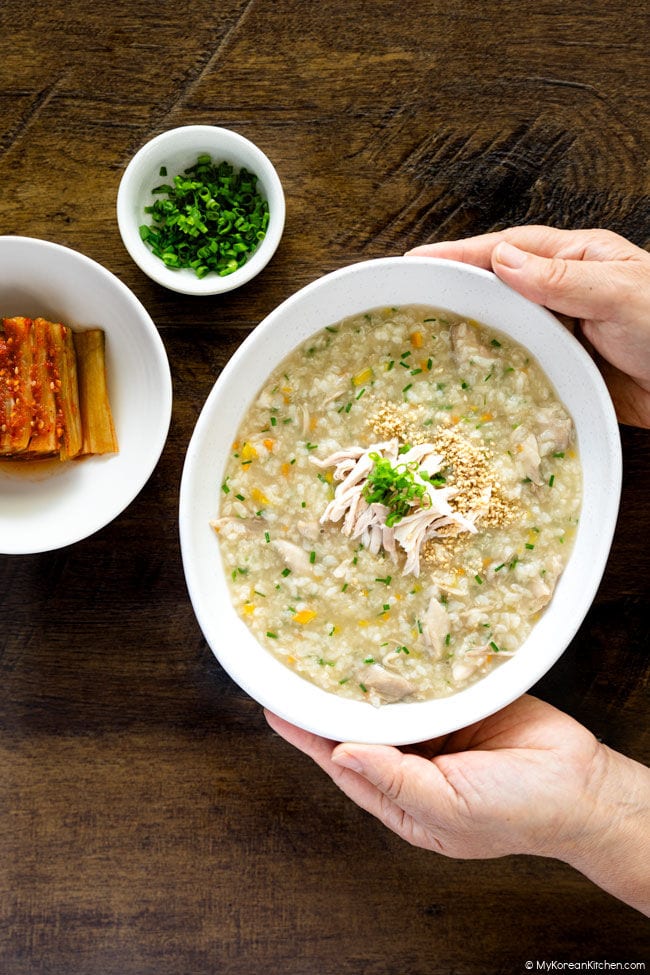
Ladle the porridge into serving bowls and garnish with the reserved chicken and toasted sesame seeds. Serve warm with fresh kimchi salad (geotjeori) or dongchimi.
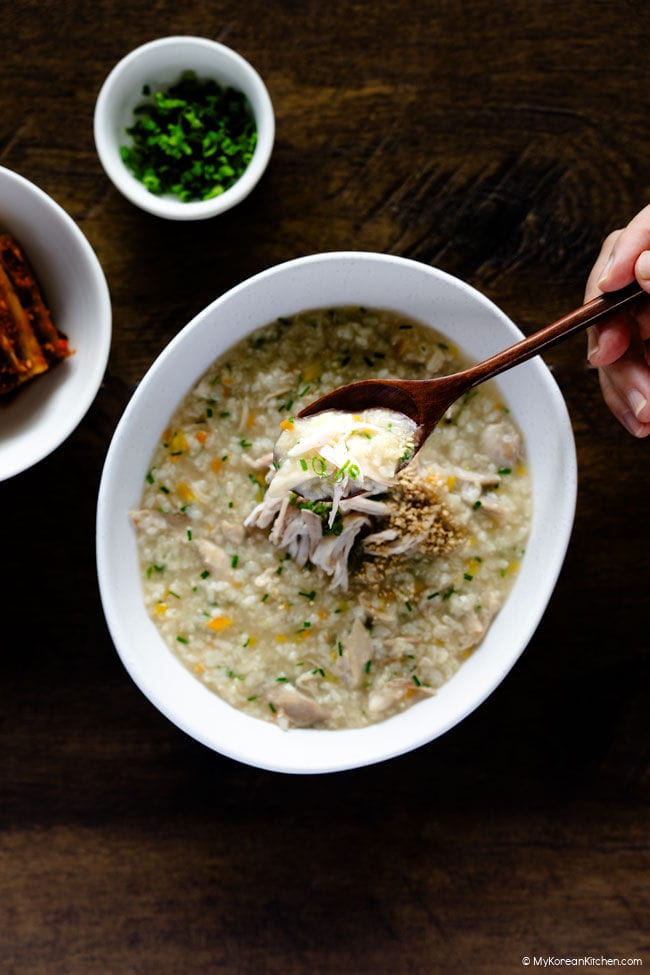
My Best Tips for Making Dakjuk
Use both glutinous rice and regular rice
I use a combination of glutinous rice and regular rice rather than relying on just one type. The glutinous rice gives the porridge a softer, slightly more cohesive texture, while the regular rice keeps it from becoming overly sticky or heavy. Soaking both for an hour also helps them cook more evenly.
Return the chicken bones to the stock
After removing the cooked chicken meat, I return the bones to the pot and simmer them for another 20 minutes. This gives the stock a deeper chicken flavor without overcooking the meat. It is a small extra step, but it makes a noticeable difference to the finished porridge.
Sauté the soaked rice in sesame oil before adding the stock
Rather than adding the rice straight to the broth, I briefly cook the drained rice in sesame oil first. This coats the grains and adds a gentle nutty aroma to the porridge.
Aim for a loose porridge, not a thick one
The texture is one of the most important things to get right. Cook the rice until it is completely tender and the porridge has thickened slightly, but it should still slowly flow off a spoon. Dakjuk continues to thicken as it sits, so it is better to finish it slightly looser than you think you need.
Reserve some stock for reheating
If you’re planning to save some dakjuk for later, reserve about 2 cups of the chicken stock before adding the rest to the porridge. Dakjuk thickens considerably as it cools, so stir in some of the reserved stock when reheating to bring it back to a soft, porridge-like consistency.
Other Recipes You Might Like
Samgyetang (Korean Ginseng Chicken Soup): A light, nourishing whole-chicken soup filled with sweet rice, ginseng, garlic, and jujube. It is traditionally enjoyed in Korea as a stamina food and is especially soothing when you want something warm and restorative.
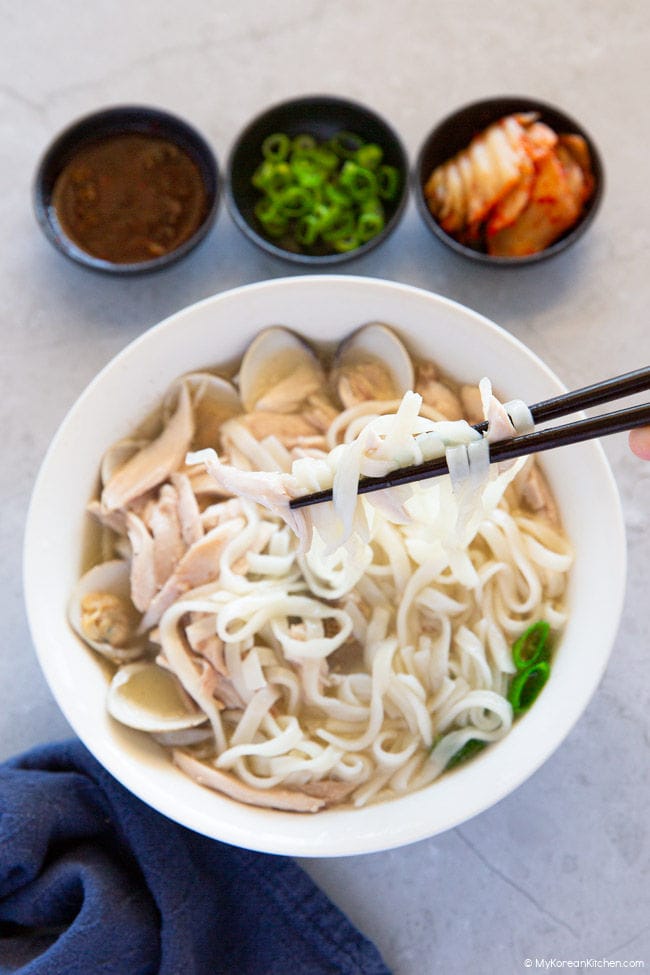
Korean Chicken Noodle Soup (Dak Kalguksu): Tender chicken and soft knife-cut noodles in a light, well-balanced broth with a subtle layer of anchovy and clam flavor. It is especially comforting on cold or rainy days.
Korean Beef Bone Broth (Sagol Yuksu): A rich, milky white broth made by boiling beef bones in several fresh batches of water, then combining the extractions. It makes a beautiful base for classic Korean soups such as seolleongtang and tteokguk.
Korean Seaweed Soup (Miyeok Guk): A simple Korean soup made with tender seaweed, beef, sesame oil, soy sauce, and garlic. It is a familiar everyday dish in Korea and is also traditionally served on birthdays, giving it a special place in Korean home cooking.
Dakjuk (Korean Chicken Porridge)
Ingredients
Chicken and Stock
- 800 g chicken drumsticks (1.8 lb)
- 1 Tbsp apple cider vinegar
- 2.5 L water (10 cups)
- 60 g green onions (2.1 oz), green parts only
- 160 g onion (5.6 oz), halved (skin on)
- 170 g Korean radish (6 oz)
For the Porridge
- 1/2 cup glutinous rice
- 1/2 cup short-grain rice or medium-grain rice (e.g. sushi rice)
- 1 Tbsp toasted sesame oil (for stir-frying)
- 1/4 tsp Korean anchovy fish sauce
- 3/4 tsp fine sea salt
- 1/2 tsp Korean soup soy sauce
- 60 g carrot (2.1 oz), finely diced
- 20 g garlic chives (0.7 oz), finely chopped
- 1 Tbsp toasted sesame oil , for finishing
For Garnish
- 1 Tbsp toasted sesame seeds , lightly crushed
- 1 Tbsp green onion , thinly sliced
Instructions
- Soak the rice. Soak the glutinous rice and regular rice in water for 1 hour. Drain well and set aside.
- Prepare the chicken. Using a sharp knife, make 2 to 3 shallow cuts in the thickest part of each chicken drumstick. Combine the water and apple cider vinegar in a bowl, then soak the chicken for 5 minutes. Drain well.
- Make the chicken stock. Add the water, green onions, onion, and radish to a large pot. Bring to a boil over high heat, about 15 minutes. Add the chicken drumsticks. Once the liquid returns to a boil, reduce the heat to medium-high and cook for 20 minutes, adjusting the heat as needed to maintain a steady boil without overflowing.Using tongs, transfer the chicken to a large plate and let it cool slightly. Keep the stock simmering over low heat. Once the chicken is cool enough to handle, separate the meat from the bones, taking care as the meat may still be hot inside. Set the meat aside and keep the bones.Return the bones to the pot and simmer over low heat for another 20 minutes to deepen the flavor of the stock. Skim off any foam, excess fat, or impurities from the surface as needed.Meanwhile, tear most of the chicken into bite-sized pieces for the porridge. Set aside about 5 Tbsp for garnish, then finely shred or chop that portion.Strain the stock through a sieve into a large bowl and discard the solids. You should have about 1.7 L (7 cups) of stock.
- Sauté the rice. Heat 1 Tbsp sesame oil in a clean pot over medium heat. Add the drained glutinous rice and regular rice and stir for 1 to 2 minutes, until evenly coated with the oil.
- Cook the porridge. Pour in the chicken stock and bring it to a boil. Add the torn chicken, except for the reserved portion, and the anchovy fish sauce. Reduce the heat to medium-low and simmer, stirring occasionally. As the rice begins to soften, reduce the heat to low and continue simmering until the rice is fully cooked and the porridge has thickened slightly. It should still be loose enough to slowly flow off a spoon.Stir in the salt and soup soy sauce. Taste and adjust the seasoning if needed.
- Add the vegetables and finish. Add the carrot and cook until tender, about 3 to 5 minutes. Stir in the remaining 1 Tbsp sesame oil and the garlic chives.
- Serve. Ladle the porridge into serving bowls and garnish with the reserved chicken and toasted sesame seeds. Serve warm with fresh kimchi salad (geotjeori) or dongchimi.
Notes
Nutrition Info (per serving)
The nutrition information shown is an estimate provided by an online nutrition calculator. It should not be considered a substitute for a professional nutritionist’s advice.
Save This Recipe For Later
You can unsubscribe at any time