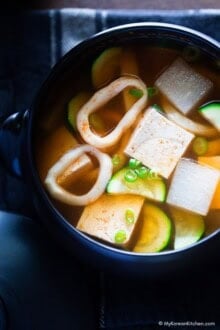
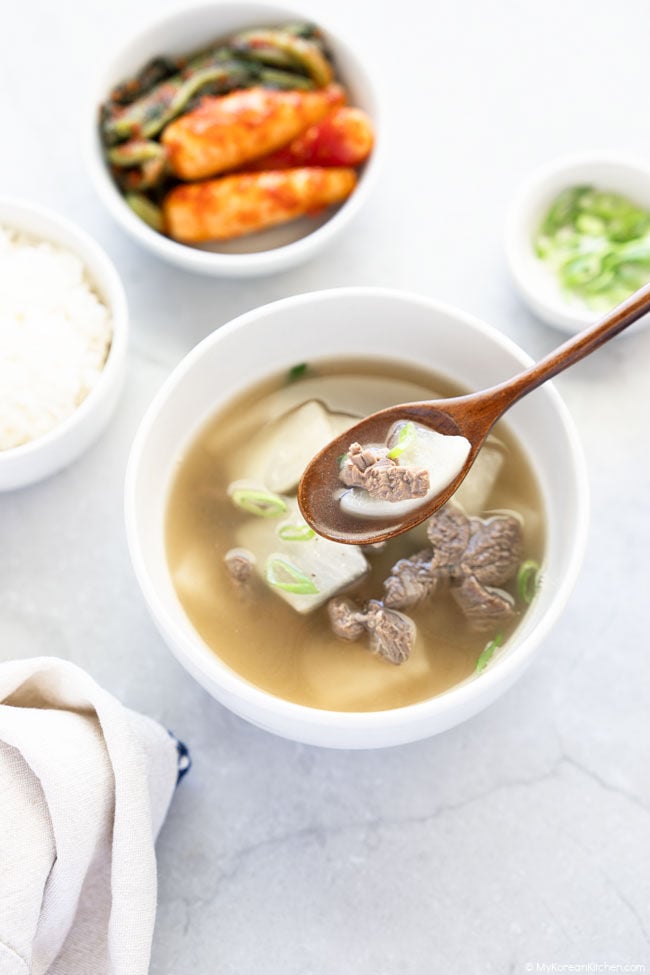
Sogogi muguk (소고기 무국), or Korean beef radish soup, is a comforting Korean home-style soup made with beef and Korean radish. As the soup gently simmers, the beef adds a savory flavor to the broth, while the radish becomes tender and releases its natural sweetness.
It’s a popular everyday soup in Korea and goes particularly well with a bowl of steamed rice and a few Korean side dishes for a simple, satisfying meal.
EXPLORE THIS RECIPE
What is Sogogi Muguk?
Sogogi means beef, and muguk means radish soup. Together they form the name Sogogi muguk (소고기무국). It’s especially good in the cooler months, when Korean radish (mu, 무) is in season and tends to be sweeter.
I remember eating this soup once or twice a week growing up, either at home or in the school cafeteria. My mom and I make the mild version I grew up with. It’s a good choice for young children and anyone who prefers a soup without chili heat.
There’s also a spicy version associated with Korea’s Gyeongsang region. I only learned about it while writing this post.
What Makes This Recipe Different
What we like about this recipe is the depth of flavor in the broth. We start with homemade stock made with dried anchovies and kelp rather than plain water, then season the soup with Korean soup soy sauce and anchovy fish sauce. Compared to versions seasoned mostly with salt and a splash of soup soy sauce, ours has a fuller flavor and a slightly darker color.
While we like a deeply savory broth, we don’t want to overpower the flavor of the beef or the gentle sweetness of the radish. I use an enameled cast iron Dutch oven (Le Creuset) and find that I can briefly brown the beef without adding oil. Rather than stir-frying the beef in sesame oil, we add it later with the seasonings. A teaspoon gives the soup just the hint of sesame we like.
Ingredients
For the Broth
- 2.5 L (10 cups) water
- 20 g (0.7 oz) dried kelp
- 20 g (0.7 oz) dried anchovies
Main
- 250 g (8.8 oz) beef for soup, such as diced flank steak or diced Wagyu (see Tips)
- 350 g (12.3 oz) Korean radish, cut into thin rectangles about 3 × 4 cm (1.2 × 1.6 inches) and 6 mm (¼ inch) thick
Soup Seasonings
- 1 Tbsp Korean soup soy sauce (guk-ganjang)
- 1/2 Tbsp Korean anchovy fish sauce
- 1 tsp sesame oil
- 1 Tbsp minced garlic
- 1/4 tsp fine sea salt, or to taste
To Finish
- 1/8 tsp ground black pepper, or to taste
- 15 g (0.5 oz) green onion, thinly sliced
* 1 Tbsp = 15 ml, 1 cup = 250 ml
How to Make Korean Beef Radish Soup
Make the anchovy and kelp broth.
Put the water and dried kelp in a stockpot. Remove the heads and dark innards from the dried anchovies. Add the anchovies to the pot, using a dashi bag or a large stainless steel mesh tea infuser with a locking lid if you have one.
Bring to a gentle boil, then reduce the heat to medium. Cook for 10 minutes, adjusting the heat as needed to keep the broth gently bubbling. Remove the kelp, reduce the heat to low, and simmer the anchovies for another 10 minutes.
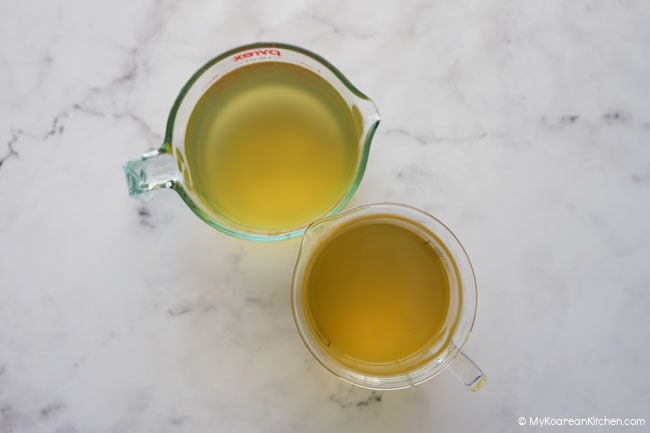
Strain the broth and measure out 1.75 L (7 cups) for the soup. If you’re a little short, add enough water to make up the difference (see Tips below).
Prepare the beef.
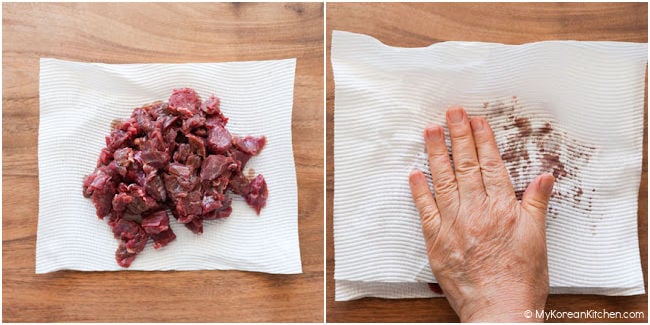
Soak the beef pieces in cold water for about 10 minutes. Drain carefully, then pat dry with paper towels.
Start the soup.
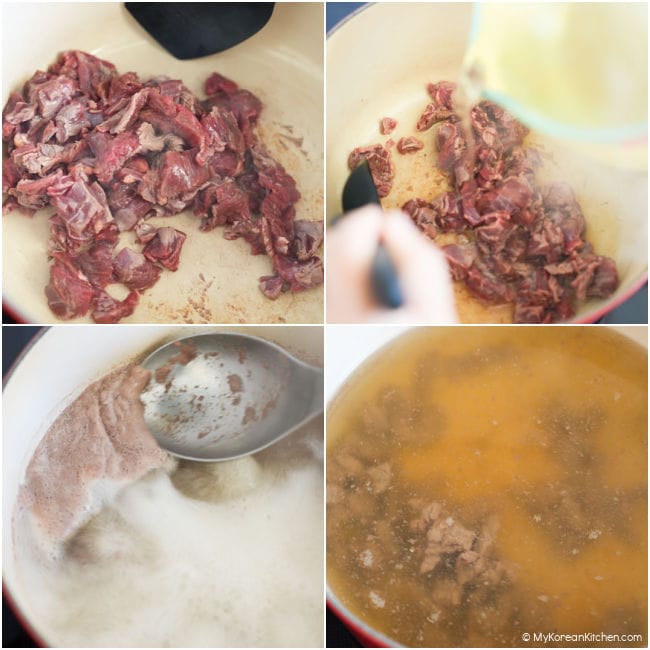
Stir-fry the beef in a soup pot over medium heat for about 1 minute, until lightly browned in spots. If the beef sticks to the pot, you can add a little neutral cooking oil. Pour in half of the broth and bring to a boil over high heat. Skim off any foam that rises to the surface.
Reduce the heat to medium and pour in the remaining broth. Cover and bring back to a boil, then cook covered for about 10 minutes, adjusting the heat to keep the broth bubbling gently. If you’re using a tougher cut of beef, continue simmering until the beef is nearly tender.
Cook the radish.
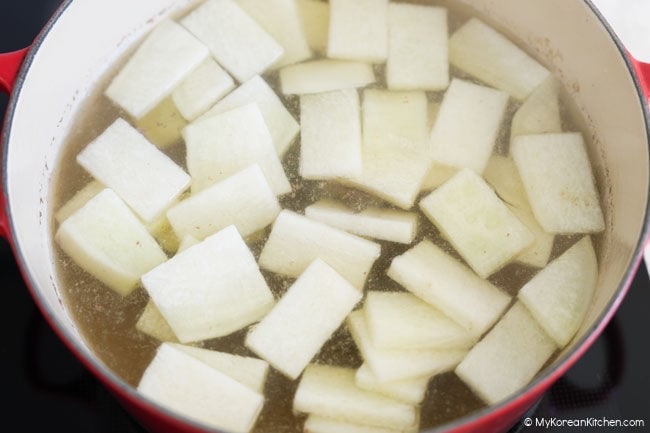
Add the Korean radish and cook over medium heat for 8–10 minutes, until the edges start to turn translucent and the centers are still firm.
Season and simmer.
Stir in the soup soy sauce, anchovy fish sauce, sesame oil, and minced garlic. Cover, reduce the heat to medium-low, and simmer for about 10 minutes, until the beef is tender and a small knife slides easily into the center of a piece of radish.
Taste the broth and add salt as needed. Cover again and simmer gently for about 10 more minutes to deepen the flavor of the broth.
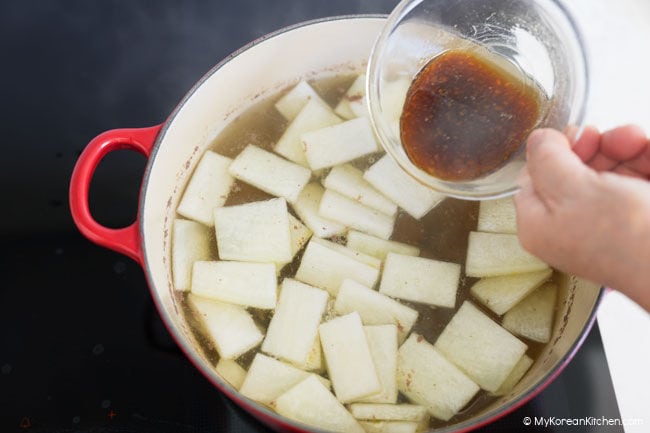
Finish and serve.
Stir in the black pepper, then add the green onion. Simmer for another 30 seconds to 1 minute. Serve hot with steamed rice and your favorite Korean side dishes.
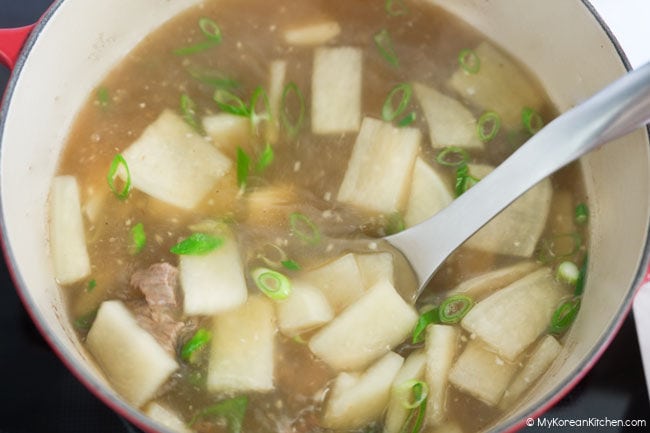
Tips for Making Korean Beef Radish Soup
Choose the right cut of beef
Beef brisket and boneless beef shank are both common choices for Korean beef radish soup. I’ve tried both diced flank and diced Wagyu beef sold for soup and prefer them for their tenderness and less fibrous texture compared to some other cuts I’ve used.
I prefer buying beef for this soup from a Korean grocery store or butcher. Even when the beef is labeled as the same cut, I’ve generally found it to be more tender and less fibrous than what I’ve bought from regular supermarkets. I suspect this may have something to do with the specific cuts of meat selected, how well they are trimmed, and how the beef is prepared for Korean soups. If you’re cutting the beef yourself, slice it thinly across the grain, then cut the slices into bite-sized pieces. Simmer the beef in the broth for about 10 minutes before adding the radish.
If you’re using a tougher cut, allow more time for the beef to become nearly tender before adding the radish. This helps keep the radish from becoming too soft while the beef finishes cooking.
Check the radish for bitterness
Taste a small piece of radish while slicing it. If it’s particularly bitter or sharp, briefly blanch the sliced radish in boiling water for 1 to 2 minutes, then drain it before adding it to the soup. This can help mellow the bitterness.
Check how much broth you have
You’ll need 1.75 L (7 cups) of broth for this recipe. The amount of broth you get depends on how much water evaporates as it cooks. If you’re a little short, add enough water to make up the difference. If you have just a little extra, you can use it all and adjust the salt to taste toward the end of cooking. If you have quite a bit more, stick with 7 cups to keep the balance of broth, beef, and radish. Refrigerate or freeze the extra for another dish.
Adjust the seasoning to taste
The saltiness of the broth can vary depending on the anchovy stock, soup soy sauce, and fish sauce you use. Taste the broth after adding the seasonings and adjust with salt as needed. I find that the black pepper added toward the end of cooking also helps balance the flavor of the sesame oil. If you prefer a milder sesame flavor, you can reduce the amount of sesame oil to ½ teaspoon.
How to Serve, Store, and Reheat
Serving: Korean beef radish soup is best served warm with a bowl of steamed rice and a few Korean side dishes (banchan). I like to keep it simple with napa cabbage kimchi, ponytail kimchi, or cubed radish kimchi. Whatever kimchi you might have at home and a packet of seasoned seaweed (gim) will be just fine. The tangy, spicy flavors of the kimchi complement the mild soup, and the crunch adds a nice contrast in texture.
Storage: Divide leftover soup into smaller, shallow containers and refrigerate within 2 hours of cooking. Store the soup in an airtight container in the refrigerator for up to 4 days or freeze it for up to 3 months for best quality. The radish may soften a little after thawing, but this shouldn’t be too noticeable as it’s already cooked.
Reheating: Reheat the soup on the stovetop or in the microwave until piping hot throughout. If using the stovetop, bring the soup back to a boil. If using a microwave, stir the soup partway through reheating. For larger amounts, it’s better to use a pot. Let the soup cool slightly before serving, if needed.
Frequently Asked Questions
Yes, you can use daikon in place of Korean radish. Korean radish tends to have a denser, firmer texture, and its natural sweetness contributes to the flavor of the broth.
If you’re using daikon, you can use the same amount specified in the recipe, but keep an eye on its texture as it cooks, as it may soften a little sooner.
Yes. Korean soup soy sauce (guk-ganjang) is generally saltier and lighter in color than regular soy sauce, which makes it particularly suitable for Korean soups.
If you don’t have it, my first choice would be to use a little more Korean anchovy fish sauce. Regular soy sauce, such as Kikkoman, is another option, but I would use it sparingly as it can darken the broth.
You can also use salt in place of Korean soup soy sauce. This will give the soup a lighter-colored broth, although the flavor will be slightly different.
More Korean Soup Recipes
If you enjoy Korean soups, here are a few more recipes you might like to try.
- Galbitang (Beef Short Rib Soup) – Beef short ribs are slowly simmered with Korean radish and aromatic vegetables to create a rich, savory broth.
- Korean Seaweed Soup (Miyeok Guk) – Also known as Korean birthday soup. I particularly like making it with beef, as it gives the soup a lovely depth of flavor.
- Korean Squid Soup (Ojingeo Guk) – A light, gently spicy soup made with squid and Korean radish. I grew up eating this soup both at home and at school in Korea.
- Yukgaejang (Spicy Beef Soup) – A substantial soup made with shredded beef brisket, fernbrake, and other vegetables. It looks fiery, but it’s not as spicy as you might think.
Korean Beef Radish Soup (Sogogi Muguk)
Ingredients
For the Broth
- 2.5 L water (10 cups)
- 20 g dried kelp (0.7 oz)
- 20 g dried anchovies (0.7 oz)
Main
- 250 g beef for soup (8.8 oz), , such as diced flank steak or diced Wagyu (see Tips)
- 350 g Korean radish (12.3 oz), cut into thin rectangles about 3 × 4 cm (1.2 × 1.6 inches) and 6 mm (¼ inch) thick
Soup Seasonings
- 1 Tbsp Korean soup soy sauce (guk-ganjang)
- 1/2 Tbsp Korean anchovy fish sauce
- 1 tsp sesame oil
- 1 Tbsp minced garlic
- 1/4 tsp fine sea salt , or to taste
To Finish
- 1/8 tsp ground black pepper or to taste
- 15 g green onion (0.5 oz), thinly sliced
Instructions
- Make the anchovy and kelp broth. Put the water and dried kelp in a stockpot. Remove the heads and dark innards from the dried anchovies. Add the anchovies to the pot, using a dashi bag or a large stainless steel mesh tea infuser with a locking lid if you have one.Bring to a gentle boil, then reduce the heat to medium. Cook for 10 minutes, adjusting the heat as needed to keep the broth gently bubbling. Remove the kelp, reduce the heat to low, and simmer the anchovies for another 10 minutes.Strain the broth and measure out 1.75 L (7 cups) for the soup. If you’re a little short, add enough water to make up the difference (see Tips below).
- Prepare the beef. Soak the beef pieces in cold water for about 10 minutes. Drain carefully, then pat dry with paper towels.
- Start the soup. Stir-fry the beef in a soup pot over medium heat for about 1 minute, until lightly browned in spots. If the beef sticks to the pot, you can add a little neutral cooking oil. Pour in half of the broth and bring to a boil over high heat. Skim off any foam that rises to the surface.Reduce the heat to medium and pour in the remaining broth. Cover and bring back to a boil, then cook covered for about 10 minutes, adjusting the heat to keep the broth bubbling gently. If you’re using a tougher cut of beef, continue simmering until the beef is nearly tender.
- Cook the radish. Add the Korean radish and cook over medium heat for 8–10 minutes, until the edges start to turn translucent and the centers are still firm.
- Season and simmer. Stir in the soup soy sauce, anchovy fish sauce, sesame oil, and minced garlic. Cover, reduce the heat to medium-low, and simmer for about 10 minutes, until the beef is tender and a small knife slides easily into the center of a piece of radish.Taste the broth and add salt as needed. Cover again and simmer gently for about 10 more minutes to deepen the flavor of the broth.
- Finish and serve. Stir in the black pepper, then add the green onion. Simmer for another 30 seconds to 1 minute. Serve hot with steamed rice and your favorite Korean side dishes.
Notes
- 1 Tbsp = 15 ml, 1 cup = 250 ml
- Beef: Brisket, boneless beef shank, diced flank, and diced Wagyu beef sold for soup are suitable choices. If cutting the beef yourself, slice it thinly across the grain, then into bite-sized pieces. For tougher cuts, simmer until nearly tender before adding the radish.
- Radish: If the radish tastes particularly bitter or sharp, blanch the sliced radish in boiling water for 1 to 2 minutes and drain before adding it to the soup.
- Broth: You’ll need 1.75 L (7 cups) of broth. If you’re a little short, top it up with water. If you have a little extra, you can use it all and adjust the salt to taste. Reserve any substantial excess for another dish.
- Seasoning: Adjust the salt to taste, as the saltiness of the broth and seasonings can vary. For a milder sesame flavor, reduce the sesame oil to ½ teaspoon.
- Serving: Serve warm with steamed rice, kimchi, and other Korean side dishes, such as seasoned seaweed (gim).
- Storage: Divide leftover soup into shallow containers and refrigerate within 2 hours of cooking. Store in airtight containers in the refrigerator for up to 4 days or freeze for up to 3 months for best quality. The radish may soften slightly after thawing.
- Reheating: Bring the soup back to a boil on the stovetop or microwave until piping hot throughout, stirring partway through if microwaving.
Nutrition Info (per serving)
The nutrition information shown is an estimate provided by an online nutrition calculator. It should not be considered a substitute for a professional nutritionist’s advice.
Save This Recipe For Later
You can unsubscribe at any time