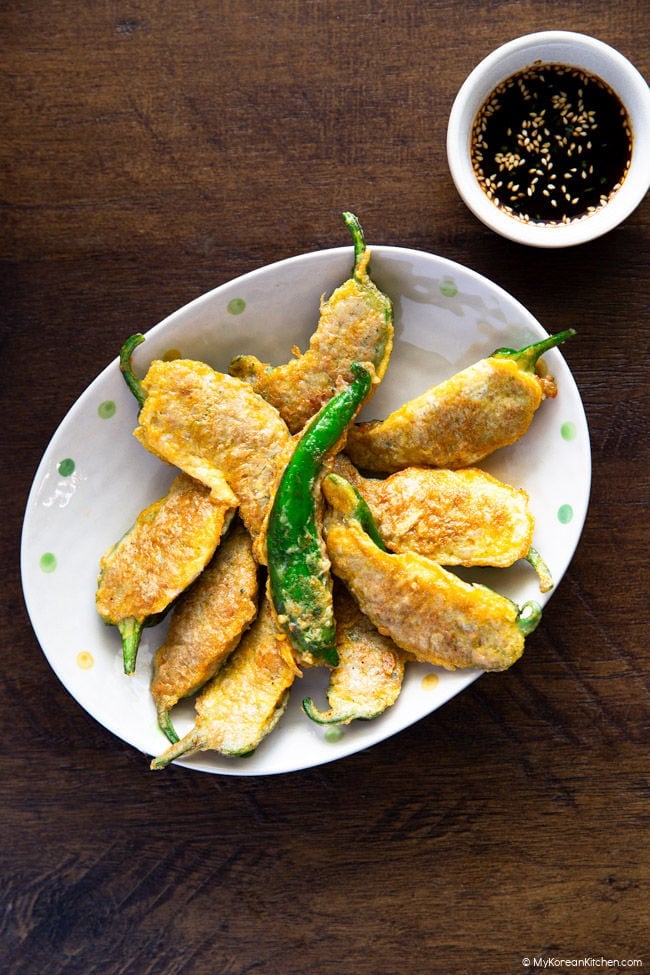
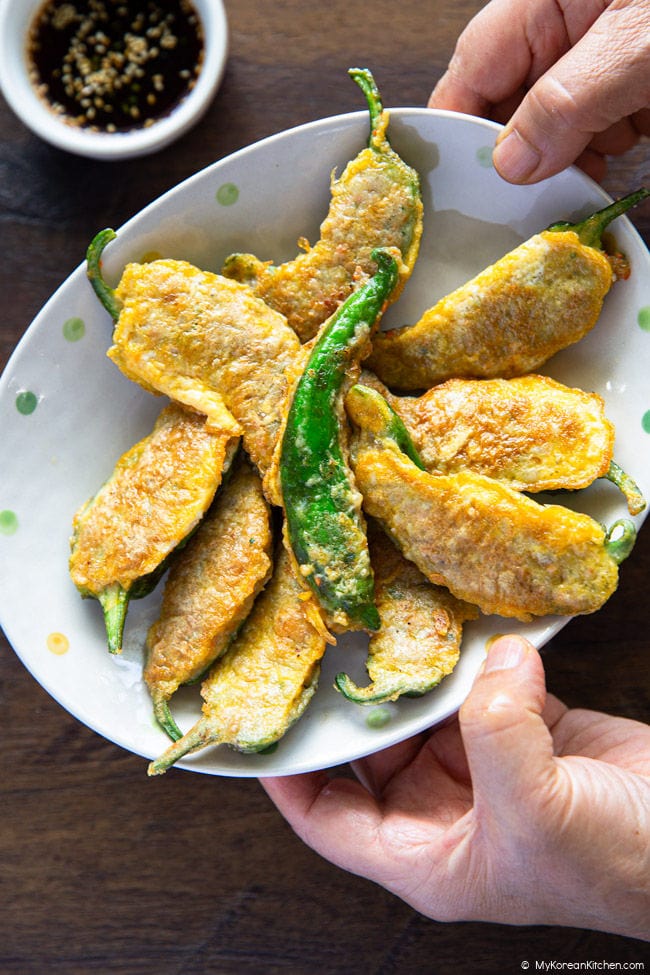
These Korean stuffed chili peppers are lightly pan-fried until golden and tender, with a juicy meat filling tucked inside. They’re delicious on their own, but even better when dipped in a simple Korean pancake dipping sauce.
Save This Recipe For Later
You can unsubscribe at any time
Why This Recipe Works
This gochujeon is comforting, savory, and easy to enjoy even if you are sensitive to spicy food. The peppers turn tender and slightly sweet as they cook, while the juicy meat filling stays flavorful inside. A light egg coating gives everything a delicate golden finish without making it feel heavy or greasy.
I used mild homegrown green peppers for this version because some of my family members cannot tolerate very spicy food, and I could not find the milder Korean green chili varieties at the time. They worked beautifully here, becoming soft, mildly sweet, and much gentler than many green chilies once cooked. The result is a cozy, home-style gochujeon where the flavor of the filling and peppers can shine without overwhelming heat.
What Is Gochujeon?
Gochujeon (고추전) is a Korean pan-fried stuffed chili pepper dish made by filling green chili peppers with a seasoned meat mixture, coating them lightly in flour and egg, then pan-frying until golden.
It’s commonly served during Korean holidays such as Chuseok (Korean harvest festival) and Seollal (Lunar New Year), alongside other jeon dishes. Although it looks festive, it’s made with simple everyday ingredients, which is why many Korean families also enjoy it as a comforting home-style dish throughout the year.
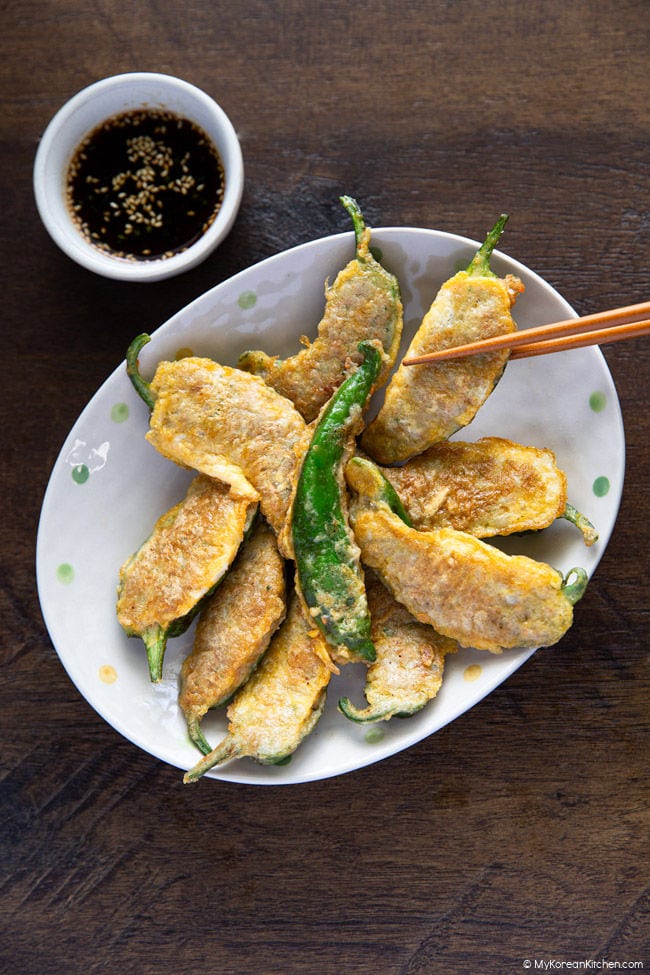
Ingredients
Main
- 180-230 g (6.3-8.1 ounces) green chili peppers (about 10-12 peppers)
- 75 g (2.6 ounces) minced beef
- 75 g (2.6 ounces) minced pork
- 30 g (1 ounce) carrot, finely minced
- 60 g (2.1 ounces) onion, finely minced
- 10 g (0.4 ounces) green onion (green part only), finely minced
- 1/2 Tbsp Korean pancake mix (buchim garu)
Filling Seasoning
- 1 Tbsp minced garlic
- 1/2 Tbsp oyster sauce
- 1/2 Tbsp mirin
- 1/2 tsp sesame oil
- 1/2 tsp white sugar
- 1/2 tsp fine sea salt
- 1/8 tsp ground black pepper
Coating and Cooking
- 1/4 cup plain all-purpose flour, for dusting
- 2 eggs, beaten
- Neutral oil, for cooking
* 1 Tbsp = 15 ml, 1 cup = 250 ml
How to Make Gochujeon (Korean Stuffed Chili Pepper Pancakes)
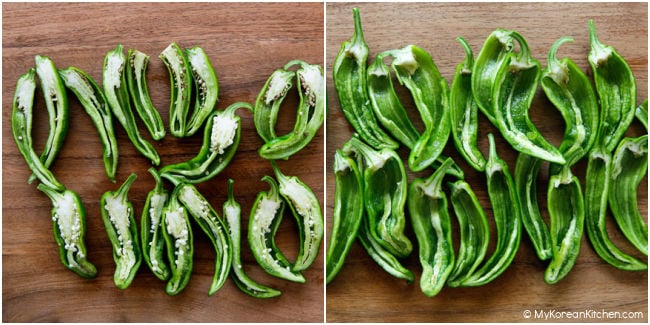
1. Halve the chili peppers lengthwise and remove the seeds. If the peppers seem watery inside, gently pat them dry with paper towels. I find it easier to hold the peppers in my hand while slicing them rather than cutting them on a board.
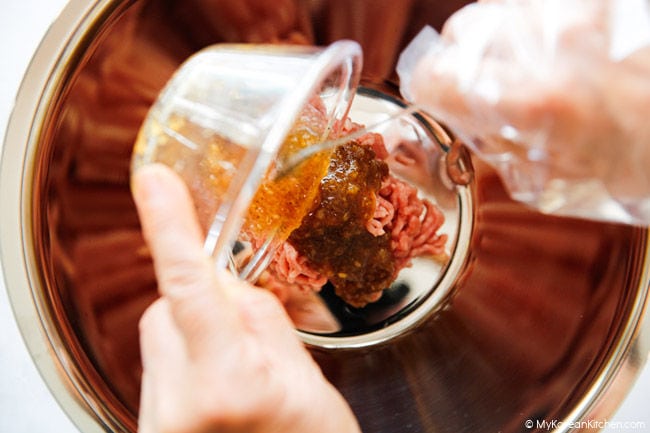
2. In a small bowl, combine the seasoning ingredients. Add the seasoning mixture to the minced meat and mix well until evenly seasoned.
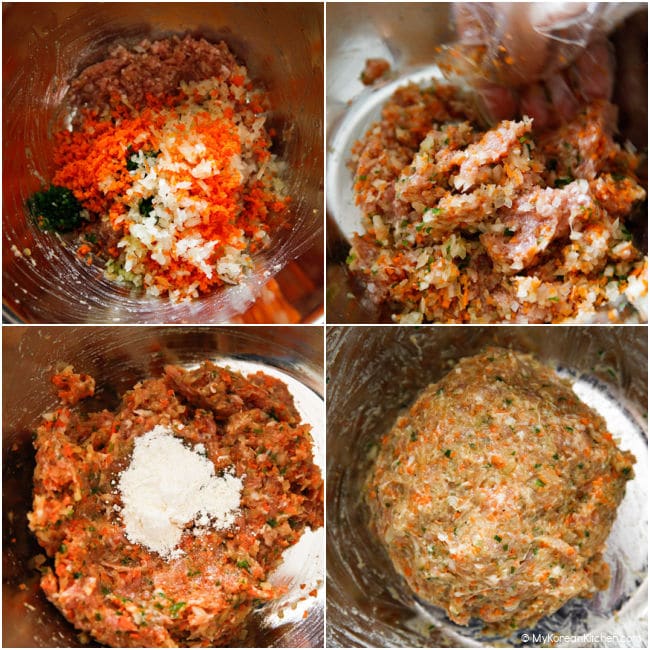
3. Add the carrot, onion, and green onion to the meat mixture and mix until evenly combined. Add the Korean pancake mix (buchim garu) and mix until the filling becomes slightly sticky and holds together well.
4. Lightly dust the inside of each halved chili pepper with flour. Fill each pepper with the meat mixture, gently pressing it in so the filling holds its shape better.
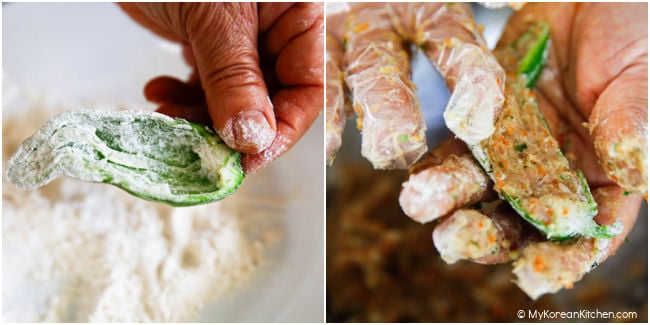
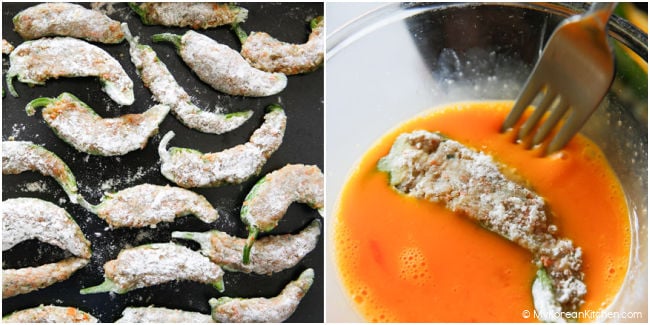
5. Lightly coat the filled side of each pepper with flour, then dip it into the beaten egg.
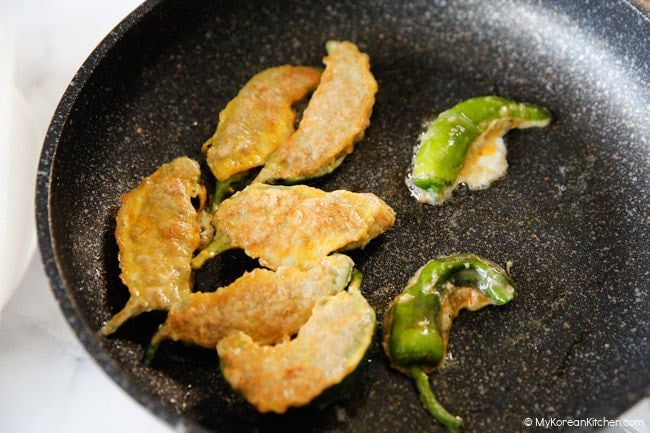
6. Heat a thin layer of oil in a pan over medium-low heat. Place the peppers filling-side down first and cook until golden brown, about 3 minutes. Carefully flip and continue cooking until the filling is fully cooked through.
7. Serve warm with a simple soy dipping sauce on the side, if desired.
Tips
Cook gently.
Cook the gochujeon over medium-low heat so the filling cooks through evenly without burning the outside. Try not to overcook the peppers, as the filling can shrink and separate from the chili while cooking. When turning them over, use a fork and flip them gently to help keep the filling intact. I found a fork worked best for getting underneath the peppers without disturbing the filling too much.
About the filling.
This version skips tofu for a firmer, meatier texture. If you prefer a softer, more traditional-style filling, you can replace up to half of the meat with well-drained tofu. You can also use only beef or only pork if you prefer, but I find a 50:50 combination gives the best balance of flavor and texture.
Adjust the seasoning if needed.
The filling is already well seasoned, so the gochujeon can be enjoyed on their own without a dipping sauce. If you prefer a lighter, more traditional flavor, you can reduce the salt slightly to suit your taste.
About the chili stems.
The chili stems are often removed before cooking, but I left them on for presentation. They also make the peppers a little easier to handle and flip while cooking.
What peppers should I use?
Traditionally, gochujeon is made with Korean green chilies, which can range from mild to quite spicy depending on the variety. Mild peppers such as 오이고추 (oi gochu) and 아삭이고추 (asak-i gochu) are especially popular because they are slightly sweet, crunchy, and sturdy enough to hold the filling well, but slightly spicier Korean green chili varieties are also sometimes used. When choosing peppers, look for ones that are relatively large, sturdy enough to stuff, not overly watery, and slightly sweet if possible.
If Korean peppers are not available, shishito peppers, jalapenos, Anaheim peppers, and Corno di Toro (bull’s horn peppers) can also work. Keep in mind that spice levels can vary depending on the pepper variety and growing conditions. For example, shishito peppers are usually mild, but some I tried recently were unexpectedly spicy. You can try other varieties of green chilies that are suitable for stuffing too!
How should I store gochujeon?
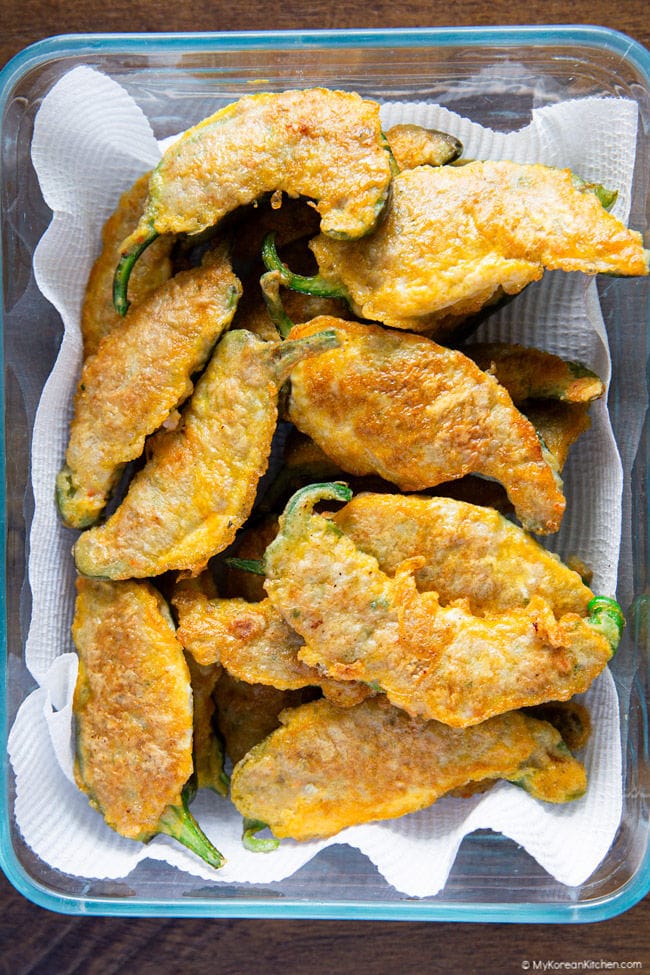
Let the cooked gochujeon cool completely, then store them in an airtight container in the fridge for up to 3 days.
For longer storage, you can freeze them in a freezer-safe container or bag for up to 1 month for the best texture and flavor. If stacking them for freezing, place parchment paper between layers to prevent sticking.
To reheat, warm them in a lightly oiled pan over medium heat until heated through and lightly crisp again. An air fryer also works well and helps bring back the crisp texture nicely. If reheating from frozen, thaw them in the fridge overnight if possible, or cook them straight from frozen for a few extra minutes until fully heated through.
Other Korean Side Dishes You Might Like
If you enjoyed these Korean stuffed peppers, here are a few more Korean side dishes you might also like.
- Stuffed Perilla Leaves (Kkaennip Jeon) – Savory stuffed perilla leaves with a soft, juicy filling and a delicate egg coating.
- Korean Green Chili Pickles (Gochu Jangajji) – Crunchy pickled green chili peppers with a sweet, salty, and tangy flavor.
- Pan-fried Korean Zucchini (Hobakjeon) – Lightly pan-fried zucchini slices coated in egg for a simple and comforting Korean side dish.
Korean Stuffed Chili Peppers (Gochujeon)
Ingredients
MAIN
- 180 g green chili peppers (6.3 ounces),(about 10-12 peppers)
- 75 g minced beef (2.6 ounces)
- 75 g minced pork (2.6 ounces)
- 30 g carrot (1 ounce), finely minced
- 60 g onion (2.1 ounces), finely minced
- 10 g green onion (0.4 ounces), (green part only), finely minced
- 1/2 Tbsp Korean pancake mix (buchim garu)
FILLING SEASONING
- 1 Tbsp minced garlic
- 1/2 Tbsp oyster sauce
- 1/2 Tbsp mirin
- 1/2 tsp sesame oil
- 1/2 tsp white sugar
- 1/2 tsp fine sea salt
- 1/8 tsp ground black pepper
COATING AND COOKING
- 1/4 cup plain all purpose flour , for dusting
- 2 eggs , beaten
- neutral oil , for cooking
Instructions
- Halve the chili peppers lengthwise and remove the seeds. If the peppers seem watery inside, gently pat them dry with paper towels. I find it easier to hold the peppers in my hand while slicing them rather than cutting them on a board.
- In a small bowl, combine the seasoning ingredients. Add the seasoning mixture to the minced meat and mix well until evenly seasoned.
- Add the carrot, onion, and green onion to the meat mixture and mix until evenly combined. Add the Korean pancake mix (buchim garu) and mix until the filling becomes slightly sticky and holds together well.
- Lightly dust the inside of each halved chili pepper with flour. Fill each pepper with the meat mixture, gently pressing it in so the filling holds its shape better.
- Lightly coat the filled side of each pepper with flour, then dip it into the beaten egg.
- Heat a thin layer of oil in a pan over medium-low heat. Place the peppers filling-side down first and cook until golden brown, about 3 minutes. Carefully flip and continue cooking until the filling is fully cooked through.
- Serve warm with a simple soy dipping sauce on the side, if desired.
Nutrition Info (per serving)
The nutrition information shown is an estimate provided by an online nutrition calculator. It should not be considered a substitute for a professional nutritionist’s advice.
Save This Recipe For Later
You can unsubscribe at any time