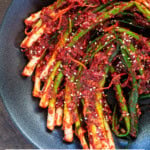
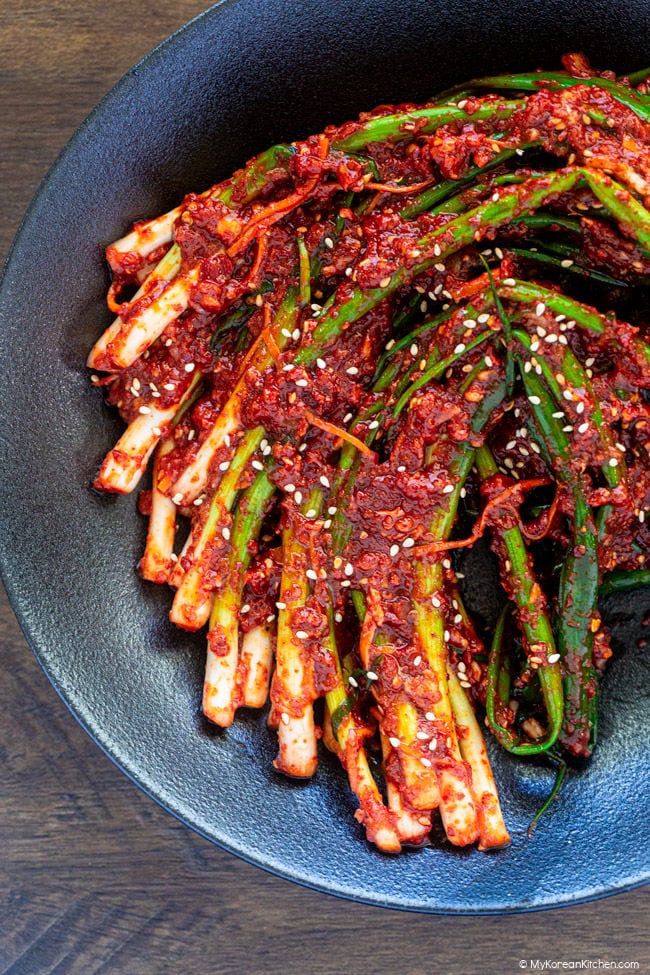
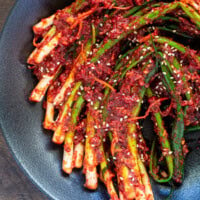
Pa kimchi is one of the boldest and most flavorful kimchi varieties, with tender green onions coated in a rich red seasoning that’s spicy, savory, slightly sweet, and deeply umami-rich.
Influenced by the boldly seasoned Jeolla-style kimchi my mom and I enjoyed during our years living there, this version is especially delicious with Korean BBQ like samgyeopsal. It already tastes wonderful from day two, but the flavor continues to develop beautifully as it ferments.
Save This Recipe For Later
You can unsubscribe at any time
Why You’ll Love This Recipe
This pa kimchi is deeply savory, slightly sweet, spicy, and full of rich umami flavor. The seasoning paste combines anchovy fish sauce, anchovy broth, saeujeot, fresh fruit, and gochugaru, creating a kimchi that tastes wonderfully complex and well balanced from the very first day.
A few simple techniques help build that flavor. Briefly softening the gochugaru creates a smoother seasoning paste and a richer red color, while lightly pre-seasoning the green onions with fish sauce helps every bite absorb the seasoning more evenly.
Blending the apple, onion, garlic, and dried chilies creates a naturally balanced seasoning base with sweetness, depth, and gentle heat, giving the kimchi a rich flavor and a more homemade feel.
Whether you enjoy it fresh or fully fermented, this pa kimchi delivers a delicious balance of spice, savoriness, and subtle sweetness that keeps you reaching for another bite.
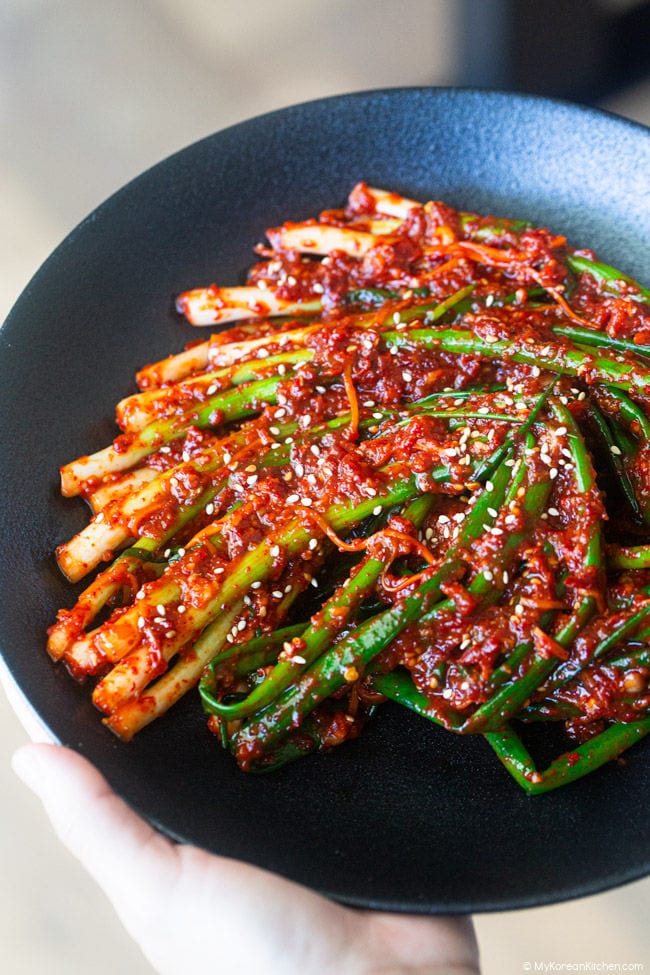
What is Pa Kimchi
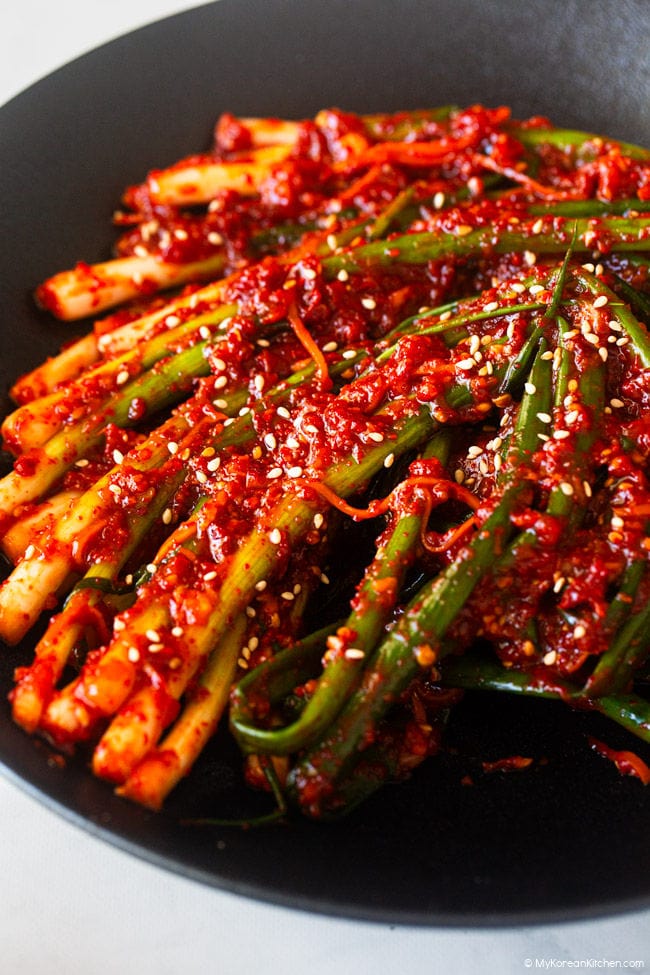
Pa kimchi is a Korean kimchi made with green onions (also called scallions). Unlike napa cabbage kimchi, it lets the flavor of the green onions shine through, while coating them in a bold, spicy seasoning made with gochugaru (Korean chili flakes), fish sauce, and other flavorful ingredients. Depending on how long it is fermented, pa kimchi can taste fresh and vibrant or deeper, tangier, and more savory.
Why I Avoided Pa Kimchi for Years
Interestingly, I refused to eat pa kimchi growing up. I just didn’t really see the appeal. It wasn’t as crunchy as radish kimchi, as mild and refreshing as white kimchi, or as versatile as napa cabbage kimchi. I also found the idea of green onions and kimchi together a little overwhelming at the time since both already have such bold flavors and aromas on their own. 😄
But a few years ago, my sister served pa kimchi alongside jajangmyeon (Korean black bean noodles), and I was genuinely surprised by how well they paired together. After that, I started enjoying it with Korean BBQ too, and honestly, the combination was unbelievably delicious.
Now it’s become one of the kimchi varieties I look forward to eating, especially when my mom makes it. In fact, one of my sisters refuses to eat pa kimchi unless it’s my mom’s version!
If you’ve never tried pa kimchi before, I hope this recipe changes your mind the way it changed mine.
Best Green Onions for Kimchi
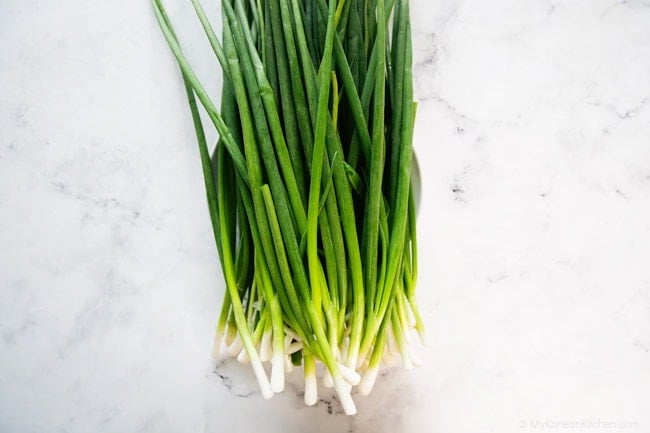
Young green onions with tender white stems and fresh green tops work best for pa kimchi. In Korea, this kimchi is often made with jjokpa (쪽파) or silpa (실파), which have a mild flavor and delicate texture.
For this recipe, I used green onions labeled as jjokpa from my local Korean grocery store, but they looked much larger and very similar to regular green onions. So if standard green onions are all you can find, don’t worry. If possible, choose green onions that are thinner and younger-looking, with firm white stems and vibrant green tops. They tend to be more tender and absorb the seasoning well, but larger green onions can still make excellent pa kimchi.
Ingredients
Main
- 530 g / 1.2 lb green onions (scallions), trimmed, rinsed and drained well (This was about 600 g / 1.3 lb before trimming.)
- 75 g (2.6 oz) carrot, julienned
- 2 Tbsp toasted sesame seeds
Kimchi Seasoning
- 1/3 cup Korean anchovy fish sauce, divided
- 2 dried Korean red chilies (optional)
- 45 g (1.6 oz) garlic cloves, peeled, about 12 cloves
- 175 g (6.2 oz) sweet apple or Korean pear, cored and roughly chopped
- 80 g (2.8 oz) onion, roughly chopped
- 1/2 cup Korean anchovy stock
- 1/4 cup granulated sugar
- 1 cup gochugaru (Korean chili flakes)
- 1 Tbsp Korean plum extract or 2 Tbsp Korean corn syrup
- 1 Tbsp saeujeot (Korean salted shrimp)
- 1/2 Tbsp minced ginger
- 4 tsp coarse sea salt, adjust to taste
Flour Paste
- 1 Tbsp all-purpose flour
- 1 cup water
* 1 Tbsp = 15 ml, 1 cup = 250 ml
** For more information about Korean ingredients, check out my Korean ingredients guide.
How to Make Pa Kimchi
Season the white parts of the green onions
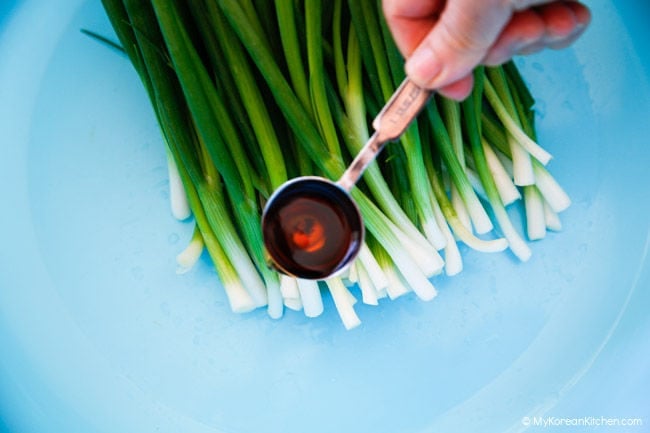
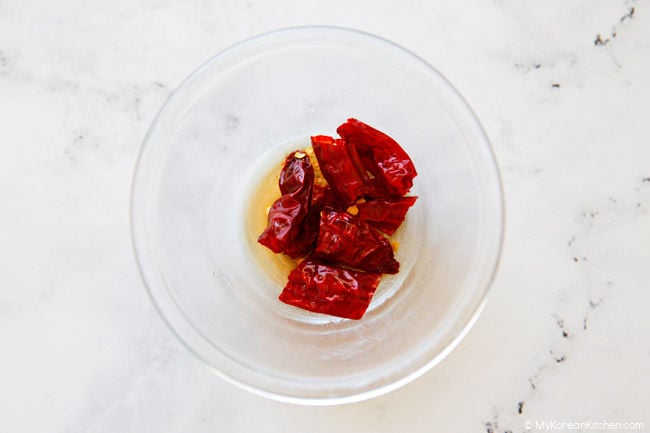
Place the green onions in a large bowl. Drizzle about 2 Tbsp of the anchovy fish sauce over the white stem parts. If using the dried red chilies, place them in a small bowl and drizzle about 1 Tbsp of the anchovy fish sauce over them. Set both aside while preparing the seasoning.
Blend the fruit and vegetable mixture
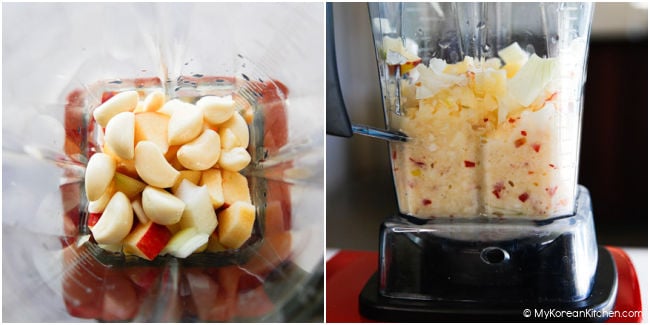
Add the apple, onion, garlic, and anchovy stock to a blender. Blend until smooth. Add the softened dried chilies (if using) and blend for a few more seconds, leaving small flecks of chili throughout the mixture.
Prepare the seasoning mixture
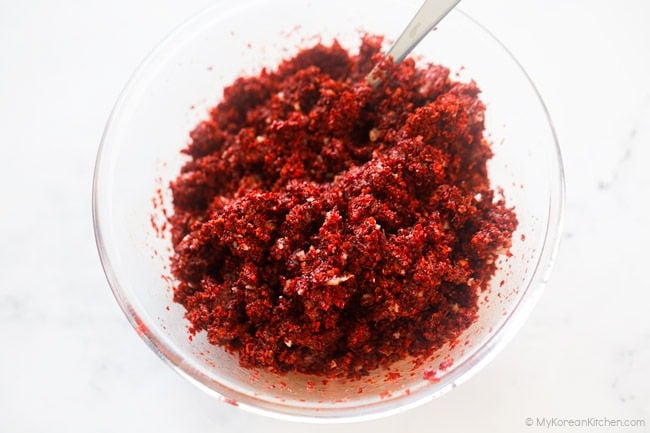
In a mixing bowl, combine the remaining anchovy fish sauce, sugar, Korean plum extract, saeujeot, minced ginger, coarse sea salt, and gochugaru. Mix well and let the gochugaru soften briefly in the liquid. This helps create a smoother seasoning paste and gives the kimchi a richer red color.
Make the flour paste
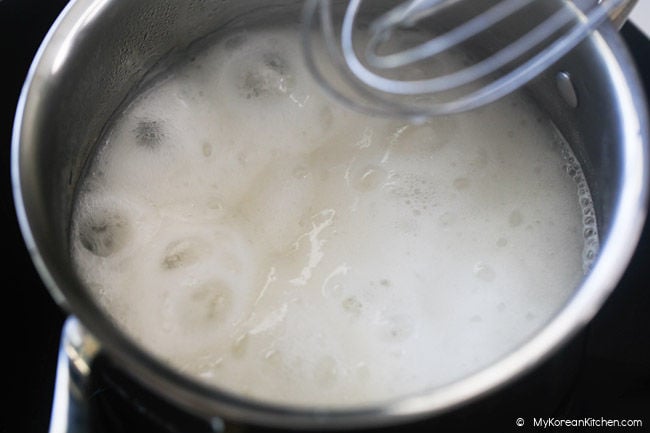
Combine the flour and water in a small saucepan and mix well. Cook over medium heat, stirring constantly, until the mixture thickens into a paste. Remove from the heat and let it cool slightly.
Combine the kimchi seasoning
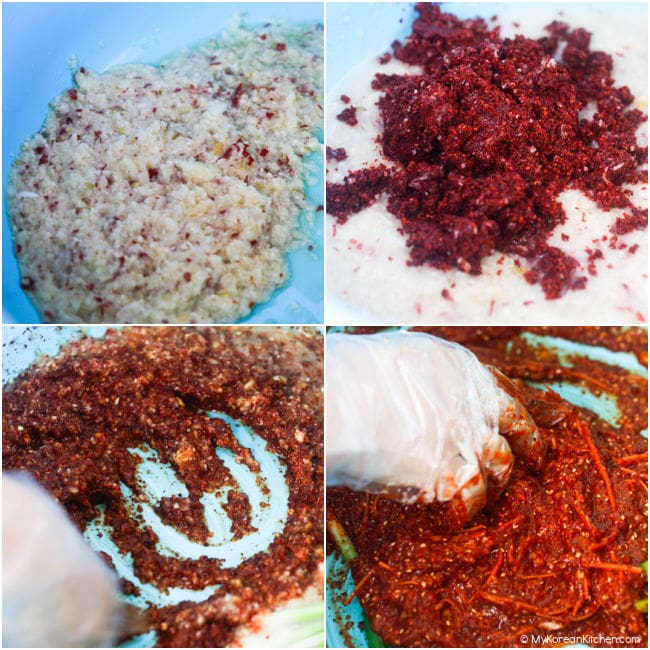
Add the blended mixture and the flour paste to the kimchi seasoning. Mix until well combined. Add the julienned carrot and toasted sesame seeds, then mix again.
Coat the green onions
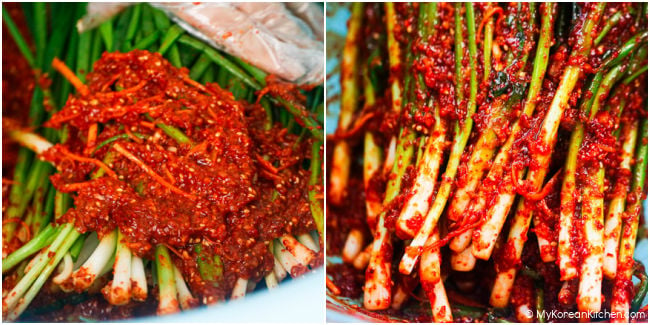
Add the green onions to the seasoning and gently coat them thoroughly, paying special attention to the thicker white stem parts.
Store and ferment
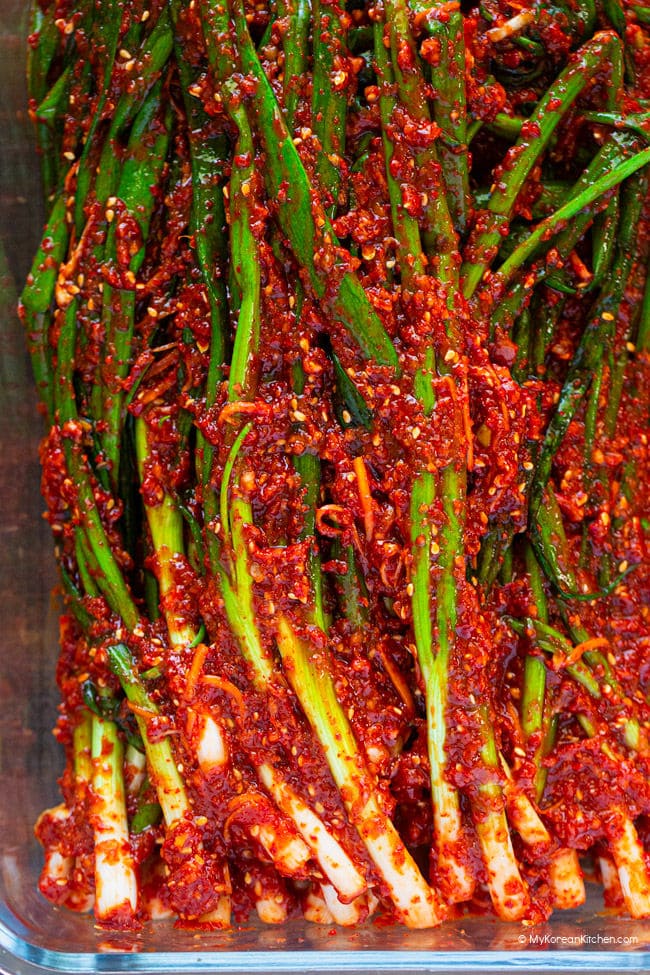
Transfer the pa kimchi to an airtight container. It can be enjoyed fresh right away, when the green onions are crisp and full of fresh flavor, or left at room temperature for several hours to kick-start the fermentation before storing it in the fridge. As it ferments, the flavor will gradually become deeper, tangier, and more savory, while the green onions will soften over time.
How to Enjoy Pa Kimchi
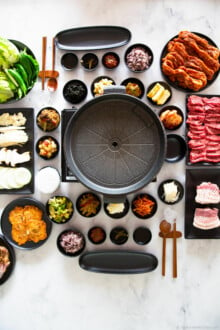
Pa kimchi pairs beautifully with a bowl of steamed rice and other Korean side dishes. It’s also especially good alongside Korean BBQ, particularly samgyeopsal (Korean pork belly) and unseasoned grilled beef, where its bold, spicy, and savory flavor helps cut through the richness of the meat.
I personally prefer pa kimchi when it’s about a week old. By then, the seasoning has had time to develop a deeper, richer umami flavor while still retaining some freshness. At this stage, I especially enjoy it with noodle dishes such as jajangmyeon (black bean noodles) and kalguksu (Korean knife-cut noodles).
Recipe Notes
About the dried chilies: I used homemade dried shishito peppers for this recipe, which add a subtle pepper flavor without too much heat. If you’d like to use dried chilies, dried Korean red chilies are a great choice. I don’t recommend very hot varieties, such as many Thai chilies, as they can make the kimchi much spicier than intended.
Plum extract vs Corn syrup: Korean plum extract and Korean corn syrup are not identical ingredients, but both work well in this recipe. Korean plum extract adds a gentle sweetness along with a subtle fruity tang, while Korean corn syrup contributes more sweetness and gives the kimchi a slightly glossier finish. I usually prefer plum extract, but Korean corn syrup is a good option if that’s what you have on hand. If using Korean corn syrup, my mum prefers the Chung Jung One brand because she finds it less sweet than some others.
Why I don’t salt the green onion separately: You don’t need to salt the green onions separately for this recipe. Instead, the thicker white parts are lightly pre-seasoned with anchovy fish sauce, which helps them absorb flavor more evenly without making the green onions overly soft.
Handle the green onions gently: Green onions can become tough if they are rubbed or handled too much with the kimchi seasoning. When mixing, gently lift the green onions from the bottom and fold them over rather than rubbing or pressing them. Think of it as coating the green onions with the seasoning, not massaging them.
Storage container size: This recipe fits comfortably in a 3.1 L (105 fl oz) container with a little room to spare. I used an IKEA 365+ Food Container, but any airtight container of a similar size will work well.
Other Kimchi Recipes You Might Like
- Kimchi Geotjeori (Fresh Kimchi Salad) – This fresh kimchi salad is tossed in a spicy, tangy seasoning and meant to be enjoyed shortly after making it while the vegetables are still crisp and vibrant. It’s a refreshing side dish that pairs especially well with Korean BBQ and everyday meals.
- Kkakdugi (Radish Kimchi) – Kkakdugi is a Korean radish kimchi made with crunchy cubes of Korean radish coated in a bold, spicy seasoning. Its crisp texture and refreshing bite make it especially delicious alongside hearty Korean soups and stews.
- Baek Kimchi (White Kimchi) – Baek kimchi is a mild, non-spicy white kimchi with a light and refreshing flavor. Filled with crisp vegetables and a delicate brine, it’s a wonderful choice for anyone who prefers a gentler style of kimchi.
- Oi Kimchi (Cucumber Kimchi) – Oi kimchi is a crisp and refreshing cucumber kimchi with plenty of bold Korean flavor. It’s especially refreshing during warmer months and pairs beautifully with grilled meat and simple rice dishes.
Pa Kimchi (Green Onion Kimchi) - Easy Korean Scallion Kimchi Recipe
Ingredients
Main
- 530 g green onions (scallions), (1.2 lb), trimmed, rinsed and drained well (This was about 600 g / 1.3 lb before trimming.)
- 75 g carrot (2.6 oz), julienned
- 2 Tbsp toasted sesame seeds
Kimchi Seasoning
- 1/3 cup Korean anchovy fish sauce , divided
- 2 dried Korean red chilies (optional)
- 45 g garlic cloves (1.6 oz), peeled, about 12 cloves
- 175 g sweet apple or Korean pear, (6.2 oz), cored and roughly chopped
- 80 g onion (2.8 oz), roughly chopped
- 1/2 cup Korean anchovy stock
- 1/4 cup granulated sugar
- 1 cup gochugaru (Korean chili flakes)
- 1 Tbsp Korean plum extract or 2 Tbsp Korean corn syrup
- 1 Tbsp saeujeot (Korean salted shrimp)
- 1/2 Tbsp minced ginger
- 4 tsp coarse sea salt , adjust to taste
Flour Paste
- 1 Tbsp all-purpose flour
- 1 cup water
Instructions
- Season the white parts of the green onions - Place the green onions in a large bowl. Drizzle about 2 Tbsp of the anchovy fish sauce over the white stem parts. If using the dried red chilies, place them in a small bowl and drizzle about 1 Tbsp of the anchovy fish sauce over them. Set both aside while preparing the seasoning.
- Blend the fruit and vegetable mixture - Add the apple, onion, garlic, and anchovy stock to a blender. Blend until smooth. Add the softened dried chilies (if using) and blend for a few more seconds, leaving small flecks of chili throughout the mixture.
- Prepare the seasoning mixture - In a mixing bowl, combine the remaining anchovy fish sauce, sugar, Korean plum extract, saeujeot, minced ginger, coarse sea salt, and gochugaru. Mix well and let the gochugaru soften briefly in the liquid. This helps create a smoother seasoning paste and gives the kimchi a richer red color.
- Make the flour paste - Combine the flour and water in a small saucepan and mix well. Cook over medium heat, stirring constantly, until the mixture thickens into a paste. Remove from the heat and let it cool slightly.
- Combine the kimchi seasoning - Add the blended mixture and the flour paste to the kimchi seasoning. Mix until well combined. Add the julienned carrot and toasted sesame seeds, then mix again.
- Coat the green onions - Add the green onions to the seasoning and gently coat them thoroughly, paying special attention to the thicker white stem parts.
- Store and ferment - Transfer the pa kimchi to an airtight container. It can be enjoyed fresh right away, when the green onions are crisp and full of fresh flavor, or left at room temperature for several hours to kick-start the fermentation before storing it in the fridge. As it ferments, the flavor will gradually become deeper, tangier, and more savory, while the green onions will soften over time.
Notes
- 1 Tbsp = 15 ml, 1 cup = 250 ml
- For more information about Korean ingredients, check out my Korean ingredients guide.
Nutrition Info (per serving)
The nutrition information shown is an estimate provided by an online nutrition calculator. It should not be considered a substitute for a professional nutritionist’s advice.
Save This Recipe For Later
You can unsubscribe at any time