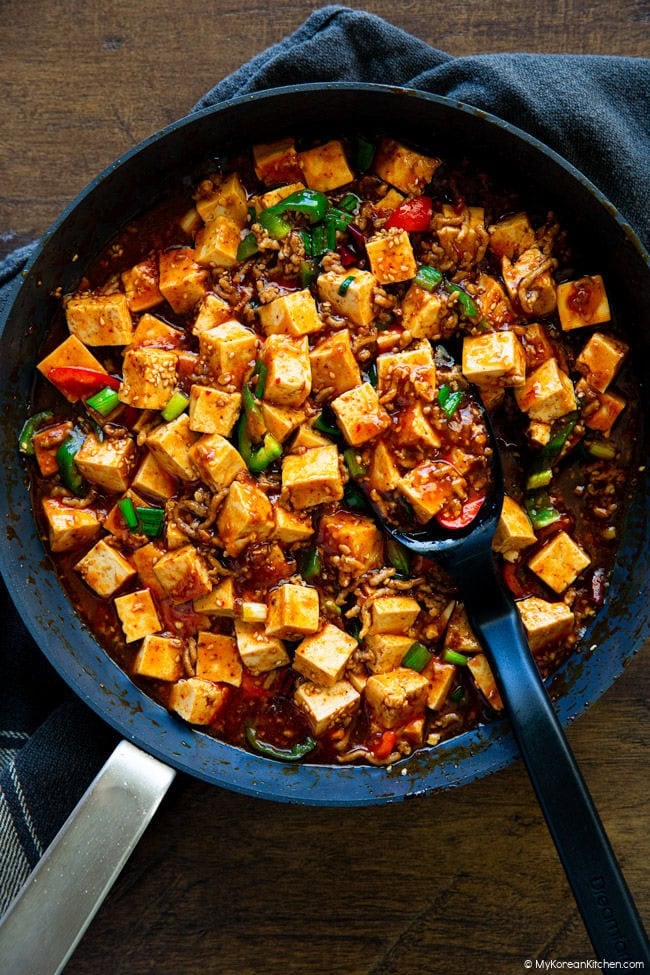
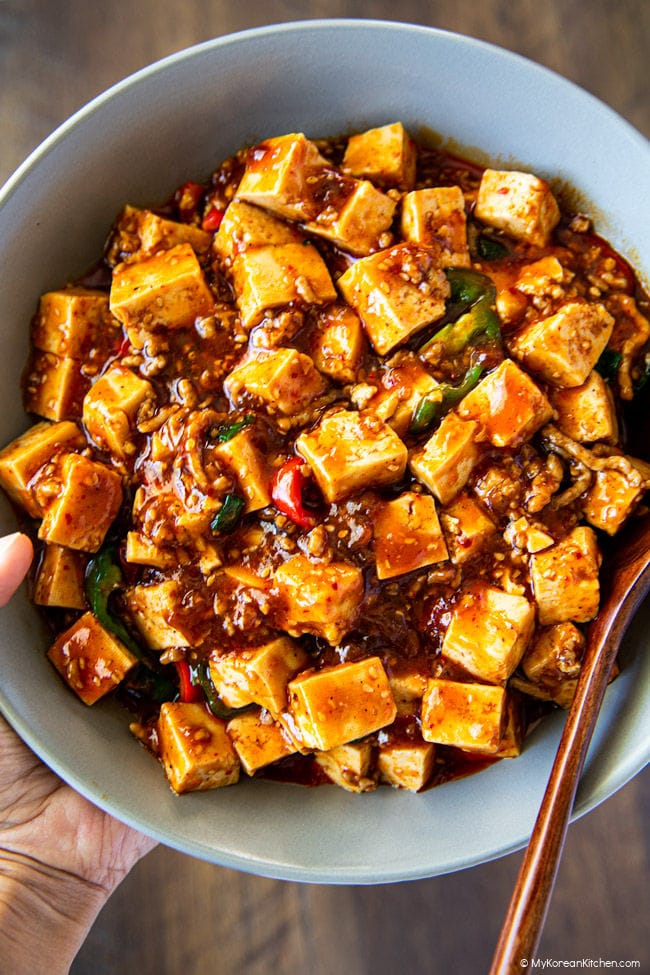
This Korean-style mapo tofu is my cozy, home style take on the classic Chinese dish. The sauce is deeply savory with layers of umami from anchovy stock, anchovy fish sauce, and ssamjang, while a touch of sweetness rounds everything out beautifully. It’s warm, comforting, and incredibly satisfying with a bowl of steamed rice.
Save This Recipe For Later
You can unsubscribe at any time
Why This Recipe Works
A Korean-inspired twist on a classic
This recipe takes inspiration from classic mapo tofu but gives it a distinctly Korean spin. Ingredients like ssamjang, gochugaru, anchovy stock, and anchovy fish sauce create a rich, savory sauce that’s familiar, approachable, and full of flavor.
Rich, layered umami
Anchovy stock and anchovy fish sauce add a subtle depth that makes the sauce taste more developed and layered. They don’t overpower the dish but quietly bring all the flavors together.
Ssamjang adds extra depth
The ssamjang is what makes this version especially memorable. It adds rich savory depth along with subtle nuttiness and layers of flavor that make the sauce feel hearty, satisfying, and deeply comforting.
Balanced and incredibly satisfying
This recipe is less numbing than traditional Chinese mapo tofu and leans into a more rounded balance of sweet, savory, and spicy flavors. The tender tofu, flavorful pork, and rich sauce come together beautifully, especially when spooned over a bowl of hot rice.
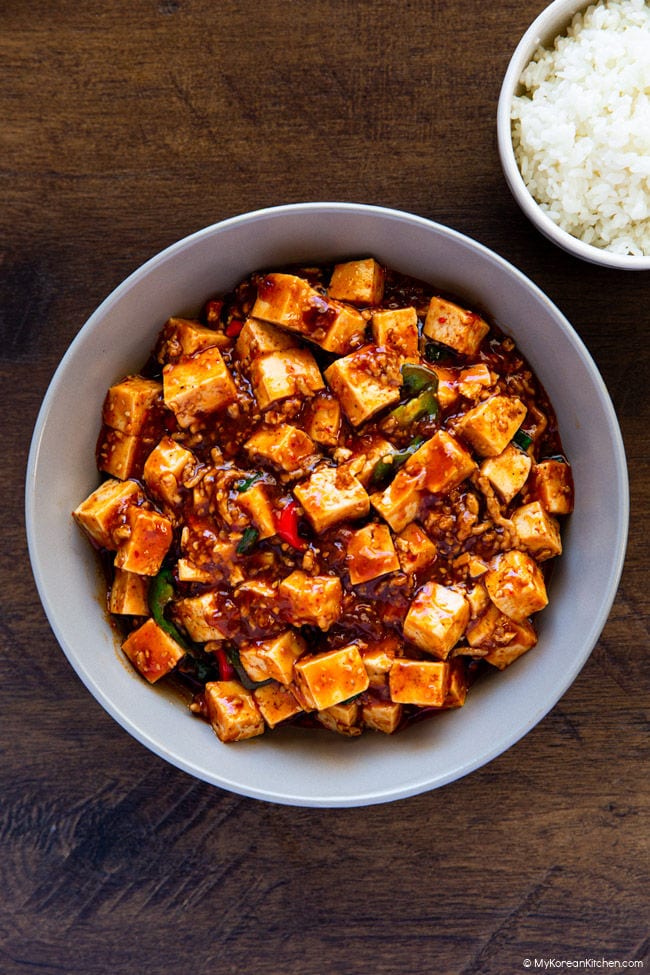
About Mapo Tofu
Mapo tofu is a beloved Chinese dish featuring soft tofu simmered in a rich, flavorful sauce with ground meat. Traditionally, it’s known for its bold savory flavor and signature tongue-tingling heat from Sichuan peppercorns.
Ingredients
Main
- 600 g / 21 oz firm tofu, cut into 2 cm (3/4 inch) cubes
- 100 g / 3.5 oz minced pork
- 20 g / 0.7 oz green chili pepper, sliced (optional)
- 10 g / 0.4 oz dried red chili pepper, sliced (optional)
- 20 g / 0.7 oz green onion (green part only), chopped
Sauce
- 1 cup Korean anchovy stock or water
- 2.5 Tbsp granulated sugar
- 2 Tbsp ssamjang (Korean spicy dipping sauce)
- 2 Tbsp mirin (sweet rice wine)
- 1 Tbsp soy sauce (Sempyo Yangjo 701 or Kikkoman)
- 1 Tbsp Korean anchovy fish sauce
- 1 tsp gochugaru (Korean chili flakes)
- 1/2 tsp minced garlic
- 1/4 tsp ground black pepper
- 1/8 tsp ginger juice (from squeezing about 1/2 tsp minced ginger)
Chili Oil
- 6 Tbsp neutral flavored cooking oil, (e.g. rice bran oil or vegetable oil)
- 120 g / 4 oz onion, thinly sliced
- 1 Tbsp minced garlic
- 2 Tbsp gochugaru (Korean chili flakes)
For Blanching the Tofu
- 4 cups water
- 1 tsp fine sea salt
Starch Slurry
- 2 Tbsp potato starch
- 2 Tbsp water
Garnish
- 2 tsp sesame oil
- 2 tsp sesame seeds
* 1 Tbsp = 15 ml, 1 cup = 250 ml
How to Make Korean Style Mapo Tofu
1. Prepare the sauce
Combine all the sauce ingredients in a measuring cup or small bowl and stir until well combined. Set aside.
2. Make the chili oil.
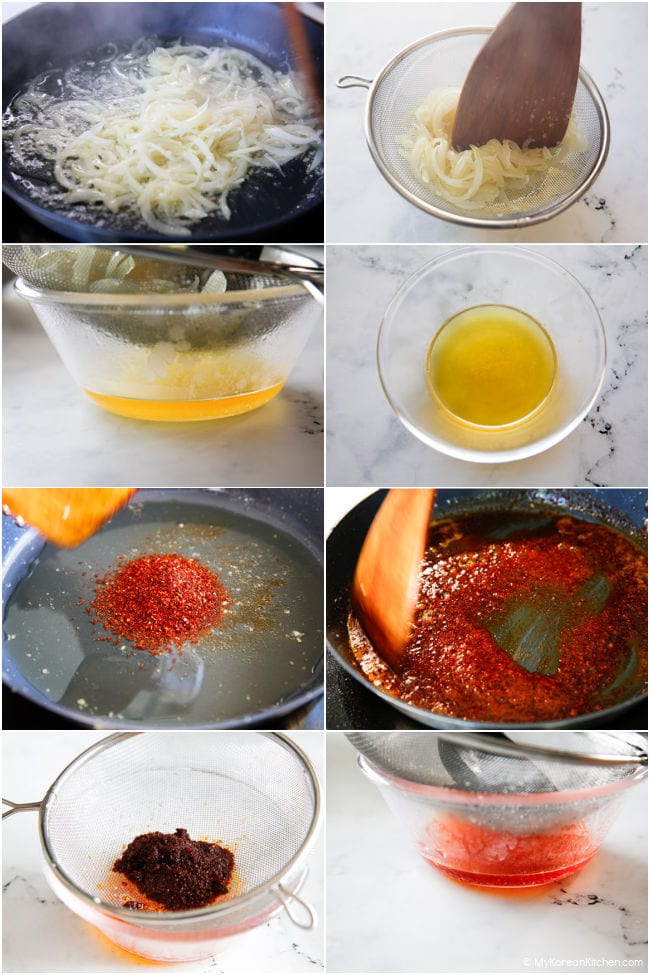
In a pan, add the cooking oil, onion and minced garlic. Stir fry over medium-high heat until the onion is softened and lightly golden. Strain the oil and discard the onion and garlic. Return the oil to the pan, add the chili flakes, and cook over low heat until fragrant, stirring frequently. Strain the oil again and discard the chili flakes. Set the oil aside. You should have about 1/4 cup remaining.
3. Prepare the tofu
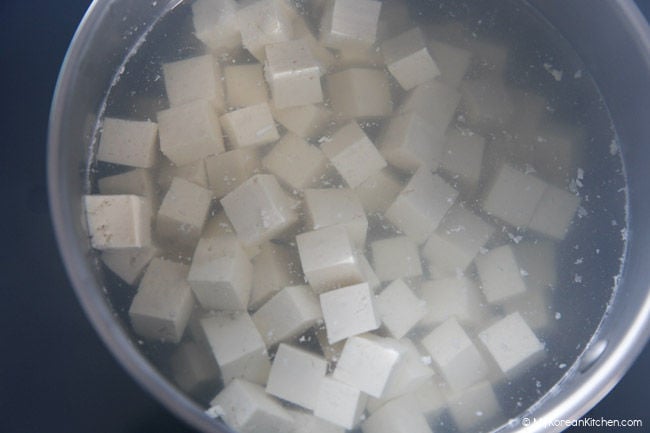
Bring a pot of water to a boil and add the salt. Add the tofu and blanch for about 1 minute. Drain and set aside.
4. Cook the pork
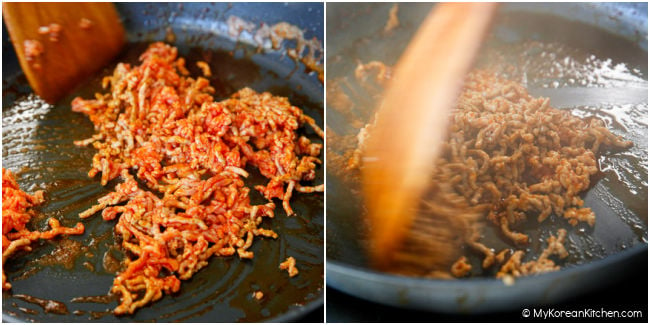
Heat 3 Tbsp of the prepared Korean chili oil in a pan over medium-high heat. Add the minced pork and cook until lightly browned, breaking it up with a spatula as it cooks.
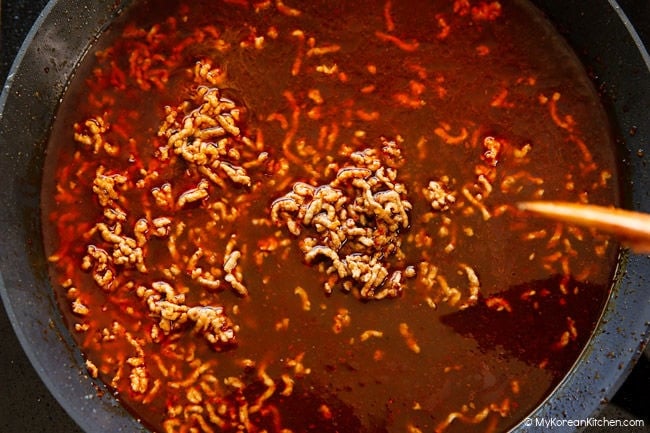
5. Build the sauce
Pour in the prepared sauce mixture and stir to combine. Bring it to a gentle simmer and cook for 2 to 3 minutes.
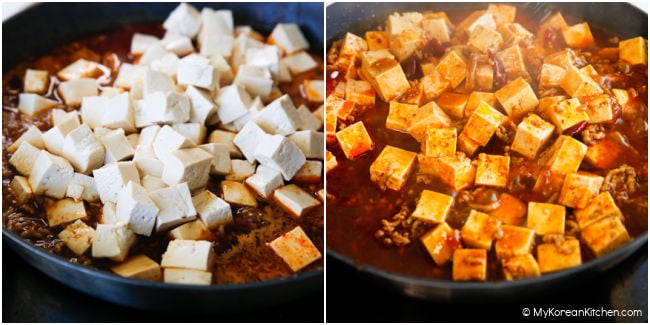
6. Add the tofu
Gently add the tofu and carefully fold to combine. Simmer for 1 to 2 minutes, gently folding once or twice.
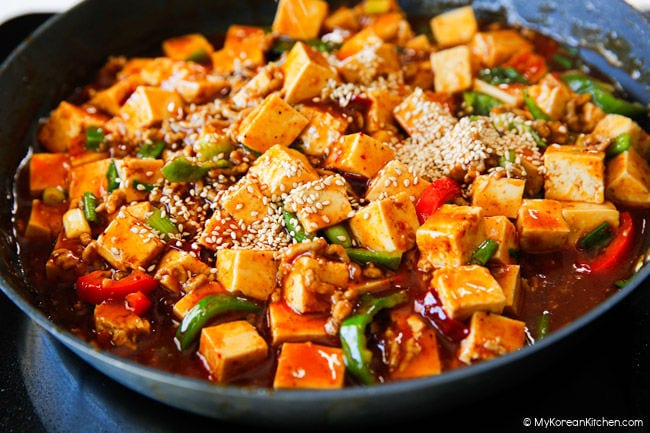
7. Finish the dish
Reduce the heat to medium. Pour in the starch slurry and stir gently until the sauce thickens and lightly coats the tofu. Add the chili peppers and green onion, then fold them through. Drizzle with the remaining chili oil (about 1 Tbsp) and the sesame oil, then sprinkle with the sesame seeds.
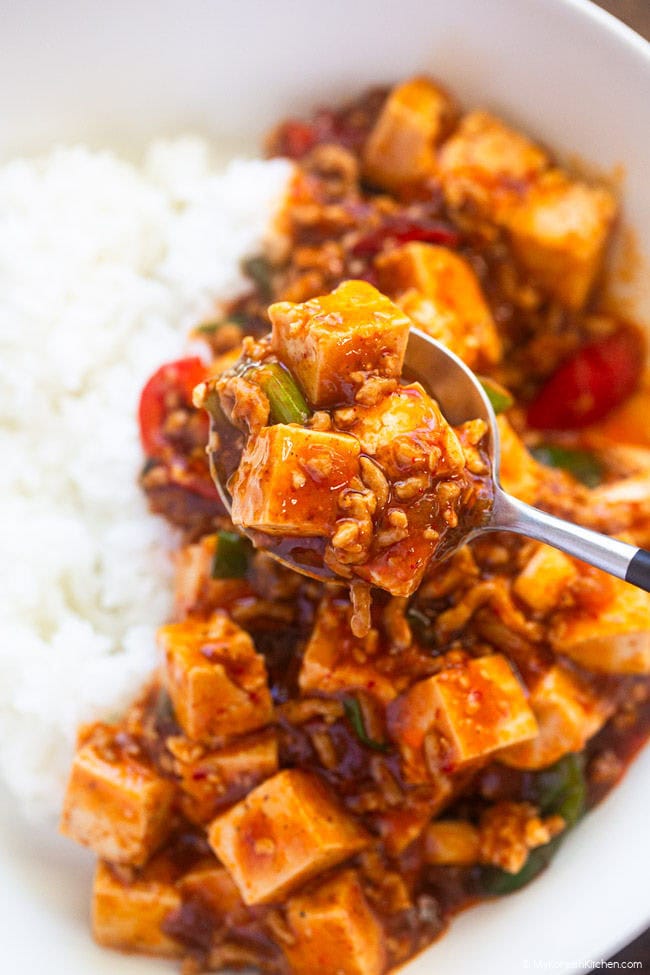
8. Serve
Serve hot with rice.
Recipe Notes
- Tofu: I developed this recipe using firm tofu, which holds its shape well in the sauce. If you prefer a softer, more traditional mapo tofu texture, you can use soft or silken tofu instead. A quick blanch in salted boiling water warms the tofu and helps it integrate more seamlessly into the sauce.
- Korean Anchovy Stock adds extra depth and umami to the sauce. If you don’t have it on hand, water works well too, though the flavor will be a little lighter.
- Chili Oil: Cook the Korean chili flakes over low heat to prevent them from burning and turning bitter. The oil should become fragrant and lightly red, not dark brown.
- Pork: For the best flavor, cook the pork until lightly browned with a few crispy bits before adding the sauce.
- Starch Slurry: Lower the heat slightly before stirring in the slurry to help it incorporate smoothly and create a silky sauce.
- Spice Level: You can easily adjust the heat by increasing or decreasing the amount of gochugaru to suit your taste. Different varieties can vary in heat level, color, and texture, so you may need to adjust the amount accordingly.
- For Serving: A final drizzle of chili oil adds extra aroma, color, and richness just before serving.
- Storage: Leftovers can be refrigerated in an airtight container for up to 3 days. The flavors continue to develop as they sit, making it especially delicious the next day.
More Tofu Recipes to Try
If you enjoy cooking with tofu, here are a few more recipes to try:
- Sundubu Jjigae (Korean Soft Tofu Stew)
- Pan Fried Tofu in Garlic Soy Sesame Sauce (Dubu Buchim)
- Tofu Kimchi
- Korean Tofu with Spicy Korean Ketchup
Interested in trying the traditional Sichuan version? I recommend this excellent recipe from The Woks of Life.
Korean-Style Mapo Tofu (Easy, Cozy, and Deeply Savory)
Ingredients
Main
- 600 g firm tofu (21 oz), cut into 2 cm (3/4 inch) cubes
- 100 g minced pork (3.5 oz)
- 20 g green chili pepper (0.7 oz), sliced (optional)
- 10 g dried red chili pepper (0.4 oz), sliced (optional)
- 20 g green onion (green part only), (0.7 oz), chopped
Sauce
- 1 cup Korean anchovy stock or water
- 2.5 Tbsp granulated sugar
- 2 Tbsp ssamjang (Korean spicy dipping sauce)
- 2 Tbsp mirin (sweet rice wine)
- 1 Tbsp soy sauce (Sempyo Yangjo 701 or Kikkoman)
- 1 Tbsp Korean anchovy fish sauce
- 1 tsp gochugaru (Korean chili flakes)
- 1/2 tsp minced garlic
- 1/4 tsp ground black pepper
- 1/8 tsp ginger juice (from squeezing about 1/2 tsp minced ginger)
Chili Oil
- 6 Tbsp neutral flavored cooking oil (e.g. rice bran oil or vegetable oil)
- 120 g onion (4 oz), thinly sliced
- 1 Tbsp minced garlic
- 2 Tbsp gochugaru (Korean chili flakes)
For Blanching the Tofu
- 4 cups water
- 1 tsp fine sea salt
Starch Slurry
- 2 Tbsp potato starch
- 2 Tbsp water
Garnish
- 2 tsp sesame oil
- 2 tsp sesame seeds
Instructions
- Prepare the sauce - Combine all the sauce ingredients in a measuring cup or small bowl and stir until well combined. Set aside.
- Make the chili oil. - In a pan, add the cooking oil, onion and minced garlic. Stir fry over medium-high heat until the onion is softened and lightly golden. Strain the oil and discard the onion and garlic. Return the oil to the pan, add the chili flakes, and cook over low heat until fragrant, stirring frequently. Strain the oil again and discard the chili flakes. Set the oil aside. You should have about 1/4 cup remaining.
- Prepare the tofu - Bring a pot of water to a boil and add the salt. Add the tofu and blanch for about 1 minute. Drain and set aside.
- Cook the pork - Heat 3 Tbsp of the prepared Korean chili oil in a pan over medium-high heat. Add the minced pork and cook until lightly browned, breaking it up with a spatula as it cooks.
- Build the sauce - Pour in the prepared sauce mixture and stir to combine. Bring it to a gentle simmer and cook for 2 to 3 minutes.
- Add the tofu - Gently add the tofu and carefully fold to combine. Simmer for 1 to 2 minutes, gently folding once or twice.
- Finish the dish - Reduce the heat to medium. Pour in the starch slurry and stir gently until the sauce thickens and lightly coats the tofu. Add the chili peppers and green onion, then fold them through. Drizzle with the remaining chili oil (about 1 Tbsp) and the sesame oil, then sprinkle with the sesame seeds.
- Serve - Serve hot with rice.
Notes
- 1 Tbsp = 15 ml, 1 cup = 250 ml
Nutrition Info (per serving)
The nutrition information shown is an estimate provided by an online nutrition calculator. It should not be considered a substitute for a professional nutritionist’s advice.
Save This Recipe For Later
You can unsubscribe at any time